
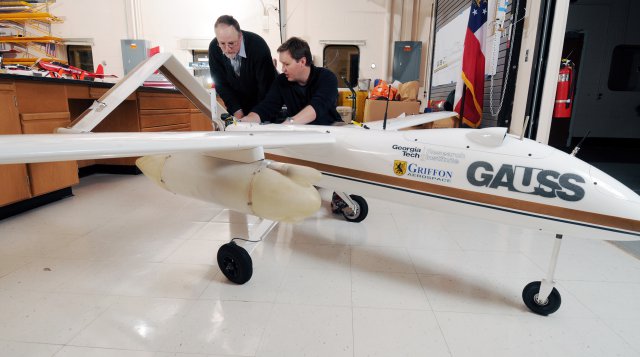
 A research team at the Georgia Tech Research Institute (GTRI) is developing an airborne testing capability for sensors, communications devices and other airborne payloads. This aerial test bed, called the GTRI Airborne Unmanned Sensor System (GAUSS), is based on an unmanned aircraft system (UAS) made by Griffon Aerospace and modified by GTRI. Continue reading
Yearly Archives: 2013
SBG Systems Launches New Family of MEMS-based Tactical Grade Inertial Systems
 SBG Systems has launched its Ekinox Series, a new product range of tactical grade inertial systems which brings robust and cost-effective MEMS to the Fibre Optic Gyro (FOG) level. Continue reading
Tasuma UK Ltd Supplies Wind Tunnel Model to UAV Engines Ltd
Tasuma UK Ltd. has recently supplied to UAV Engines Ltd, UK. a full sized blended wing body UAS for testing and ratification with the AR731 rotary engine. Continue reading
US to Give Unarmed UAS to Afghanistan
 President Hamid Karzai announced on Monday that the United States would give Afghanistan its own fleet of unmanned surveillance aircraft and would speed up the handover of detainees held by American forces. Continue reading
AAI Buys MetaVR VRSG Licenses for US Army UAS Simulation Training
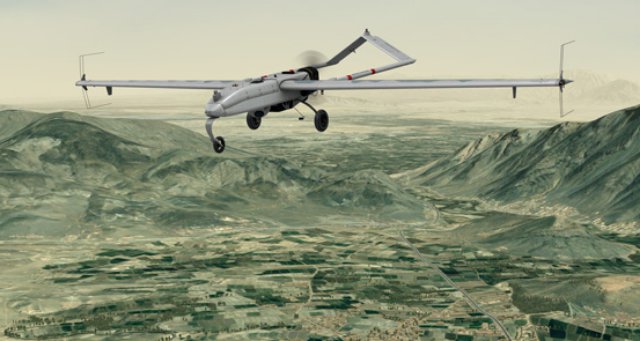 MetaVR, Inc. has announced that AAI Corp. recently purchased 176 MetaVR Virtual Reality Scene Generator (VRSG) licenses to be delivered over 28 months. Continue reading
Austro Develops Vibration Free Rotary Engine for UAS
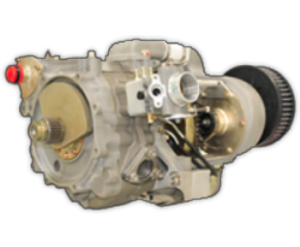 After two and a half years of development, Austro Engine has bench-tested a new dual full authority digital engine-controlled rotary aircraft engine called the AE80R. Continue reading
IAI Continues Development of Unmanned Butterfly
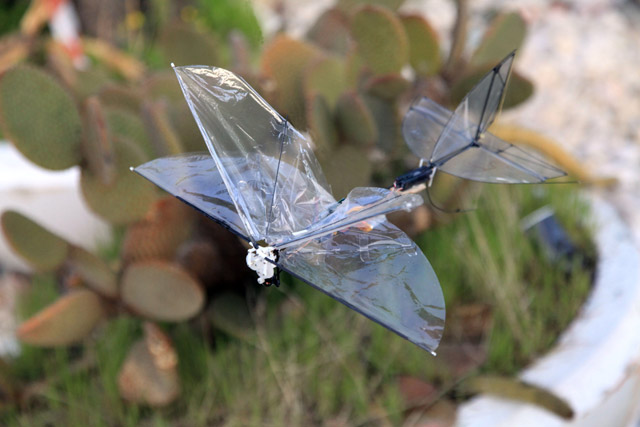 When the Israel Aerospace Industries (IAI) “butterfly” unmanned aircraft, or rather super micro aircraft, takes off in one of the company’s hangars, it looks like a toy for spoiled boys who have parents with really deep pockets. In reality, it is being developed for far more serious scenarios. Continue reading
Boeing: Building A Better GPS
As the number of GPS devices increases globally, so must the satellites. Continue reading