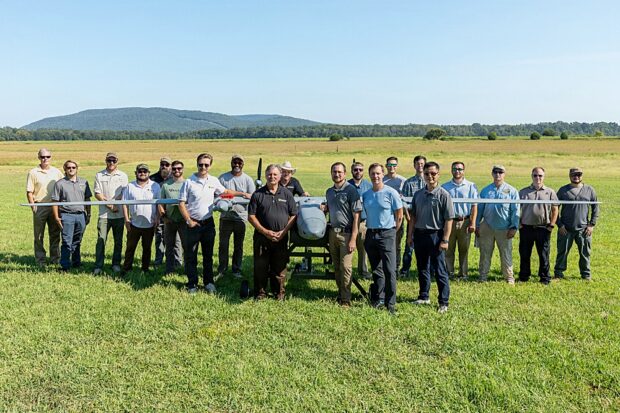
Years of Army scientific research culminated in the successful flight demonstration of a 3D-printed heavy-fuel rotary-engine series-hybrid system, advancing power and propulsion science for future tactical unmanned aircraft systems.

UAS VISION
an independent online news service for the Unmanned Aircraft Systems world
Years of Army scientific research culminated in the successful flight demonstration of a 3D-printed heavy-fuel rotary-engine series-hybrid system, advancing power and propulsion science for future tactical unmanned aircraft systems.
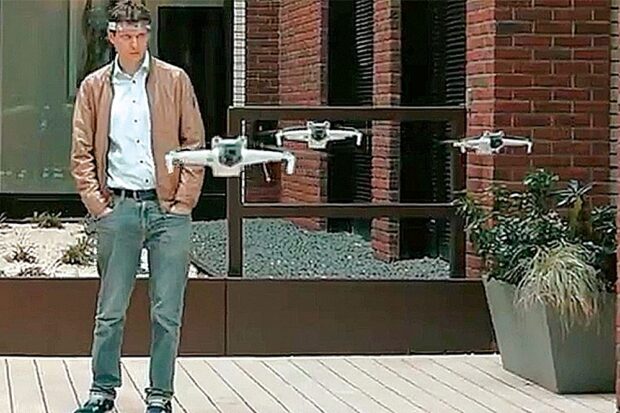
Outside a nondescript office building in the north of England in late September, a “pilot” commanded three drones to take off and fly around the courtyard. Continue reading
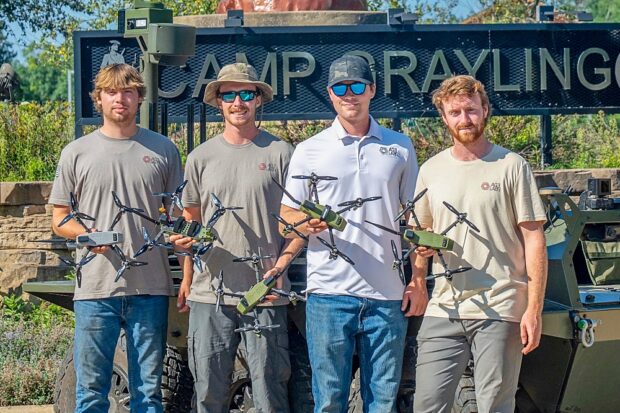
Five years ago, Gavin Gardner was a Michigan State University engineering student researching next-generation drone technology as part of a NASA grant. Garder expected the research to be demanding – but he was surprised that navigating the financial side of the work presented an even greater challenge. Continue reading
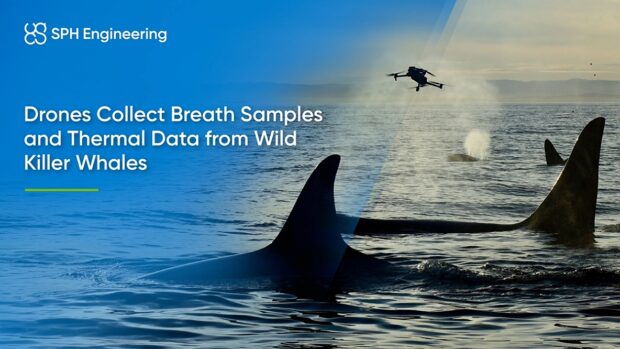
San Diego Zoo Wildlife Alliance, winner of the Academia & Research category at the Global Drone Operations Awards 2026, combined drone-based breath collection and thermal imaging to study the health of wild killer whales, or orcas, in the Salish Sea.
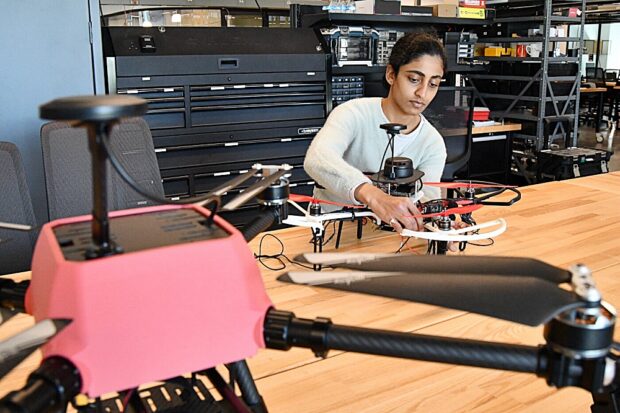
Engineers at the University of Cincinnati are using sound to help NASA detect if a drone’s motors or propellers are damaged to prevent a crash. UC College of Engineering and Applied Science doctoral student Prissha Chawla and her research partners recorded the various sounds that drones make when their propellers get chipped or cracked or their motor becomes damaged or begins to fail.
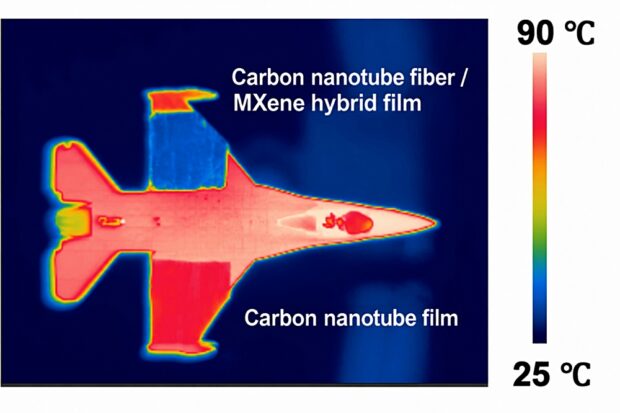
A research team led by Dr. Taehoon Kim of the Composites & Convergence Materials Research Division at the Korea Institute of Materials Science (KIMS), headed by President Chul-jin Choi, has collaborated with research teams led by Dr. Seon Joon Kim and Dr. Jaewoo Kim of the Korea Institute of Science and Technology (KIST) to develop an ultrathin composite film that combines electromagnetic interference (EMI) shielding, infrared (IR) stealth, and high mechanical strength. Continue reading
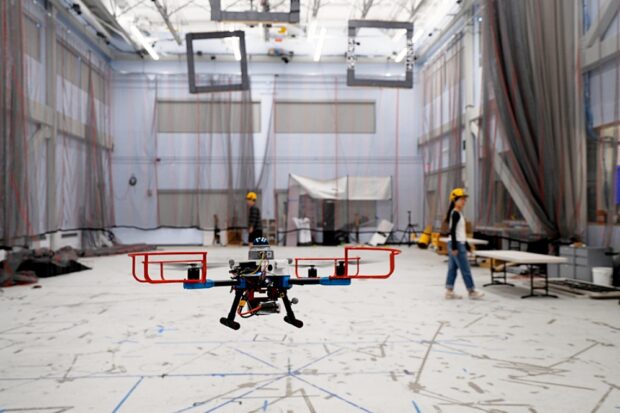
Unmanned aerial vehicles (UAVs) could fly deep into the heart of a raging wildfire, avoiding sudden flare-ups and dodging falling tree branches to gather critical information for rescuers. But in this dangerous situation, the UAV could easily be damaged or destroyed by falling debris. Continue reading
