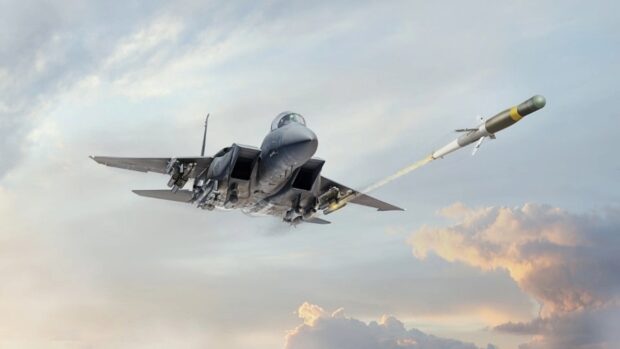
British citizens and regional partners will be better protected against drone attacks as the Royal Air Force deploys a new low-cost anti-drone weapon on operations in the Middle East. Continue reading

an independent online news service for the Unmanned Aircraft Systems world
British citizens and regional partners will be better protected against drone attacks as the Royal Air Force deploys a new low-cost anti-drone weapon on operations in the Middle East. Continue reading
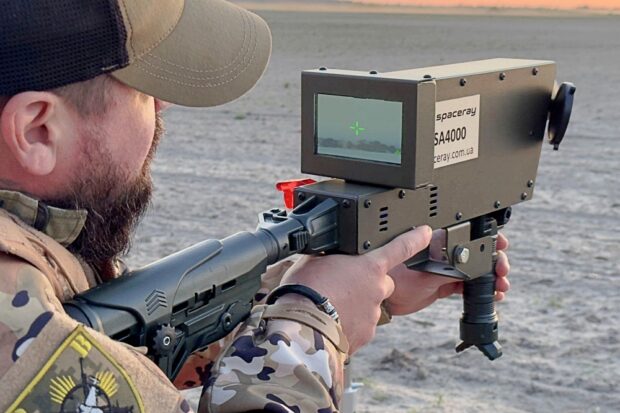
Ukrainian forces have turned to lasers to spot and track drones in complete darkness, aiming to improve nighttime targeting while reducing the cost of countering low-cost aerial threats.

BAE Systems Geospatial eXploitation Products (GXP) and Vantor, a provider of unified spatial intelligence, have announced that they will be providing advanced intelligence and targeting capabilities for contested electronic warfare (EW) environments. Continue reading

Motorola Solutions has just announced a $100 million plan to scale and diversify the manufacturing and supply chain operations of Silvus Technologies, a global leader in advanced tactical networking and electromagnetic spectrum operations (EMSO). Continue reading
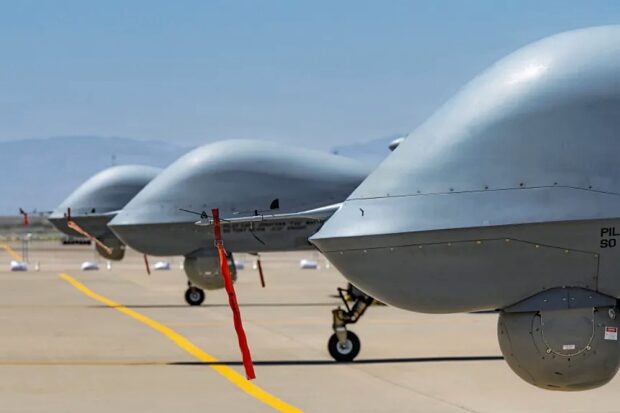
US. Air Force Futures has approved a requirements document for an aircraft that will replace the General Atomics Aeronautical Systems Inc. MQ-9A Reaper, Major General Christopher Niemi told lawmakers on May 12. Continue reading
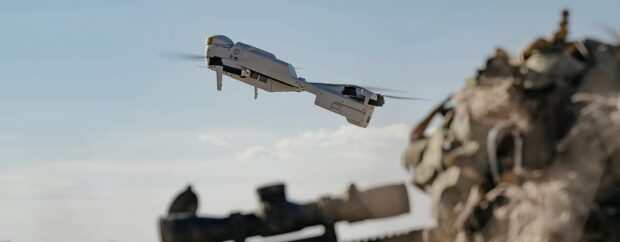
Teledyne FLIR Defense, part of Teledyne Technologies Incorporated, announced that its Rogue 1 loitering munition system has been selected by the U.S. Army for its Low Altitude Stalking and Strike Ordnance (LASSO) program. Continue reading
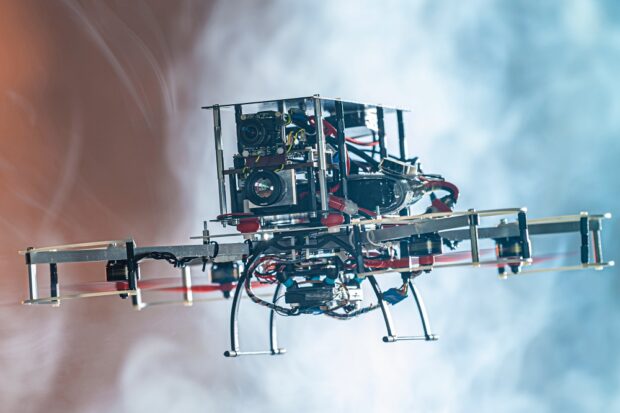
Researchers at the Karlsruhe Institute of Technology (KIT) have developed a new concept for drone defence: Thin chains are fired at incoming drones, entangled in their rotors, and bring them down in a controlled manner. Simulations and initial field tests demonstrate the basic functionality of this approach. Continue reading

It looked outdated almost the moment it was created. In the early 1960s, as the Pentagon obsessed over supersonic jets and nuclear warfare, two frustrated Marine Corps officers believed the military was building the wrong aircraft for the wars soldiers were actually fighting. They wanted something slower, simpler, and capable of staying close to troops on the ground for hours at a time. Continue reading