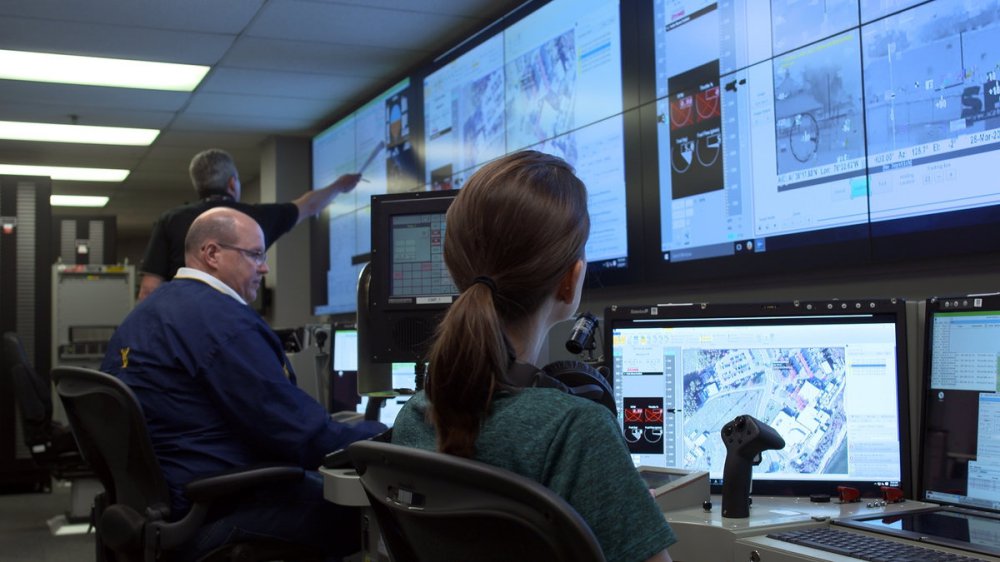
Members of the 812th Civil Engineer Squadron teamed with the Emerging Technologies Combined Test Force to use small unmanned aircraft systems to increase their emergency response capabilities during two aircraft crash exercises held July 31 and Aug. 3. Continue reading
Microsoft Tests Self-Flying Gliders in Rural Nevada
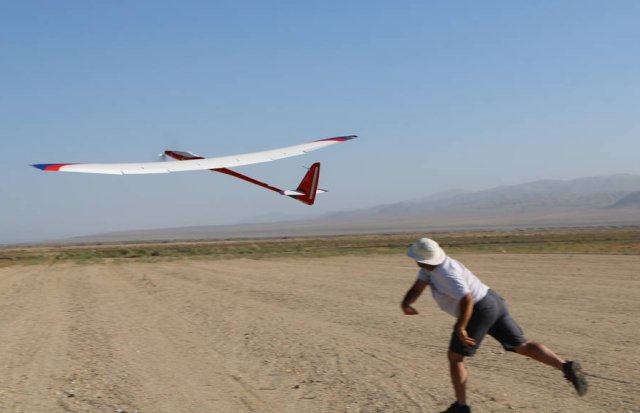
Microsoft is already thinking about self-flying airplanes. The tech giant tested such technology in Hawthorne, 130 miles south of Reno, last week with the help of the Governor’s Office of Economic Development and the Nevada Institute for Autonomous Systems. Continue reading
Grumman F7F Tigercat – Bad Kitty Tribute
The Grumman F7F Tigercat is a heavy fighter aircraft that served with the United States Navy (USN) and United States Marine Corps (USMC) from late in World War II until 1954. It was the first twin-engined fighter to be deployed by the USN. While the Tigercat was delivered too late to see combat in World War II, it saw action as a night fighter and attack aircraft during the Korean War. Continue reading
US Naval Research Lab Tests Stackable CICADA Microdrones Swarm
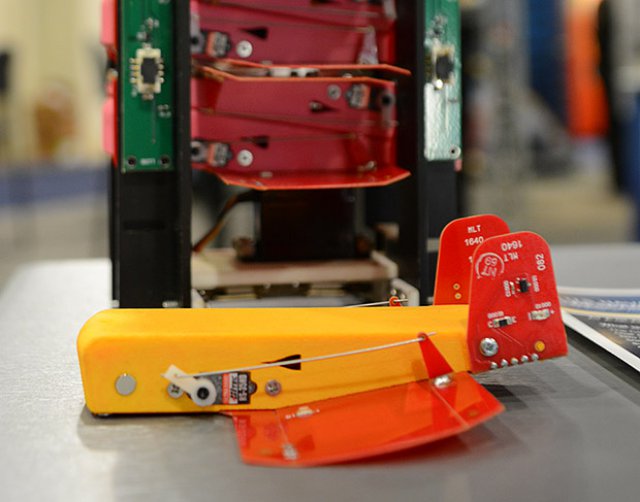
The U.S. Naval Research Lab has been working on its CICADA (Close-In Covert Autonomous Disposable Aircraft) drones since at least 2011. The tiny drones are designed to be carried aloft by other aircraft and dropped, whereupon they’ll use GPS and little fins to glide to within 15 feet of their destination. Continue reading
DARPA Elevated Sensor Mast Tested on US Navy Vessel
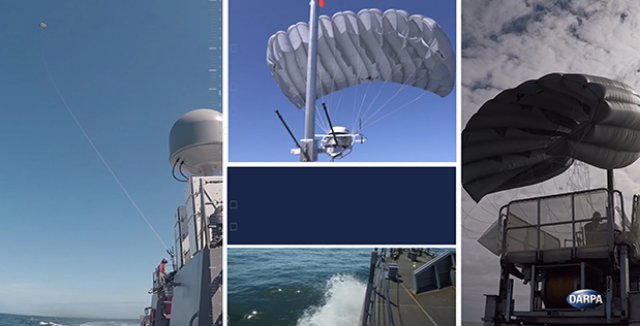
DARPA’s Towed Airborne Lift of Naval Systems (TALONS) research effort recently demonstrated its prototype of a low-cost, elevated sensor mast aboard a commissioned U.S. Navy vessel for the first time. The crew of USS Zephyr, a 174-foot (53-meter) Cyclone-class patrol coastal ship, evaluated the technology demonstration system over three days near Naval Station Mayport, Florida. Continue reading
Future Mission Control System Key to UAS Flying Off Carriers

A team from the U.S. Navy’s Naval Air Systems Command simulates the operation of the future MQ-25 during a demo of the Unmanned Carrier Aviation Mission Control System at Naval Air Station Patuxent River, Md.
The US Navy says it is moving full-throttle on plans to fly unmanned aircraft off of carriers. The planned MQ-25A will serve primarily as a refuelling platform, with the capacity to carry out some intelligence missions. The first unmanned craft to fly off a carrier, it is slated to deploy on the aircraft carriers Dwight D. Eisenhower and George H.W. Bush as early as 2019. Continue reading
First Full Inspection of Airlander Hull Completed
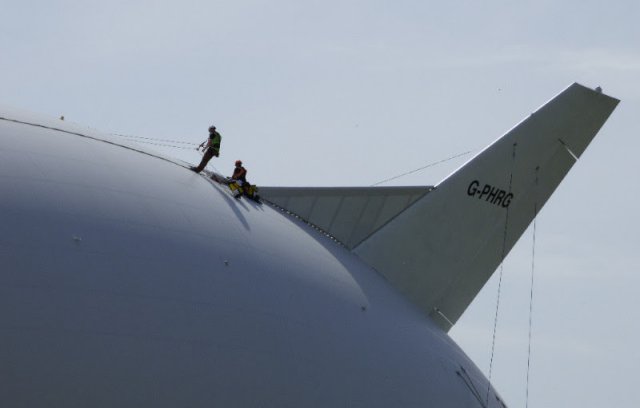
The first full inspection of Airlander’s hull was completed last week by HAV’s team of aerospace technicians as part of ongoing analysis during the Flight Test Progamme. Continue reading
Airborne Computer Network Platform for UAVs
Yan Wan, an associate professor in UTA’s Department of Electrical Engineering, is the team lead on a three-year, $998,803 grant from the National Science Foundation that will develop a networked airborne computing platform for multiple unmanned aerial systems.