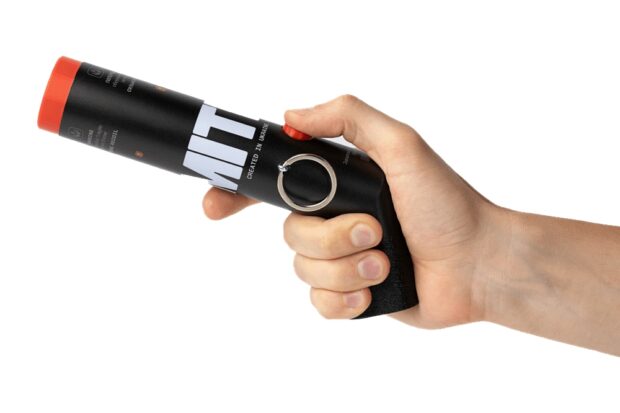
Ukrainian defense company TENETA has developed a new lightweight, single-use anti-drone device designed to counter enemy FPV drones and reconnaissance quadcopters. Continue reading

an independent online news service for the Unmanned Aircraft Systems world
Ukrainian defense company TENETA has developed a new lightweight, single-use anti-drone device designed to counter enemy FPV drones and reconnaissance quadcopters. Continue reading
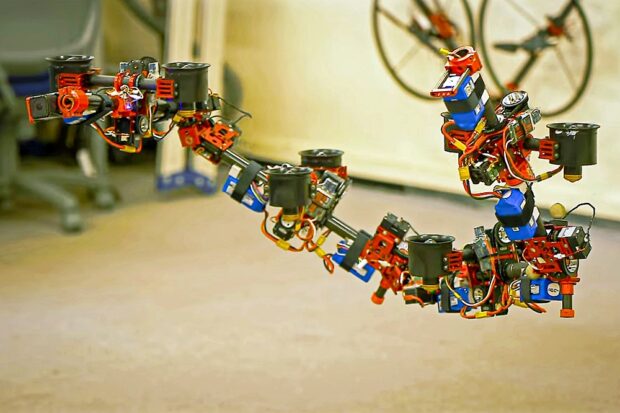
Engineers at the University of Tokyo JSK Robotics Laboratory had been working on a drone that represents the latter called the “Dual-Rotor embedded multilink robot with the Ability of multi-deGree-of-freedom aerial transformatiON” – a mouthful, so just DRAGON for short. Continue reading
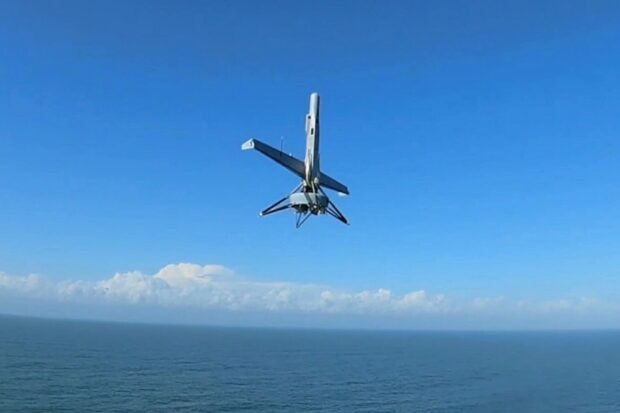
– Shield AI, the deep-tech company building state-of-the-art autonomy software products and defense aircraft, has announced that the Netherlands Ministry of Defence has procured eight V-BAT unmanned aircraft systems to enhance maritime intelligence, surveillance and reconnaissance (ISR) operations for the Royal Netherlands Navy and Marine Corps. Continue reading
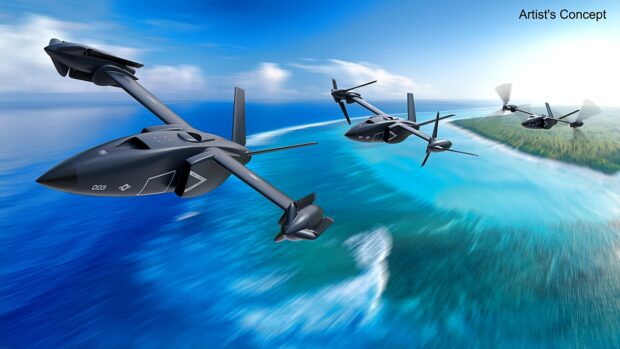
– Bell Textron Inc., a Textron Inc. company, has been down-selected for Phase 2 of Defense Advanced Research Projects Agency (DARPA) Speed and Runway Independent Technologies (SPRINT) X-Plane program with the objective to complete design, construction, ground testing and certification of an X-plane demonstrator. Continue reading

– TEKEVER, a European provider of AI-driven autonomous systems, has chosen Cahors as the location for its new Centre of Excellence for dual-use autonomous systems in France. This choice is the result of close collaboration with the Occitanie region, which played a major role in supporting the company at every stage of the process. Continue reading
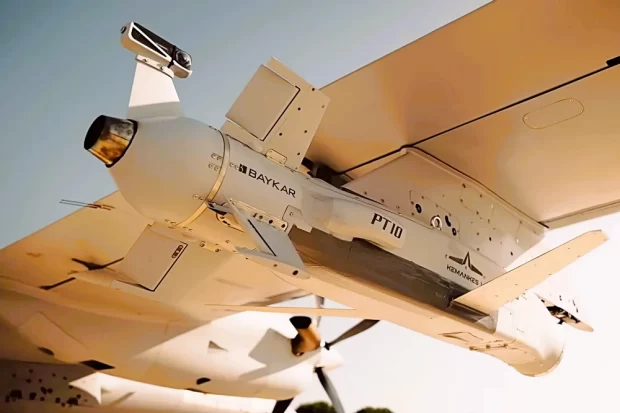
In a demonstration of multi-domain versatility, the Turkish drone manufacturer Baykar has achieved a milestone by proving that its AI-powered Kemankeş 1 loitering munition can engage airborne threats, not just ground targets. Continue reading
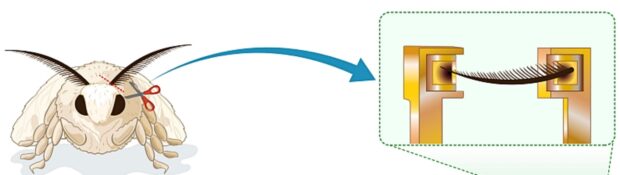
Conventional drones use visual sensors for navigation. However, environmental conditions like dampness, low light, and dust can hinder their effectiveness, limiting their use in disaster-stricken areas. Researchers from Japan have developed a novel bio-hybrid drone by combining robotic elements with odor-sensing antennae from silkworm moths. Continue reading
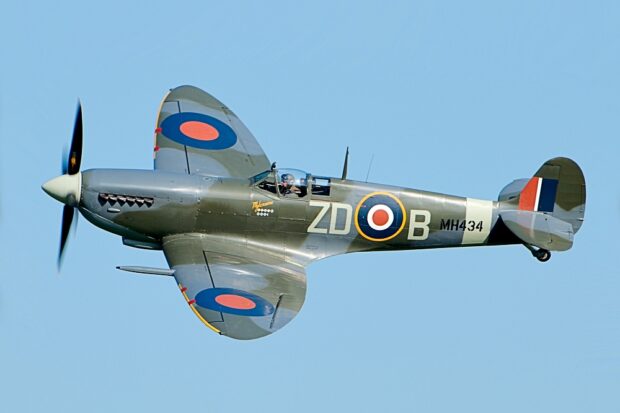
A Spitfire tears over an English village, skimming over the treetops. Below, an old woman drops her basket in shock. Flight Lieutenant “Geoff” Wellum shouts, “Sorry if I frightened you, my love!”, grinning widely. Nineteen years old. Barely six hours of solo time. And here he is, gripping the controls of a Supermarine Spitfire Mk I. With a top speed of 370 miles per hour, it feels like flying a wild animal. Geoff grins widely. Continue reading