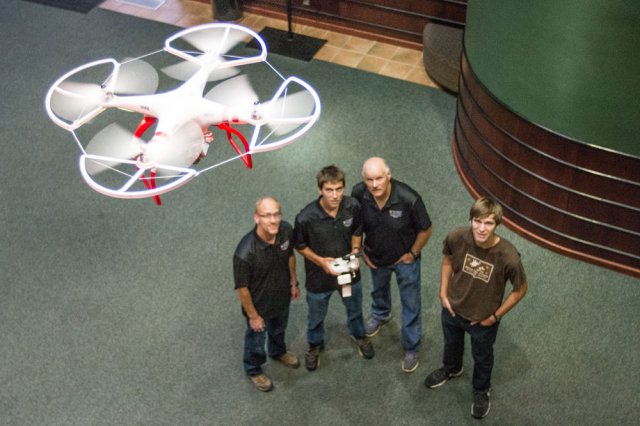
Global spending on unmanned aerial vehicle (UAV) programs is expected to triple over the next decade in military, commercial, and consumer markets, according to analysts at Teal Group in a new market analysis. They estimate that UAV production will rise from current worldwide UAV production of $4 billion annually to about $14 billion, totaling $93 billion over the next ten years. Military UAV research spending would add another $30 billion over the same decade. Continue reading
Category Archives: Research
Warsaw University of Technology & Lockheed Martin Conclude UAS Research
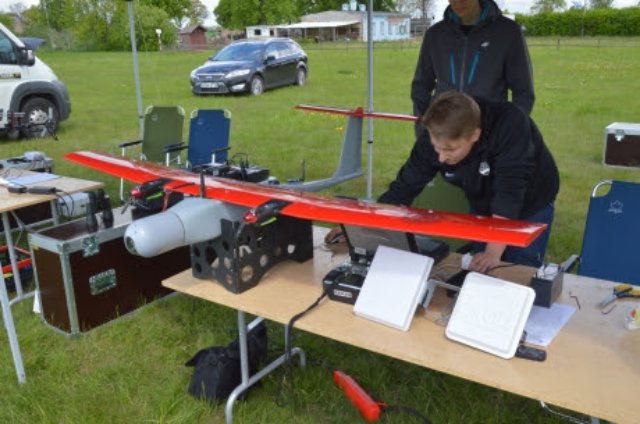
The Warsaw University of Technology (WUT) and Lockheed Martin celebrated the successful conclusion of a joint advanced applied research program focused on the integration between manned and unmanned airborne platform systems. The program builds on the strong industrial and academic partnership between Poland and Lockheed Martin aimed at motivating young Polish engineers to address tomorrow’s defense and industrial needs. Continue reading
Invisible Cloak for Military UAS
Scientists are working on creating a new design for a technology that redefines what the public views as imaginary. Inspired by the well-known Invisibility Cloak from Harry Potter, electrical engineers at the University of California, San Diego have created a new design for their cloaking device, using a Teflon substrate, studded with cylinders of ceramic, that is thinner than any prior development and does not alter the brightness of light around concealed objects. Continue reading
DARPA Plans Aircraft-Launched, Reusable Drones
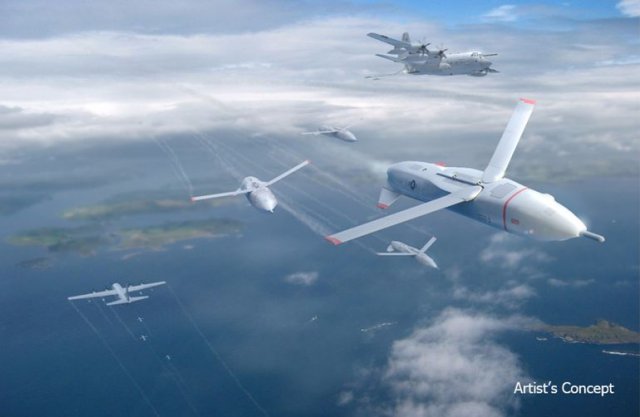
Drones that can be launched from military transport and fighter aircraft are the subject of a new project of the US Defence Advanced Projects Agency (DARPA). Continue reading
Lockheed Skunk Works Next-gen U-2 Spy Plane
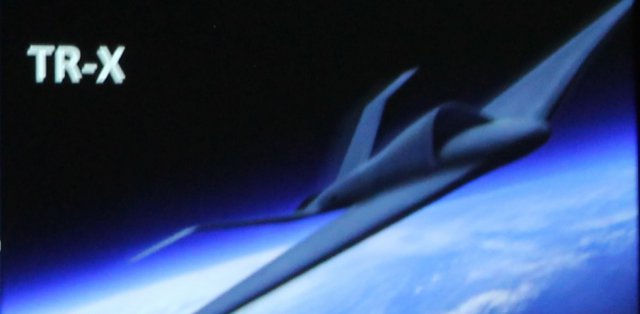
Lockheed Martin Skunk Works is designing a next-generation high-altitude, long-endurance (HALE) surveillance airplane, known internally as RQ-X or UQ-2, as an optionally-manned successor to the U-2 and Northrop Grumman RQ-4 Global Hawk. Continue reading
US Naval Research Lab’s Flying-Swimmer (Flimmer) UAV/UUV
NRL is merging two separate research areas — unmanned undersea vehicles (UUVs) and unmanned air vehicles (UAVs) — to significantly improve tactical availability of UUVs in time critical situations. Common across the services, autonomous vehicles are being seen as an effective projection of force, both above and below the water’s surface. Unlike an air-deployed Sonobuoy, ongoing research into novel bio-inspired UUV finned propulsion has potential benefits for autonomous motion beyond the insertion point. This combination of an airplane mode for UUV insertion is the thrust of the Flimmer program. Continue reading
South Korea Downs Drones With Sound
Researchers at the Korea Advanced Institute of Science and Technology (KAIST) in Daejon, South Korea, analyzed the effects of resonance on a crucial component of a drone, its gyroscope.Their paper will be presented next week at the 24th USENIX Security Symposium in Washington, D.C. Continue reading
NASA Grant for KU Student’s Drone Radar System
Kansas University student Lei Shi, an electrical engineering doctoral candidate, is developing tiny on-board radar systems to help keep small commercial drones from crashing into things — one of the biggest safety concerns keeping such unmanned aerial vehicles, or UAVs, mostly grounded by FAA regulations.