The ‘Green Brain Project’ combines computational neuroscience modelling, learning and decision theory, modern parallel computing methods, and robotics with data from state-of-the-art neurobiological experiments on cognition in the honeybee Apis mellifera.
Category Archives: Research
MIT Swarming Quadcopter can Float on Water
Researchers from the Massachusetts Institute of Technology (MIT) have created a drone that can float on water and communicate with other drones via the cloud. Continue reading
Smartphone Controlled Quadcopter
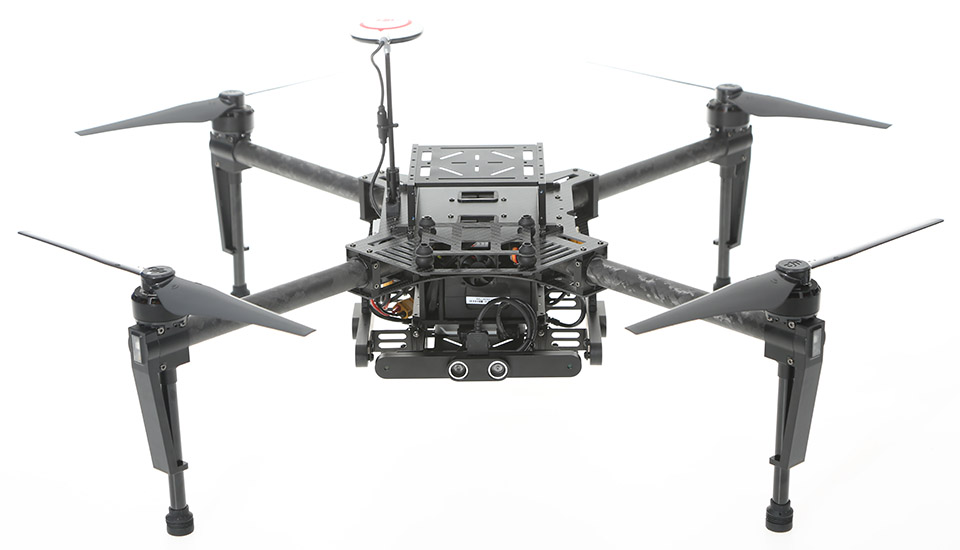
At the University of Pennsylvania’s Vijay Kumar Lab, Dr. Kumar and his students have been developing advanced, autonomous drones that are assembled from off-the-shelf parts. The drone itself is bare bones: a frame, battery, four motors and props, and a motor controller. As for the phone they’re using, it’s not a special prototype or a developer-only device like Google’s Project Tango. It’s an ordinary Samsung Galaxy phone. Continue reading
New Technology Allows Safe UAS Operation BLoS
“Our new technology allows safe operation of drones beyond the operator’s line of sight, which is crucial for commercial use of drones, such as parcel delivery,” says Prof. Davide Scaramuzza, co-inventor and Director of the Robotics and Perception Group at the University of Zurich. Continue reading
eMotionButterflies – Ultralight Flying Objects with Collective Behaviour
Flying is a recurring theme in the Bionic Learning Network. The developers channelled their knowledge gained from the projects on the BionicOpter and the eMotionSpheres into the bionic butterflies. They combine the ultralight construction of artificial insects with coordinated flying behaviour in a collective. Continue reading
DARPA’s System of Systems Integrates UAS
DARPA’s System of Systems (SoS) Integration Technology and Experimentation (SoSITE) program aims to develop and demonstrate concepts for maintaining air superiority through novel SoS architectures—combinations of aircraft, weapons, sensors and mission systems—that distribute air warfare capabilities across a large number of interoperable manned and unmanned platforms. The vision is to integrate new technologies and airborne systems with existing systems faster and at lower cost than near-peer adversaries can counter them. Continue reading
Balloon-Assisted UAV Brings Back Stratospheric Aerosol Samples from Altitude of 22 km in Antarctica
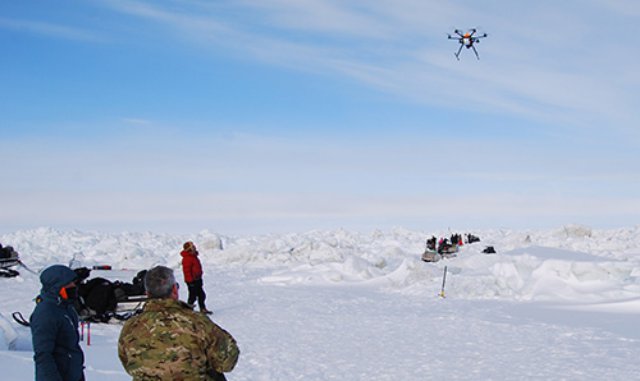
A balloon-assisted UAV (Unmanned Aerial Vehicle) named “Phoenix-S1,” developed by Kyushu University and Fukuoka University, Japan, has successfully brought back stratospheric aerosol samples from the altitude of 22 km and observed aerosol density at the altitude of 23 km in Antarctica on January 24, 2015.