
A NOAA Fisheries research team flying a remotely operated hexacopter in Washington’s San Juan Islands in September collected high-resolution aerial photogrammetry images of all 81 Southern Resident killer whales that showed the endangered whales in robust condition and that several appear to be pregnant. Continue reading
Category Archives: Research
University Tests Graphene-Coated UAV Wing
The city-based University of Central Lancashire is working on a research initiative, between the University of Central Lancashire’s Engineering Innovation Center (EIC), and The University of Manchester’s National Graphene Institute which has just seen the first flight of a UAV part-constructed with graphene. Continue reading
Sonar Navigation, Mapping System for UAVs
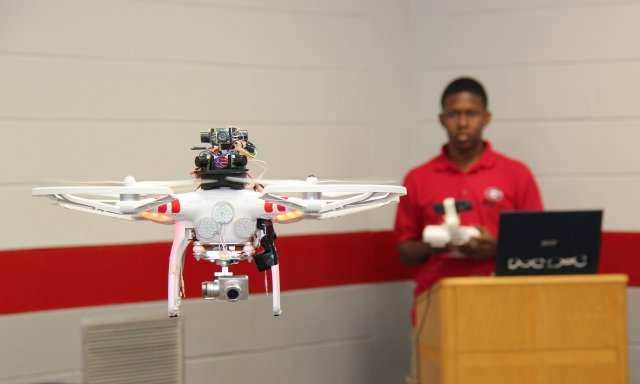 Researchers at the University of Georgia are working to bring a new level of precision to the navigation systems used to guide drones. The work is supported through a contract with Southern Company, one of the nation’s largest energy companies, which plans to use unmanned aircraft to enhance safety for crews in the field and improve reliability for customers. Continue reading
UAS for Animal Distribution Studies Research
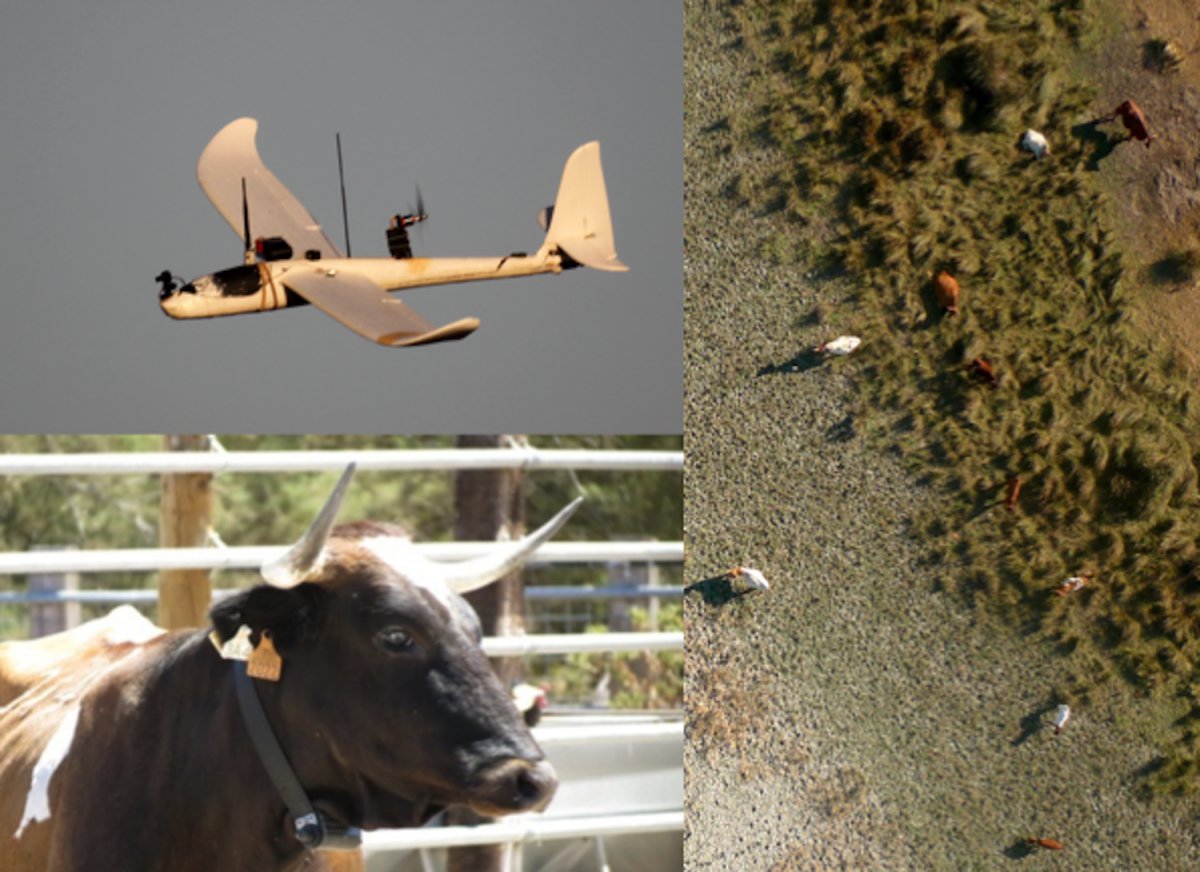 A team led by the Doñana Biological Station, Spanish National Research Council (DBS, CSIC) has used Unmanned Aircraft Systems to model the spatial distribution of free-ranging cattle in Doñana National Park, Spain.
Icarus – DARPA’s Vanishing Air Vehicles Programme
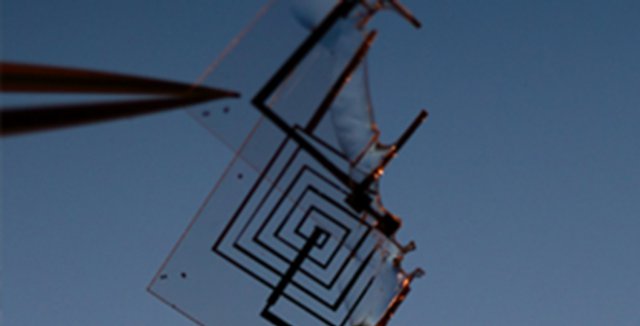 It sounds like an engineering fantasy, or maybe an episode from Mission Impossible: A flock of small, single-use, unpowered delivery vehicles dropped from an aircraft, each of which literally vanishes after landing and delivering food or medical supplies to an isolated village during an epidemic or disaster. And it would be nothing more than a fantasy, were it not that the principle behind disappearing materials has already been proven. Continue reading
Unmanned Aircraft in Canadian Wildlife Study
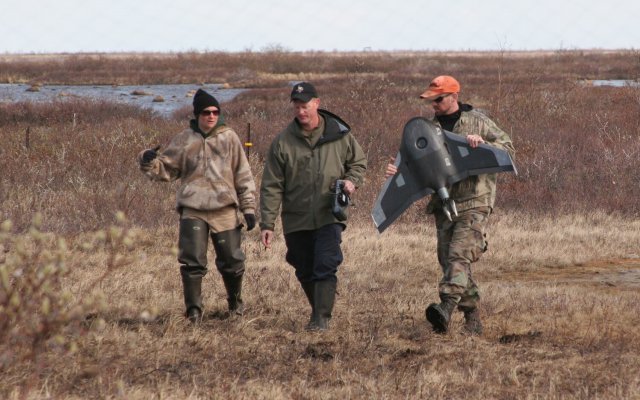 In a portion of Manitoba, Canada, so remote you have to fly in by helicopter, a research team led by the University of North Dakota and the American Museum of Natural History spent the summer in the polar bear capital of the world deploying the latest tool – Unmanned Aerial Systems (UAS) — in a nearly five-decade-old ecological study.
University of Minnesota to Develop World’s Smallest Solar-Powered UAV
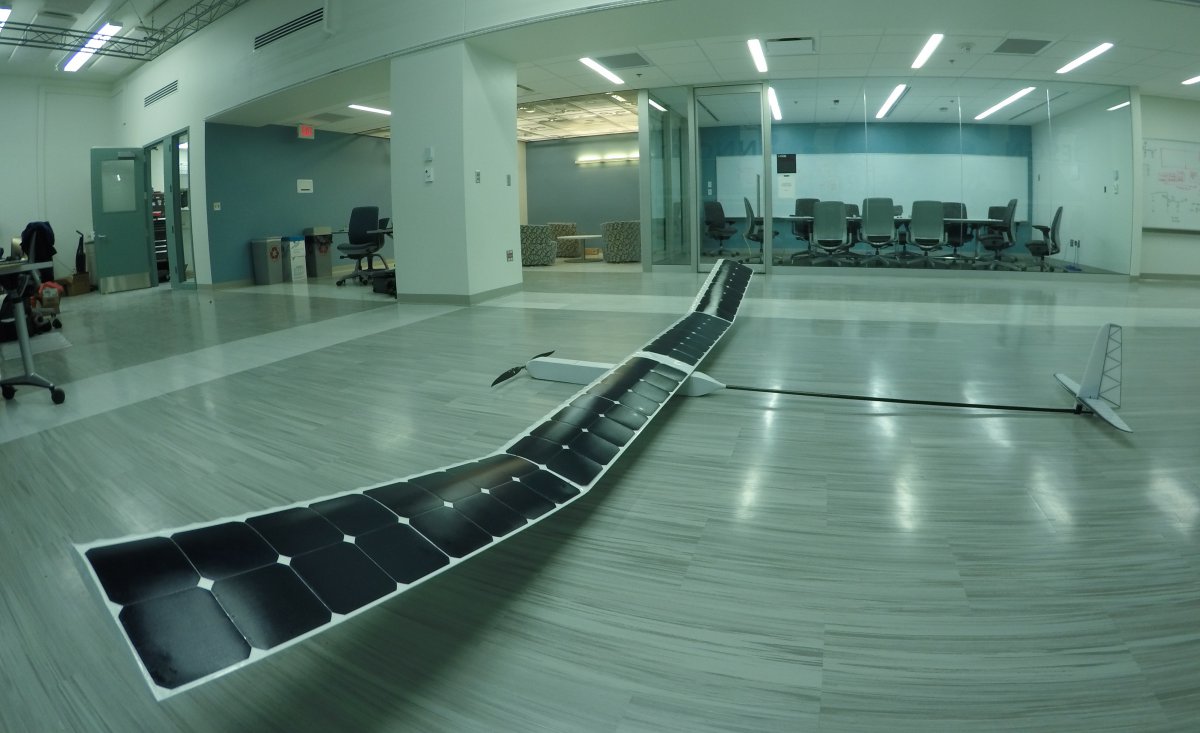 The National Science Foundation has awarded a grant of $1,525,000 to a University of Minnesota team led by Prof. Nikos Papanikolopoulos to develop the world’s smallest solar-powered unmanned air vehicle (UAV) capable of multi-day flight.
Quadcopters Weave a Rope Bridge
Using quadrocopters and some rope, researchers have woven together a bridge strong enough to walk across. Made at the ETH Zurich Flying Machine Arena in Switzerland, the bridge joins two scaffolds, and is the first full-scale load-bearing structure autonomously built by flying machines. The feat represents one more step in the field of robotic aerial construction. Continue reading