
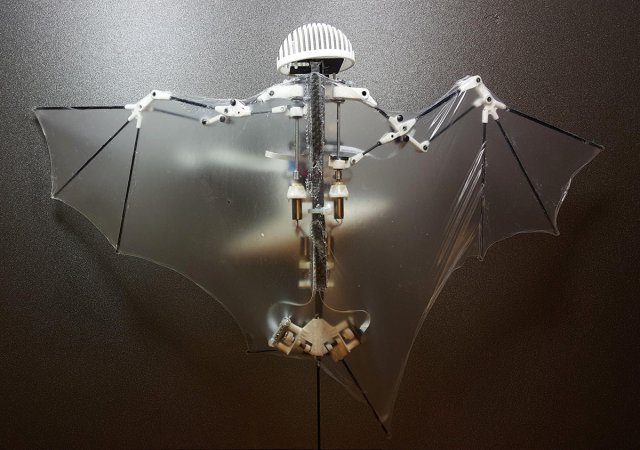
 It swoops, flaps and dives just like the animals it was designed to mimic. Inspired by the flexibility and agility of bats and their wings, a team of engineers has come up with an autonomous flying robot with the same skills – one that could ultimately be used to survey building sites from the air.
Category Archives: Research
DARPA Announces OFFSET Proposers Day
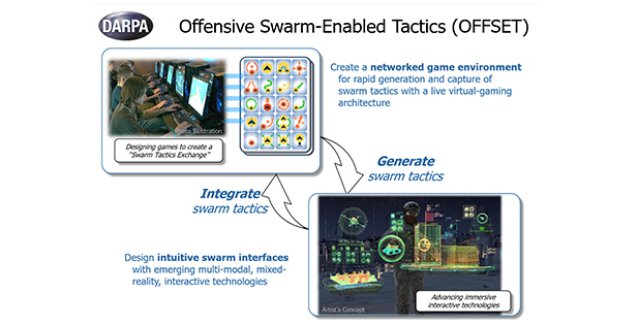
DARPA’s Tactical Technology Office (TTO) is hosting a Proposers Day to provide information to potential applicants on the structure and objectives of the new OFFensive Swarm-Enabled Tactics (OFFSET) program. Continue reading
Northrop Grumman Sponsors UK Young Engineers UAS Challenge
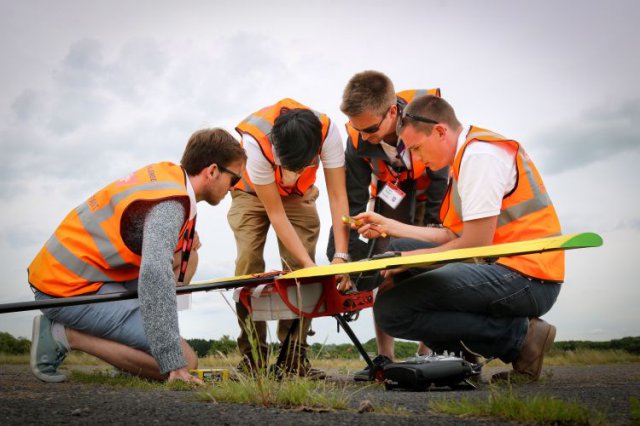 Northrop Grumman Corporation is sponsoring, for the third consecutive year, the UK Institution of Mechanical Engineers’ annual Unmanned Aircraft Systems Challenge as part of the company’s global commitment to encourage innovative thinking in engineering and technology, and inspire young engineers of the future.
Drone Flight Tests FAA Spacecraft Re-entry Technologies
 High-altitude drone tests new Federal Aviation Administration, FAA, surveillance technologies potential to support commercial spacecraft.
US Army Flies Hoverbike Prototype
The U.S. Army Research Laboratory and industry partners demonstrated the flying capabilities of a unique rectangular-shaped quadcopter during a visit from DOD officials at APG Jan. 10. Continue reading
DARPA Funds Cardboard UAV Project
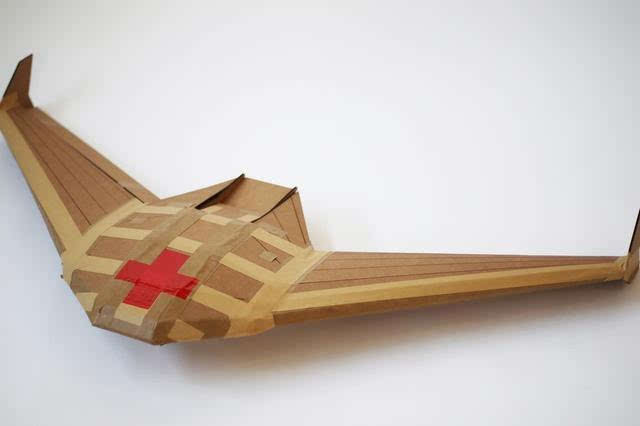
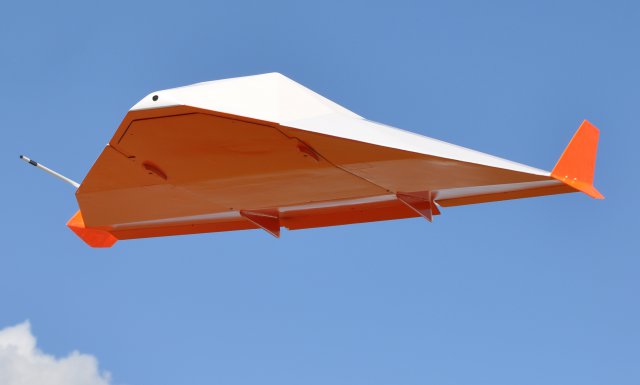
A new research project funded by DARPA, the United States military’s experimental technology arm, has developed an autonomous drone made out of cardboard that can fly twice the distance of any fixed-range aircraft because it’s disposable. The drone only goes one way. Continue reading
DARPA’s Top Ten Stories of 2016

DARPA’s technology portfolio comprises about 250 paradigm-challenging programs across dozens of fields, from quantum metamaterials and machine learning to neurotechnology and unmanned system autonomy. Throughout the year, the Agency produces updates about newly launched efforts, promising results, and major program accomplishments. Continue reading
Syracuse University Gets $230,000 for UAS Research
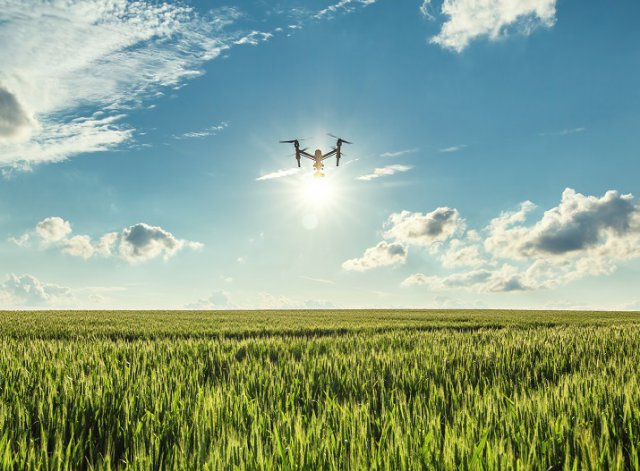
Six collaborative research groups from the University’s various schools and colleges have been awarded more than $230,000 in state revitalization funding for their projects in unmanned aerial systems (UAS). Projects include energy mapping of buildings, autonomous navigation and the development of regulations and policies to integrate unmanned aerial vehicles into communities. An additional $100,000 was also made available to support these projects via shared facilities and capabilities. Continue reading