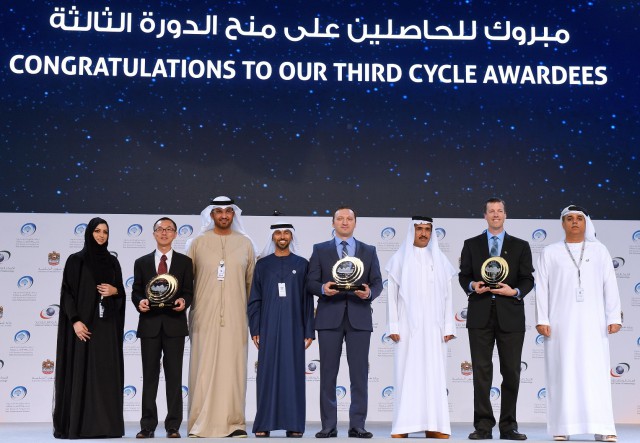
Under the patronage of His Highness Sheikh Mansour bin Zayed Al Nahyan, Deputy Prime Minister of the UAE and Minister of Presidential Affairs, the awardees of the Third Cycle of the UAE Research Program for Rain Enhancement Science were announced and honoured at an exclusive ceremony held as part of Abu Dhabi Sustainability Week (ADSW) 2018. Continue reading
Category Archives: Research
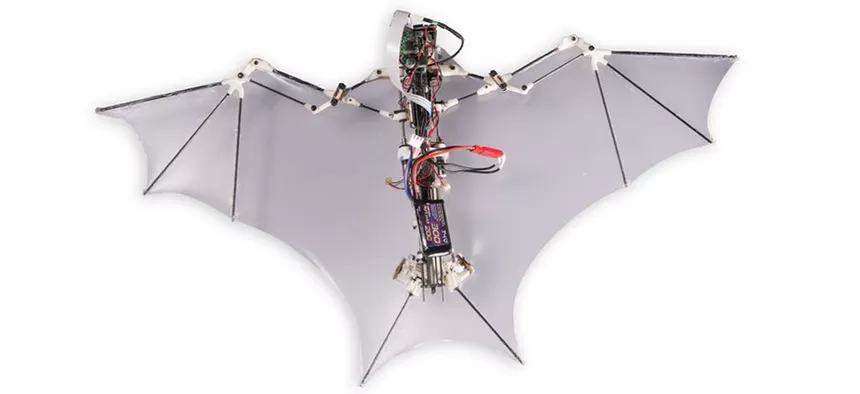
Pentagon Seeks Laser-Powered Bat Drones
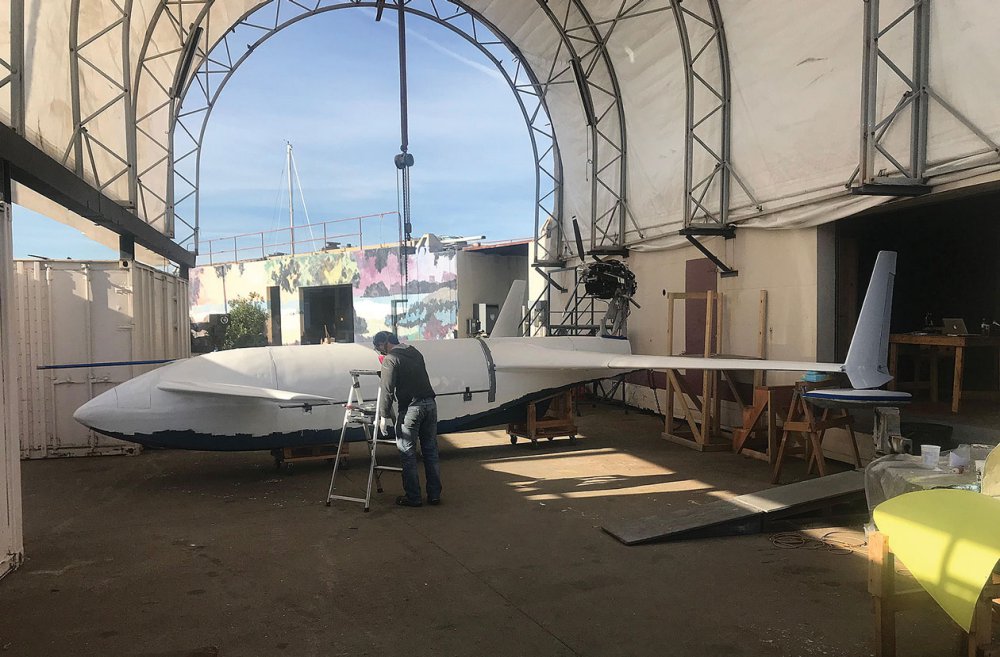
Seaplane Drones to Deliver Freight
Two years after World War II, billionaire Howard Hughes personally piloted his “Spruce Goose” troop transport aircraft on the first and only flight of the largest seaplane ever built. It lasted barely a minute. Now, more than 70 years later, a U.S. startup is testing a new seaplane concept—one that could evolve into huge cargo drones that fly 109 metric tons of freight across the Pacific, touch down autonomously over water, and unload at ports around the world. Continue reading
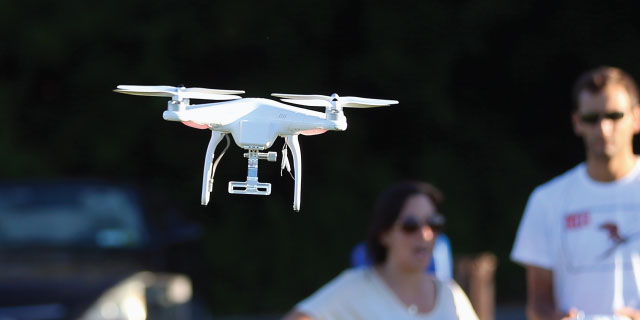
8% of Americans Say They Own a Drone
Drones are catching on as consumer goods. As of mid-2017, 8% of Americans say they own a drone and 59% say they have seen one in action, according to a Pew Research Center survey. But while drones – that is, aircraft without on-board human pilots – are more prevalent than they were a few years ago, many have reservations about where and under what circumstances their use should be allowed. Continue reading
Lockheed Martin UAE Payload Challenge
The inaugural Unmanned Aerial Systems Payload Design Challenge brings university students together from across the United Arab Emirates to design, develop and integrate payloads with commercial and industrial applications. Continue reading
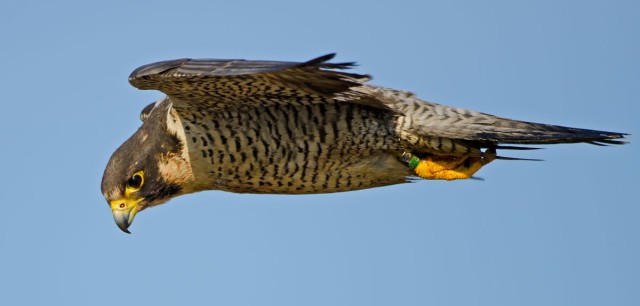
Replicating Peregrine Attack Strategies Could Help Down Rogue Drones
Researchers at Oxford University have discovered that peregrine falcons steer their attacks using the same control strategies as guided missiles.
Smart Drones Mimic Birds Neural Networks
BAE Systems engineers are mimicking the neural networks of birds to create artificially intelligent drones that could bolster our air defences.
UAV Collision Avoidance Math
The real success for Unmanned Aircraft Vehicles (UAV) will be when they can autonomously operate to complete their appointed task. Autonomous operation means both operating beyond visual line of sight (BVLOS) and the ability to operate independent of a pilot. Before this can happen, UAVs need to be much smarter about their surroundings. A key to smarter UAVs is on-board collision avoidance sensing, such as radar. An understanding of the math behind collision avoidance helps dictate what technologies provide the best option for collision avoidance.