
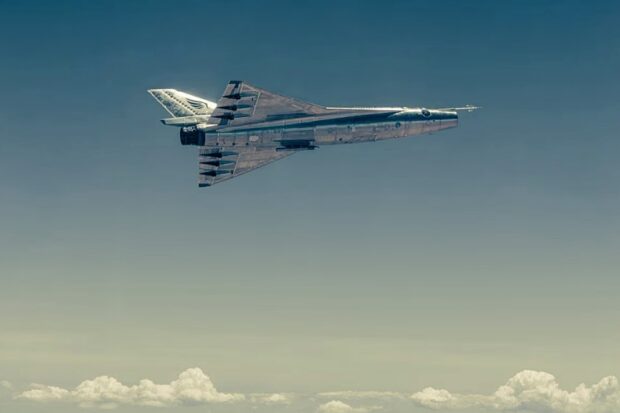
Northrop Grumman and Hermeus Corporation have signed a teaming agreement to rapidly field a new class of autonomous, high‑Mach aircraft to give warfighters faster, more survivable options in combat.
“Defence technology needs to evolve faster than ever before, because our customers need solutions now. Together, we’re giving the military a new operational edge by putting advanced mission kits on aircraft built to move beyond supersonic speeds,”
said Kyle Mimken, program manager at Northrop Grumman, working on these new solutions.
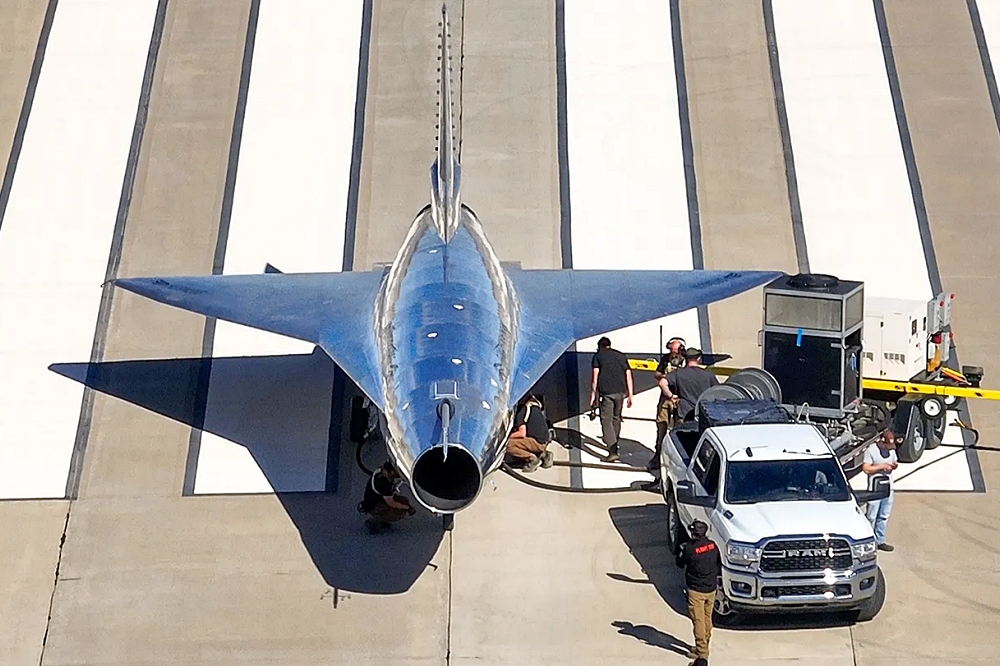
“We’re building a new class of aircraft that gives the warfighter improved speed, range, and flexibility while integrating into the existing Force,”
said Zach Shore, CEO of Hermeus.
“Adding Northrop Grumman’s battle-tested mission systems will push what those aircraft can do in real world scenarios and help us field operational capability faster. Northrop brings decades of experience turning aircraft into effective mission platforms and that’s exactly what we want to tap into.”
The agreement brings together Northrop Grumman’s mission systems and program execution experience with Hermeus’ rapid development approach and in-house mission management system (MMS) core — an open, modular system of systems that keeps flight-critical and mission-critical functions cleanly separated.
Built to the U.S. Government’s Agile Mission Suite and Autonomy Government Reference Architectures (AMS-GRA and A-GRA) and Open Mission Systems/Universal Command and Control Interface (OMS/UCI) standards, the MMS core allows the companies to integrate and update mission capabilities in weeks rather than years as requirements evolve.
By integrating proven mission technology onto rapidly developed, next-generation unmanned aircraft, the companies aim to shorten the path from emerging operational need to tested, fieldable capability for the American warfighter.
Together, both companies are positioned to pursue opportunities across advanced development programs that require both cutting-edge airframe technology and battle-tested mission systems.
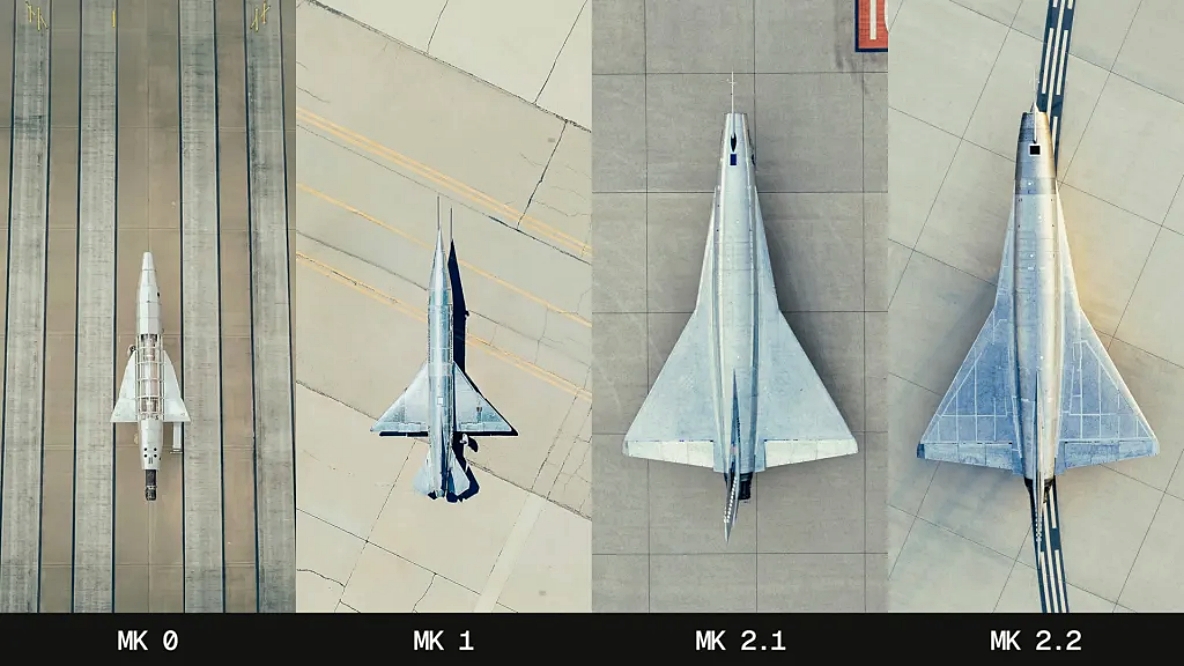
A look at the progression in Hermeus Quarterhorse drone designs to date, starting with the non-flying Mk 0 ‘iron bird’ test rig on the far left. Hermeus
Hermeus, which was founded in 2018, has already flown a succession of ever-more capable unmanned jet-powered Quarterhorse demonstrator drones. The delta-winged Quarterhorse Mk 2.1 was the first of these to break the sound barrier during a test flight in May. The company is now working on a further evolved Quarterhorse Mk 2.2, which it hopes to push beyond Mach 2.
Hermeus’ stated end goal is a design capable of hypersonic flight.
Quarterhorse Mk 2.1 has already demonstrated the ability to release stores at high speed. In September, Hermeus also unveiled Ramjet-X, a smaller ramjet-powered platform that can be air-launched from Quarterhorse drones, ostensibly to support high-speed flight testing activities, but that could be adapted to operational missions.
Sources: Northrop Grumman; Hermeus; The War Zone