
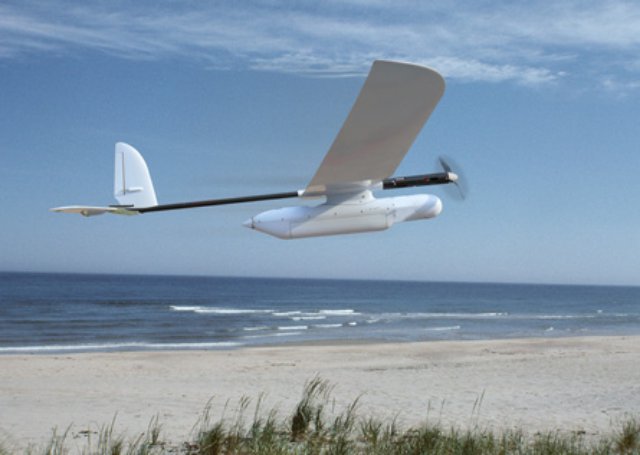
 An unmanned Israeli surveillance aircraft crashed in the Gaza Strip on Sunday after experiencing a technical malfunction, the military said. The military said it was investigating what caused the Skylark UAS to go down. Continue reading
Korea to Go Ahead with Purchase of 4 Global Hawks
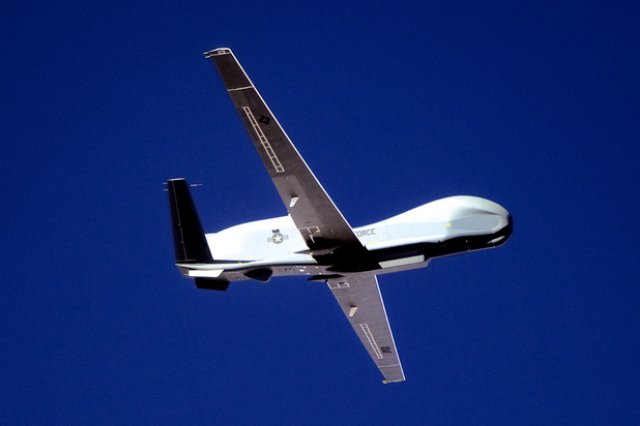 The Korean military has decided to buy four Global Hawk unmanned aircraft systems (UAS) as part of building its kill chain system, an arms procurement officer said last Friday. Continue reading
Northrop Grumman, U.S. Navy Complete First Flight of Next Generation Fire Scout
[youtube 7WW1s9Nqyd8 nolink]
Northrop Grumman Corporation and the U.S. Navy successfully completed the first flight of the next-generation MQ-8C Fire Scout unmanned helicopter at Naval Base Ventura County, Point Mugu, Calif. Continue reading
New Unmanned Aircraft Research Centre Opening in Texas
Texas A&M University has approved the establishment of a new facility for research and testing of unmanned aircraft systems (UAS). The Lone Star Unmanned Aircraft Systems Center (LSUASC), a joint collaboration of Texas A&M University-Corpus Christi and Texas A&M Engineering Experiment Station (TEES), will provide research, testing and training to support the integration of UAS into civil airspace. Continue reading
DJI Phantom Video of New York Public Library
Seems like most likely the first UAS ever flown inside the NY Public Library. If you haven’t been there, go. Everyone in the video was involved in the shoot and lots of safety precautions were taken and no books were harmed in the making of this video. Continue reading
MQ-1B Predator Crashes Outside Holloman Air Force Base
 An MQ-1B Predator Remotely Piloted Aircraft crashed approximately 6 miles northwest of Holloman Air Force Base airfield in New Mexico at 1:45 p.m. on Thursday. Continue reading
SESAR Announces €4M Funding for 9 RPAS Demonstration Projects
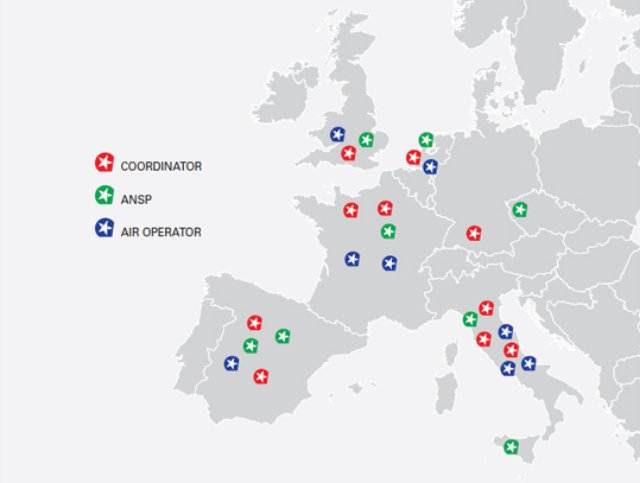
Spread of RPAS Demonstration Projects by Location
The SESAR Joint Undertaking has just announced the demonstration projects selected for funding as a result of a call launched in February 2013 for proposals in order to select and co-finance a series of projects offering SESAR integrated RPAS demonstration activities. Continue reading
Lockheed P-38 Lightning “Fork-Tailed Devil”
The Lockheed P-38 Lightning was a World War II American fighter aircraft built by Lockheed. Developed to a United States Army Air Corps requirement, the P-38 had distinctive twin booms and a single, central nacelle containing the cockpit and armament. It was named “fork-tailed devil” (Zwieselsteißteufel) by the Luftwaffe and “two planes, one pilot” (2飛行機、1パイロット, Ni hikoki, ichi pairotto) by the Japanese. Continue reading