
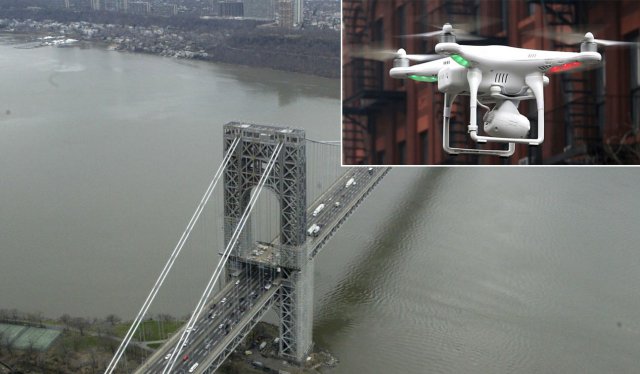
 Two UAS nearly took out an NYPD chopper over the George Washington Bridge on Monday, and cops arrested the wayward crafts’ operators, law-enforcement sources told The Post. The Aviation Unit helicopter was on patrol at around 12:15 a.m. when it had to swerve to avoid the small unmanned aircrafts, the sources said.
Moscow Workshop on UAS
 The 2nd International Workshop on Experimental Unmanned and Electric Flights ERBA-2104 was held on July 1-4 at the MIPT AeroSpace Campus located in Zhukovsky, Moscow Region. It was attended by prominent scientists from countries all over the world including Germany, Japan, Australia and others. Continue reading
Amazon Prime Air Seeks PR Person
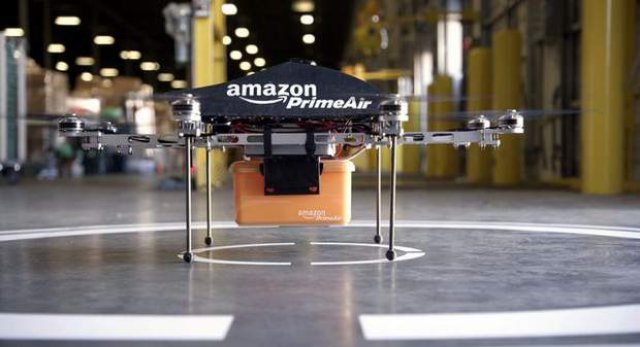 We’re looking for a communications leader for Amazon Prime Air, a new delivery system that will get packages into customers’ hands in 30 minutes or less using unmanned aerial vehicles. In this role, you will develop and execute on the communications program for an innovation coming out of our next generation R&D lab. This is a high-visibility position where you’ll work directly with Amazon senior executives and be an integral part of Amazon’s Strategic Communications team.
Global Hawk Deployment to Japan

Pacific Air Forces officials said the first deployment of the RQ-4 Global Hawk to Misawa AB, Japan, is going well, with weather patterns not affecting sortie generation in any meaningful way thus far. Continue reading
Ecuador and Brazil Manufacture UAS for UNASUR Countries
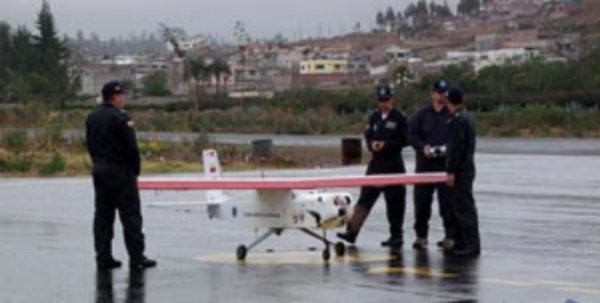 Ecuador is working with Brazil in the manufacture of prototype unmanned aircraft to be used by the countries of the Union of South American Nations (UNSAUR).
UAV Mapping of a Landslide

At the end of May 2014, UPVISION, a Czech unmanned aerial vehicle and mapping company, conducted a UAV survey of a landslide on Highway D8, currently under construction near the city of Litomerice, in the northern part of the Czech Republic. A geological survey was conducted on Highway D8, which had been under construction at the time of the landslide. Continue reading
Fireworks Display Filmed from Inside
South African Jos Stiglingh flew his DJI Phantom 2 drone into the midst of a West Palm Beach, Florida fireworks display in May, and the resulting footage is stunning.Set to a dramatic Andrea Bocelli aria, the footage shows fireworks exploding sometimes right next to the UAS. Continue reading
US Government Accountability Office Calls for Wider Adoption of Open Systems Approach
 Despite some positive developments in implementing an open systems approach to product development, congressional investigators found that the Defense Department faces several challenges, namely a preference to purchase proprietary systems.