
 The council president of the International Civil Aviation Organization (ICAO), Olumuyiwa Benard Aliu, led a special, high-level and technically oriented ICAO fact-finding mission to the United States last week at the invitation of the FAA. The aim of the mission was to ensure that ICAO remains proactive on regulatory developments relating to Remotely Piloted Aircraft Systems (RPAS) and the emerging realm of sub-orbital space flight.
Fully Autonomous and Smart Flying Robotic Waiters
Singapore-based company, Infinium Robotics, is applying advanced drone technology as a way to further automate the job of waiter. Promoted as a technology that can reduce manpower costs and maximize the use of dining room space, Infinium-Serve uses individual drones to deliver food from kitchen to dining room patrons. Continue reading
Man Fined for Crashing Drone over Melbourne Siege
A man in Melbourne, Australia has been fined AU$850 after crashing a recreational drone over a police operation and coming close to injuring one of the police officers on the ground. Continue reading
New UAV Crashes on Demonstration Flight
FOX5 Vegas – KVVU
About 50 dignitaries gathered in the desert for a demonstration flight of Sensurion Aerospace’s flagship Magpie unmanned aerial vehicle collectively gasped as it crashed seconds after a company executive launched the 5-foot aircraft.
Drone Footage Reveals Toxic Pig Waste Lakes
Something stinks in North Carolina, and we’re not talking about the Charlotte Hornets. A documentary filmmaker who flew spy drones over North Carolina pig farms claims to have captured video footage showing oceans of untreated animal waste. Continue reading
Drone Lifesaver Drops Flotation Device to Swimmers
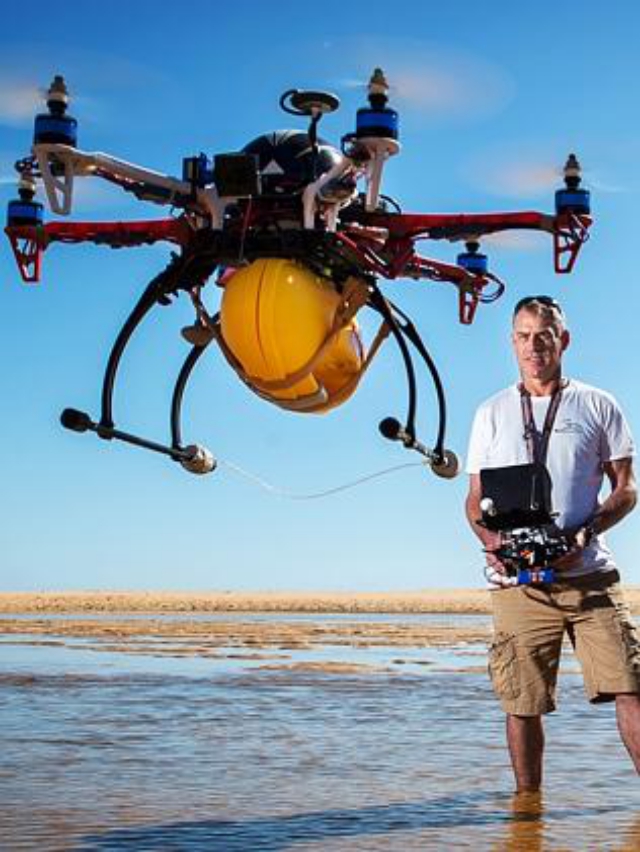 Lifesaving drones could rescue swimmers in distress in a hi-tech pitch to reduce drownings across Australia. Victorian paramedic Robin Lowe has developed a prototype that can hover and release a flotation device in less time than it takes a rescue crew to respond.
MQ-8B Fire Scout First Flight from Coast Guard Ship
The U.S. Coast Guard, in conjunction with Northrop Grumman Corporation and the U.S. Navy, flew the MQ-8B Fire Scout unmanned helicopter off the national security cutter (NSC), USCGC Bertholf (WMSL-750), Dec. 5 off the coast of Naval Base Ventura County, Point Mugu. Continue reading
Time Lapse Inflation of a JLENS Aerostat
Time lapse inflation of a Joint Land Attack Cruise Missile Defense Elevated Netted Sensor System (JLENS) aerostat at Aberdeen Proving Ground, Md., Dec. 14, 2014. JLENS provides national command authorities with increased situational awareness and early warning detection against possible threats. Continue reading