
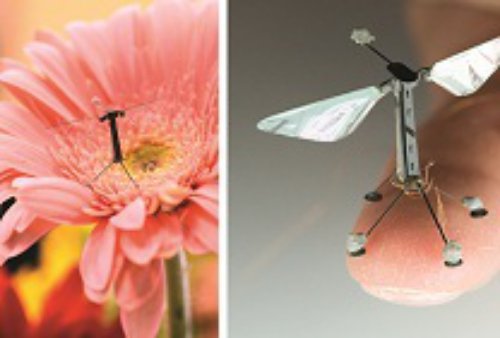
 Based on the mechanisms adopted by birds, bats, insects and snakes, 14 distinguished research teams have developed solutions to some of the common problems that UAS could be faced with when navigating through an urban environment and performing novel tasks for the benefit of society. Continue reading
Category Archives: Research
Quadrotor uses Google’s Project Tango for Autonomous Flight
Early this year, Google unveiled its Project Tango smartphone, a mobile device equipped with a depth sensor, a motion tracking camera, and two vision processors that let the phone track its position in space and create 3D maps in real time. The device is particularly useful for robots, which have to navigate and locate themselves in the world. Continue reading
DARPA Unveils Hack-Proof UAS
 The Pentagon’s research arm unveiled a new UAS built with secure software that prevents the control and navigation of the aircraft from being hacked. The programme, called High Assurance Cyber Military Systems, or HACMS, uses software designed to thwart cyber attacks. Continue reading
Northrop Grumman, RMIT University to Study UAS Airworthiness in Australia
Northrop Grumman Corp. said that it is collaborating with the Royal Melbourne Institute of Technology University to study airworthiness requirements for operating unmanned aircraft systems in Australia. Continue reading
UAS Shipboard Landing Using Real-Time Kinematic (RTK) Technique
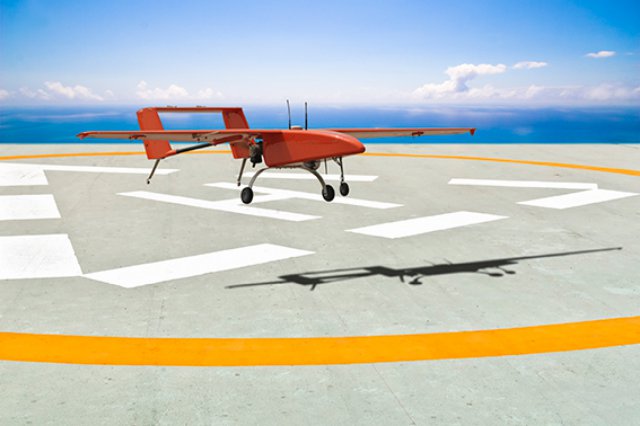 Limited landing area as well as interference due to wind disturbance and wave motion make shipboard landings of unmanned aerial vehicles (UAVs) extremely difficult. Use of UAVs at sea can enhance the efficiency of intelligence gathering and surveillance, and could also increase long-range air-strike capability. To successfully land aircraft in such a challenging environment requires a high-precision navigation system; this prototype applies RTK measurements.
University of Tasmania UAS Maps Vegetation
 The University of Tasmania’s Terra Luma project is using unmanned aircraft systems for environmental and agricultural remote sensing and aerial survey work.
University of Sydney Student’s Prize-Winning UAS Autopilot
A University of Sydney robotics researcher has won the 2014 International Simulink Challenge for pioneering a new autopilot for unmanned aerial vehicles (UAVs). Daniel Wilson, a PhD candidate at the Australian Centre for Field Robotics (ACFR), developed the ‘SkyMaster’ autopilot system using MathWorks’ Simulink Software. Continue reading
DARPA Eyes Greater Cockpit Automation
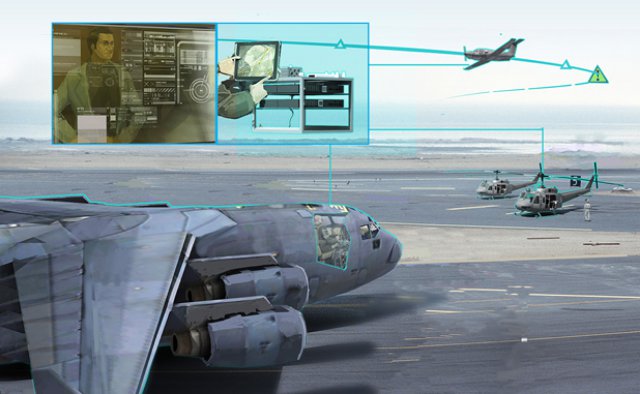 DARPA is launching a programme called Aircrew Labor In-Cockpit Automation System to mature technologies that enable higher levels of cockpit automation to help reduce pilot workload, augment mission performance, and improve safety.