
An Australian researcher is using inexpensive drones to discover why the health of whales, off the coast of Australia, is deteriorating. Griffith University researcher Dr Jan-Olaf Meynecke told Mashable collecting bacteria, and at a later stage, DNA from viruses, will help to establish a baseline understanding of respiratory infections in the humpback whales. Continue reading
Category Archives: Research
World’s First QuadCopter
In 1927 George de Bothezat told Popular Science that helicopters were “exactly where the airplane stood after the first few flights of the Wright Brothers.” What he means is that helicopters had, indeed, flown. Bothezat himself had built one that lifted off the ground while carrying the weight of four people. They just hadn’t flown well. Continue reading
Student UAS Project to Monitor Natural Gas Pipelines
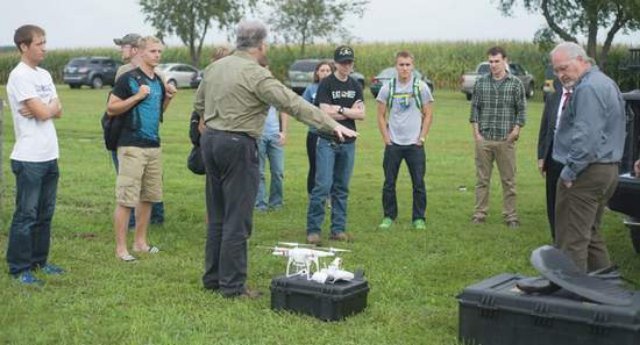 Cedarville geology and geoscience students are working on two senior projects using an Unmanned Aerial System (UAS), , as part of a partnership with Remote Intelligence, LLC., in Wellsboro, Pa. Remote Intelligence is partnering with Cedarville to provide guidance and material resources to students. Cedarville and Remote Intelligence are also in preliminary talks to study how UAS systems could help in the planning, construction, and monitoring of natural gas pipelines.
$4M Funding for Research on UAS Crop Surveillance
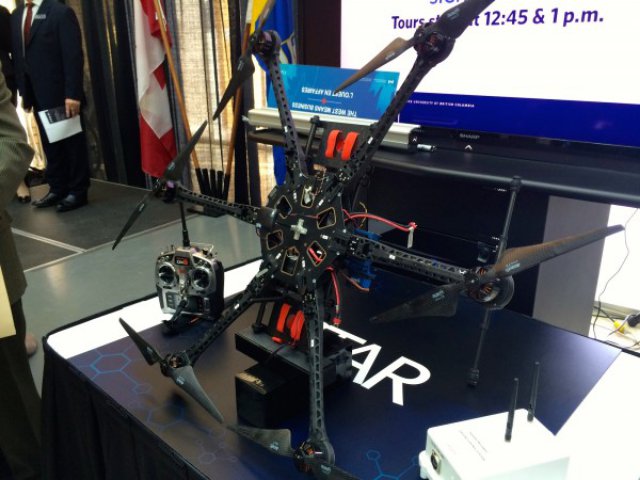 The Canadian Federal Government announced Tuesday that they are financially backing a new defence and aerospace innovation programme at UBC Okanagan. Minister of State for Western Economic Diversification, Michelle Rempel, was on hand to announce the $3.8 million in funding to support the establishment of the Survive and Thrive Applied Research Facility (STAR). Continue reading
3D-Printed UAV with Ducted Fan Motors
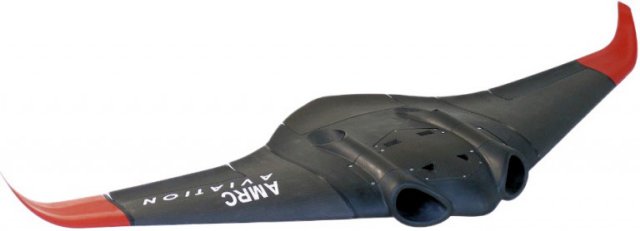
A Boeing-assisted team at the University of Sheffield’s Advanced Manufacturing Research Center has developed a blended-wing UAV featuring integrated electric ducted fan motors built with modular components made largely via Fused Deposition Modeling (FDM). This is the type of 3D printing in which successive layers of molten plastic are extruded one on top of another, to build up complete objects. Continue reading
UAV/UGV Cooperative System
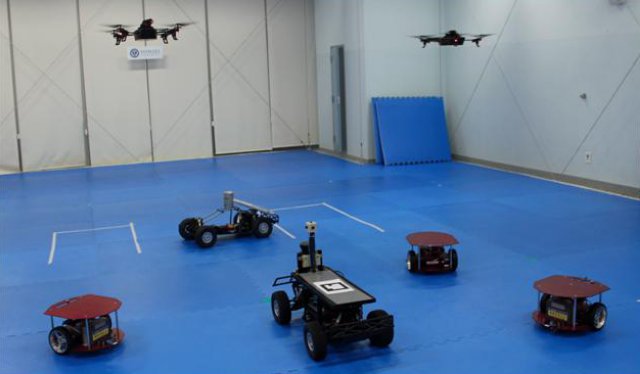 A system to allow air- and ground-based robot vehicles to work together, without GPS signals or expensive sensor devices, is being developed by a team at Yonsei University in Korea. This could be used by unmanned vehicle teams to explore environments, ranging from farms here on earth to the surfaces of other worlds.
Nixie, the Quadcopter that Fits on your Wrist
Earlier this year, Intel kicked off its Make it Wearable challenge, a mission to take wearable technology and do things with it that haven’t yet been done — that, maybe, no one had even thought of yet. Team Nixie has begun developing a quadcopter that fits on your wrist. Continue reading
Queensland University UAS in Biosecurity Research Programme
A new three-year project will see Queensland-based university QUT joining an international biosecurity research programme involving unmanned aerial systems (UAS). The project will see UA (unmanned aircraft) fitted with new high-tech imaging equipment to test how effective they are in identifying pests and diseases in horticultural and grains industries. Continue reading