
 Sentinel Air is planning to co-develop an airborne wireless sensor that can detect mobile phone signals belonging to disaster victims. The company has teamed up with European disaster relief firm Disaster Tech Lab to develop and test the sensor, which will be mounted on an unmanned aerial vehicle (UAV) made by Sentinel Air.
Category Archives: Research
Lockheed Martin and Warsaw University Test Autonomous Control Sytem
In collaboration with Lockheed Martin, a team of research students and staff from Warsaw University of Technology successfully demonstrated the first phase of flight test and integration of unmanned aircraft platforms with an autonomous mission control system. Continue reading
UTSA Researchers Study Brain Signals to Operate UAS
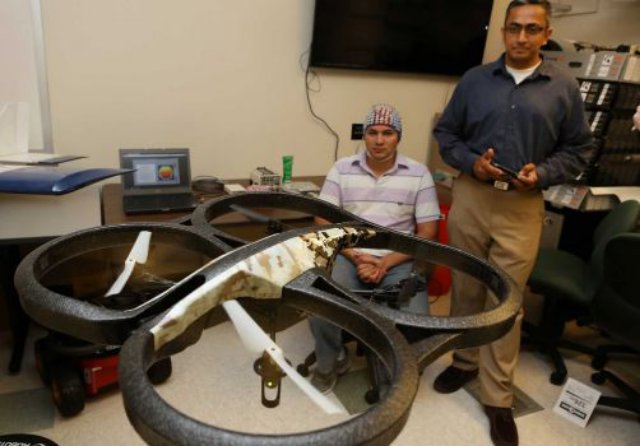 With sensors covering his head, University of Texas at San Antonio graduate student Mauricio Merino concentrates hard as a camo-colored drone hovers with a soft hum in the middle of a campus research lab. For now, fellow graduate student Prasanna Kolar stands nearby to operate the unmanned aerial vehicle through a cell phone app — gently commanding it left and right. But the goal is to create a process for a human to control the movements of groups of drones with only a thought, said Daniel Pack, chairman of UTSA’s electrical and computer engineering department.
MIT Algorithm Lets UAS Monitor Health in Real-Time
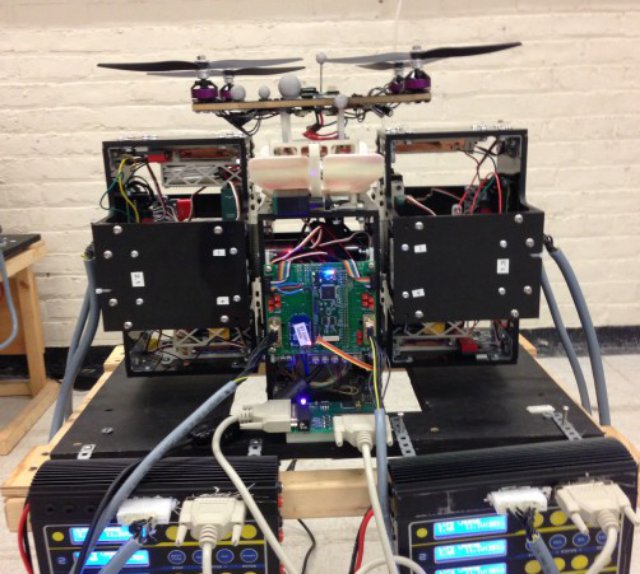 The prospect of delivery UAS brings with it a few notable issues. Beyond visions of colliding rotor blades and unsolicited package drops lies another problem: the huge amount of computational power needed to take into account real world uncertainties, such as strong winds, limited battery life and navigational errors, in order to provide a reliable delivery service. This has been the focus of new study from MIT, with a team of researchers devising a new algorithm said to massively reduce the level of computation required, enabling the drone to monitor its “health” in real time. Continue reading
Researchers Study Electronic Control of Moths
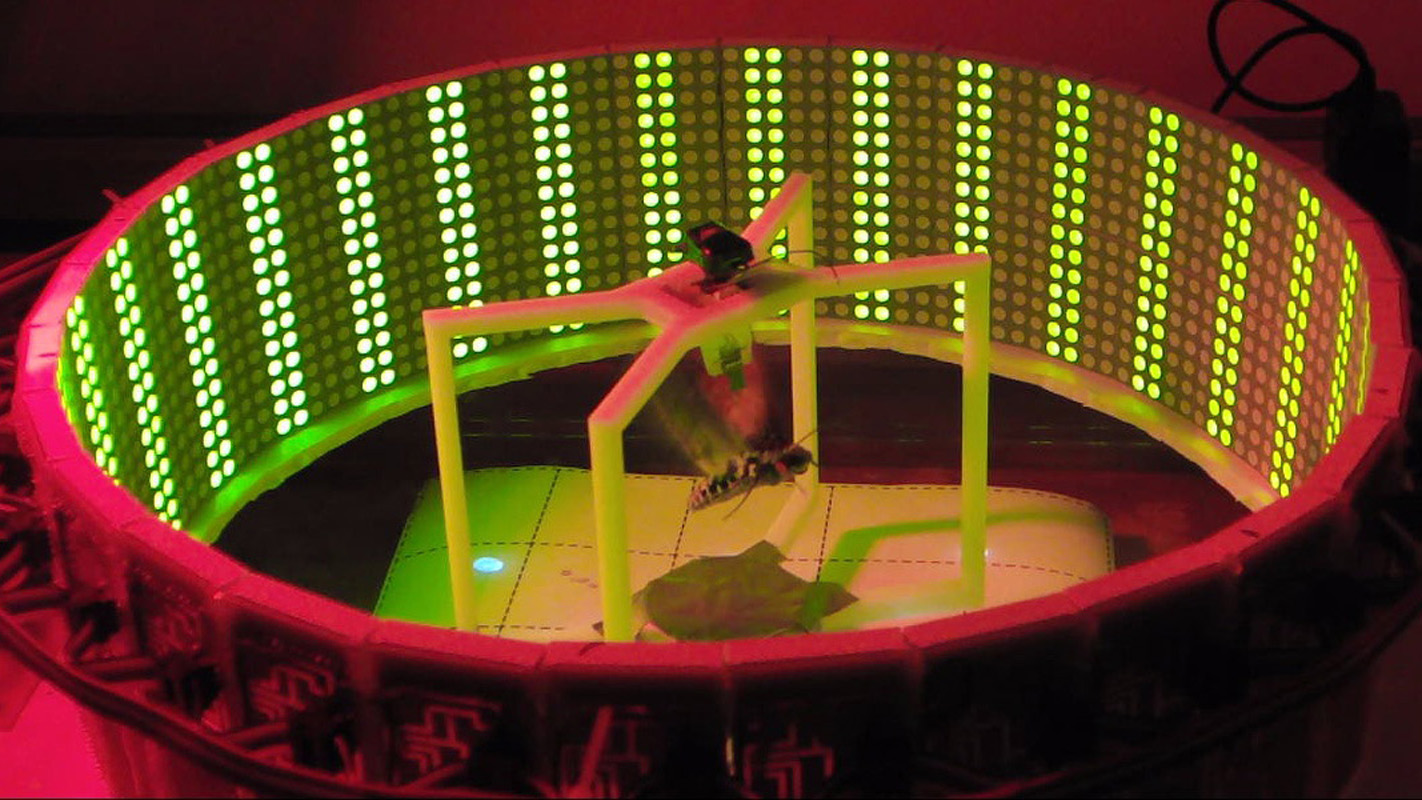 North Carolina State University researchers have developed methods for electronically manipulating the flight muscles of moths and for monitoring the electrical signals moths use to control those muscles. The work opens the door to the development of remotely-controlled moths, or “biobots,” for use in emergency response.
MIT Lincoln Lab’s Airborne Sense and Avoid (ABSAA) Radar Panel Wins R&D Award

MIT Lincoln Laboratory’s Airborne Sense and Avoid (ABSAA) Radar Panel is a stepped-notch antenna array that marks a substantial advance in the fabrication of wide-bandwidth radar systems for use aboard unmanned aerial systems (UAS). Continue reading
Autonomous UAS Landing on a Moving Platform at McGill University
The professor heading up the project, Inna Sharf, is a mechanical engineer at McGill University’s Aerospace Mechatronics Laboratory. Sharf’s team has been tasked with a new project to create autonomous landing UAS software. Continue reading
BAE Develops Smart Skin Technology to Detect Damage on Aircraft
 Work is underway at BAE Systems to give aircraft human-like ‘skin’, enabling the detection of injury or damage and the ability to ‘feel’ the world around them. Engineers at BAE’s Advanced Technology Centre are investigating a ‘smart skin’ concept which could be embedded with tens of thousands of micro-sensors. When applied to an aircraft, this will enable it to sense wind speed, temperature, physical strain and movement, far more accurately than current sensor technology allows.