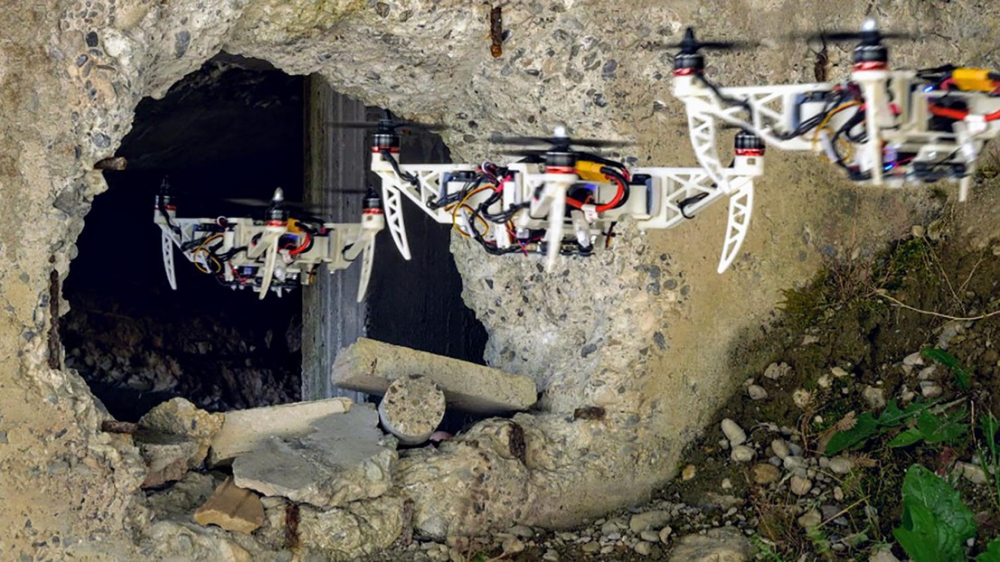
A research team from the University of Zurich and EPFL has developed a new drone that can retract its propeller arms in flight and make itself small to fit through narrow gaps and holes. This is particularly useful when searching for victims of natural disasters. Continue reading
Category Archives: Research
MIT Engineers Fly Plane with No Moving Parts
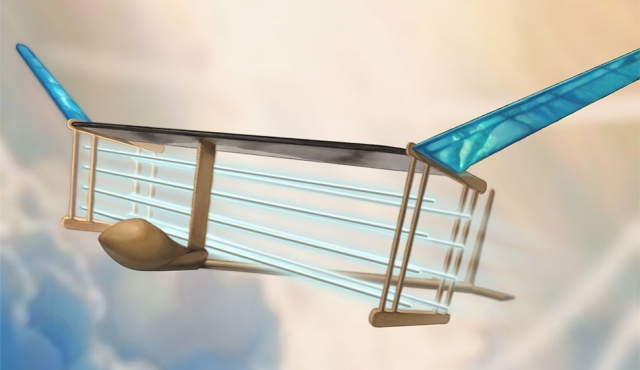
MIT engineers have built and flown the first-ever plane with no moving parts. Instead of propellers or turbines, the light aircraft is powered by an “ionic wind” — a silent but mighty flow of ions that is produced aboard the plane, and that generates enough thrust to propel the plane over a sustained, steady flight. Continue reading
Small Flying Robots Lift Objects up to 40 X Weight
Researchers from EPFL and Stanford have developed small drones that can land and then move objects that are 40 times their weight, with the help of powerful winches, gecko adhesives and microspines. Continue reading
Origami Cushions Protect Drones from Collisions
To protect flying robots without hindering their flight, Imperial experts found answers in the ancient art of origami. Taking inspiration from the ancient art of paper folding, scientists at Imperial College London’s Aerial Robotics Lab have equipped drones with lightweight, impact-absorbent cushioning to protect them from bumps and scrapes. Continue reading
US Army Funds Kent State Drone Propulsion Research
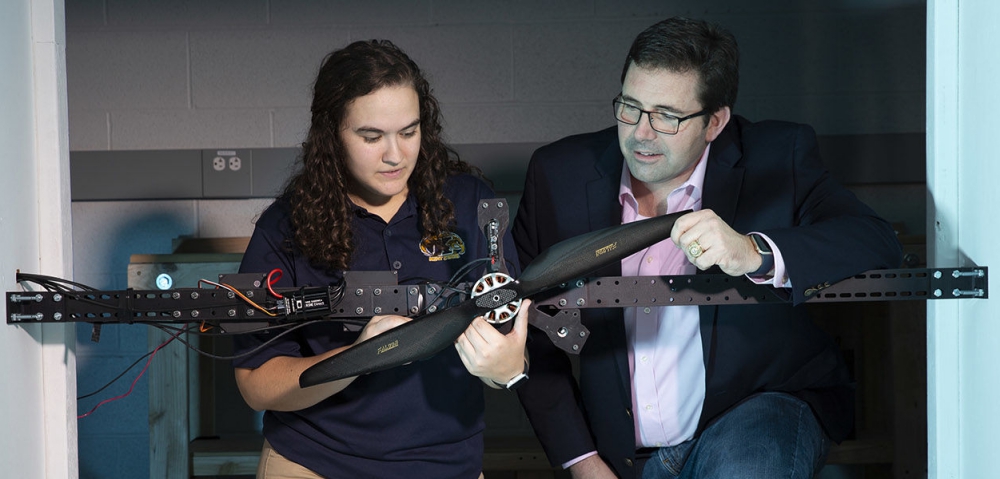
A grant from the Army Research Laboratory has a Kent State University researcher flying high. The grant provides more than $130,000 for Blake Stringer, Ph.D., assistant professor of aerospace engineering in Kent State’s College of Aeronautics and Engineering, to study propulsion systems for a new generation of intermediate-sized unmanned aircraft systems (UAS), commonly known as drones. Continue reading
Drone Net Promises Cost-Effective Security
Someday soon, a “Drone Net” now under development at Embry-Riddle Aeronautical University could provide a cost-effective way to protect small airports, university and corporate campuses, farms or other operations from irresponsible drone operators. Continue reading
Microwave Beams Could Power UAS
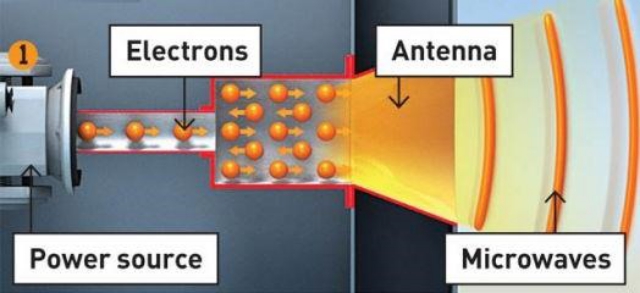
Researchers at Queen’s University Belfast are developing technology that could see the drones powered by microwave beams from the ground, opening up the possibility of continuous flight. Continue reading
PaintCopter from Disney Research
One of the latest projects from Disney Research is PaintCopter — a drone that can autonomously spray paint both flat and 3D surfaces. Disney Research says the goal is to be able to paint large surfaces without the need for scaffolding and ladders.