
The US Coast Guard completed system operational verification testing of a small unmanned aircraft system (sUAS) on Coast Guard Cutter Stratton, a national security cutter (NSC) based in Alameda, California, Jan. 2. Continue reading

UAS VISION
an independent online news service for the Unmanned Aircraft Systems world
The US Coast Guard completed system operational verification testing of a small unmanned aircraft system (sUAS) on Coast Guard Cutter Stratton, a national security cutter (NSC) based in Alameda, California, Jan. 2. Continue reading
 Texas Instruments (TI) has introduced two circuit-based subsystem reference designs that will help manufacturers add flight time and extend battery life to quadcopters and other non-military consumer and industrial drones used to deliver packages, provide surveillance or communicate and assist at long distances.
The U.S. Army Research Laboratory and industry partners demonstrated the flying capabilities of a unique rectangular-shaped quadcopter during a visit from DOD officials at APG Jan. 10. Continue reading

Following a $90 million agreement with Boeing’s unmanned aerial vehicle subsidiary InSitu, an Australian company that makes engines for aerial drones is setting up a facility in the Columbia Gorge close to InSitu. Orbital, based in Perth, has signed a three-year deal with Boeing to supply InSitu with a new Unmanned Aerial Vehicle (UAV) engine. Continue reading
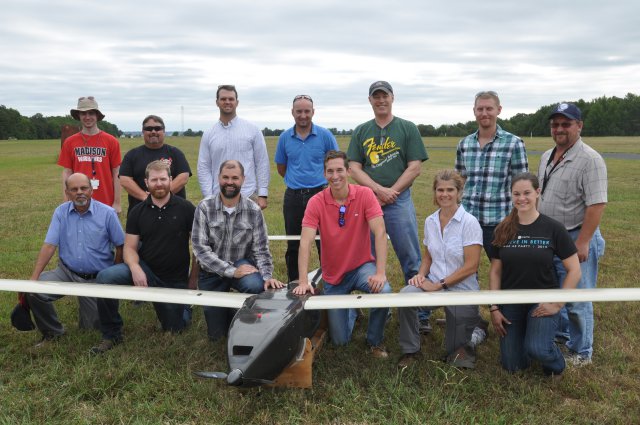
 A DARPA-backed small business effort broke boundaries for long-endurance flight this month by launching a uniquely designed, combustion-powered unmanned aircraft that stayed aloft for more than two days and two nights.

EnergyOr Technologies Inc. recently shipped the first H2QUAD 1000 to the French Air Force’s Centre d’ Expertise Aérienne Militaire (CEAM) as it enters into the second phase of the Joint Development Agreement (JDA) signed in February 2016. This JDA serves as the foundation to advance development of optimized long endurance unmanned aerial vehicles (UAVs) powered by EnergyOr’s fuel cell system technology. Continue reading
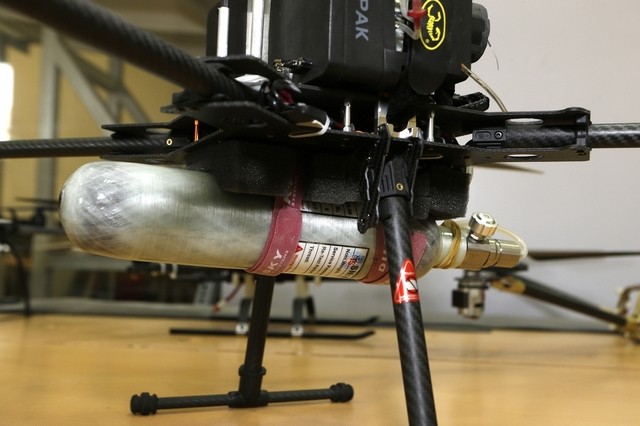
The American University of Sharjah has announced that a research exercise run by Prof Mohamed Gadalla, of the mechanical engineering department, has resulted in a multi-propeller drone powered by a hydrogen fuel cell being flown in front of the main university building.
 Researchers from the U.S. Naval Research Laboratory’s chemistry and tactical electronic warfare divisions completed the first flight of the Ion Tiger unmanned air vehicle with a new hydrogen-powered fuel cell built in-house.