
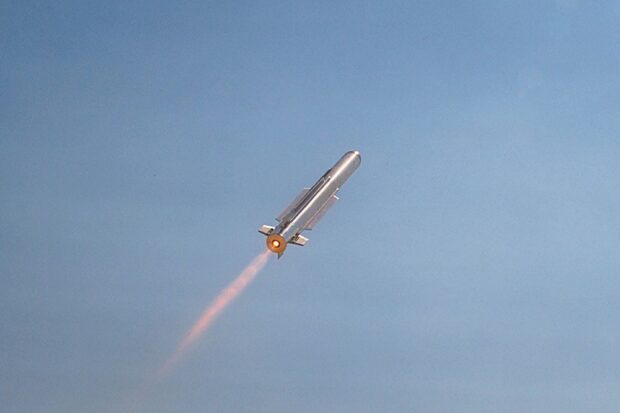
Raytheon, an RTX business, successfully completed three tests of its new Coyote Block 2C+RM upgrades, advancing the program from concept to testing in just 15 months. These Raytheon-funded developmental testing events show rapid progress of current Coyote Block 2C+RM interceptor upgrades to support an urgent joint U.S. military mission to counter evolving drone threats.
The Coyote Block 2C+RM upgrade builds on the combat–proven performance of current Coyote variants, which have intercepted hundreds of drones. This effort intends to integrate a rocket motor for faster launch and flight, along with a new seeker and warhead designed to defeat all classes of current and emerging drone threats.
“With a common backbone, Raytheon can rapidly scale the Coyote family across counter-drone missions — so we’re accelerating the pace of innovation,”
said Tom Laliberty, president of Land & Air Defense Systems at Raytheon.
“Coyote Block 2C+RM is the latest example of how we’re investing to deliver critical upgrades to combat-proven technology that give service members a decisive advantage on the battlefield.”
The initial test series included several first-of-its-kind events, including confirmation of initial integration with the current counter-drone architecture and the first launches of a Coyote effector equipped with a tactical rocket motor to improve threat engagement times and faster successive shots.
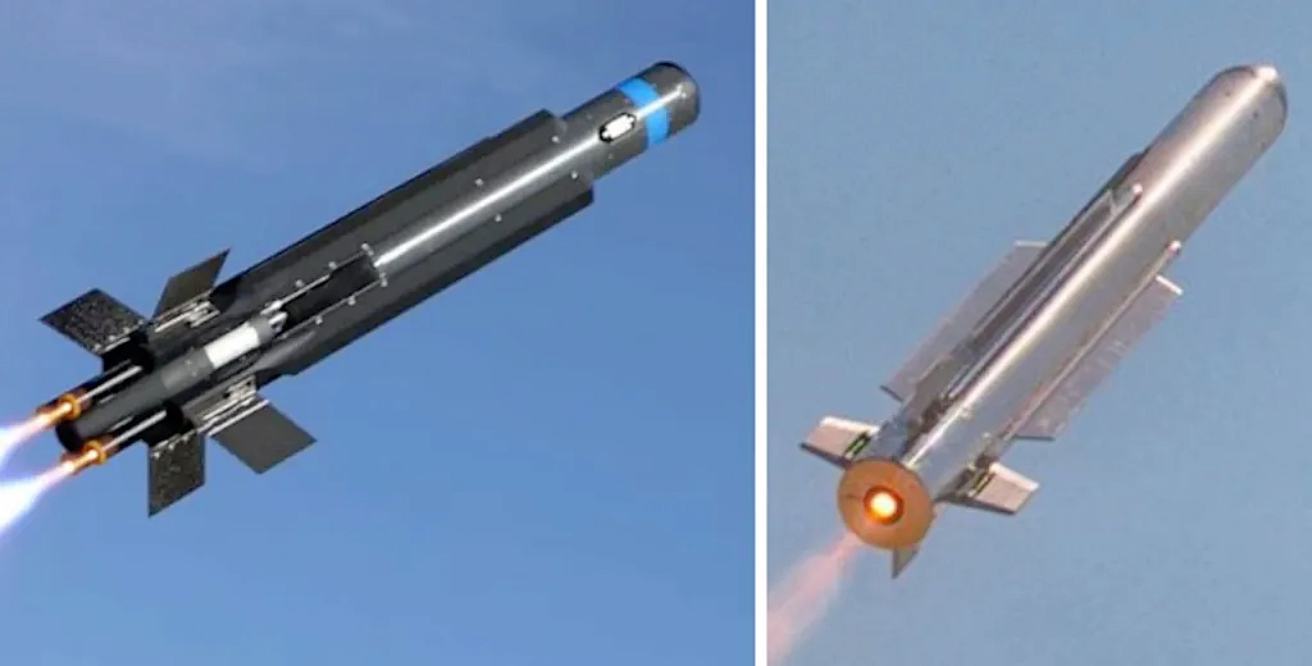
A side-by-side comparison of an earlier rocket-boosted, jet-powered Coyote Block 2, at left, and the new Block 2C+RM version, at right. Raytheon
With the rocket motor, “you get upgraded propulsion for faster launch and higher velocity flight,” Tom Laliberty, President of Land & Air Defense Systems at Raytheon, told TWZ and other outlets during a press call last week ahead of today’s announcement. “In terms of range and so forth, I can’t really get into any specifics about that, for obvious reasons.”
“What I would just say is it’s significant in terms of the range difference, and in the [sic] what I call end-game capabilities of the missile, where velocity might come into play,” he added. “Then with the seeker [and] warhead [upgrades], it really gets after the sort of more cutting-edge drone capabilities that we’re seeing from the adversary.”
Laliberty also did not elaborate on the specific improvements to the seeker or warhead. Existing Block 2-series Coyotes use on-board radio frequency seekers to find their targets in the terminal phase of flight after first being cued via radars and other sensors on the ground. They also carry blast-fragmentation warheads.
Sources: Raytheon; The War Zone