
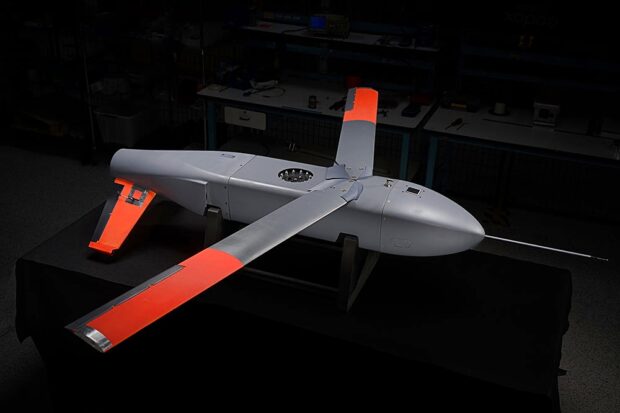
Northrop Grumman Corporation has showcased the autonomous mission capabilities of its Lumberjack Group 3 Unmanned Aircraft System during the U.S. Army 101st Airborne Division (Air Assault)’s Operation Lethal Eagle exercise.
The demonstration highlights progress toward rapid field deployment and advances in autonomous warfare. During the exercise, Lumberjack achieved full autonomous mission control, with Army personnel operating the system through the U.S. Army’s Maven Smart System.
The platform also demonstrated precision strike capability by deploying simulated versions of Northrop Grumman’s Hatchet, a six-pound miniature munition designed to deliver effects typically associated with larger weapons. AI-assisted targeting, enabled by Palantir’s Agentic Effects Agent, allowed operators to adapt quickly to changing battlefield conditions under human supervision.
Lumberjack maintained continuous beyond line-of-sight communications via satellite datalink, providing real-time mission updates and damage assessments. After completing strike operations, the system transitioned seamlessly to surveillance mode, gathering additional intelligence.
Michael Bastin, director of distributed systems at Northrop Grumman, said the system progressed from concept to flight in under 14 months and demonstrated adaptability across multiple missions and payloads. He described Lumberjack as a cost-effective, highly attritable platform designed to reshape battlefield operations.
Maj. Jonathon Bless, Public Affairs Officer for the 101st Airborne Division, said the exercise provided an opportunity to evaluate emerging technologies and highlighted the role of collaboration between the military and industry in driving innovation.
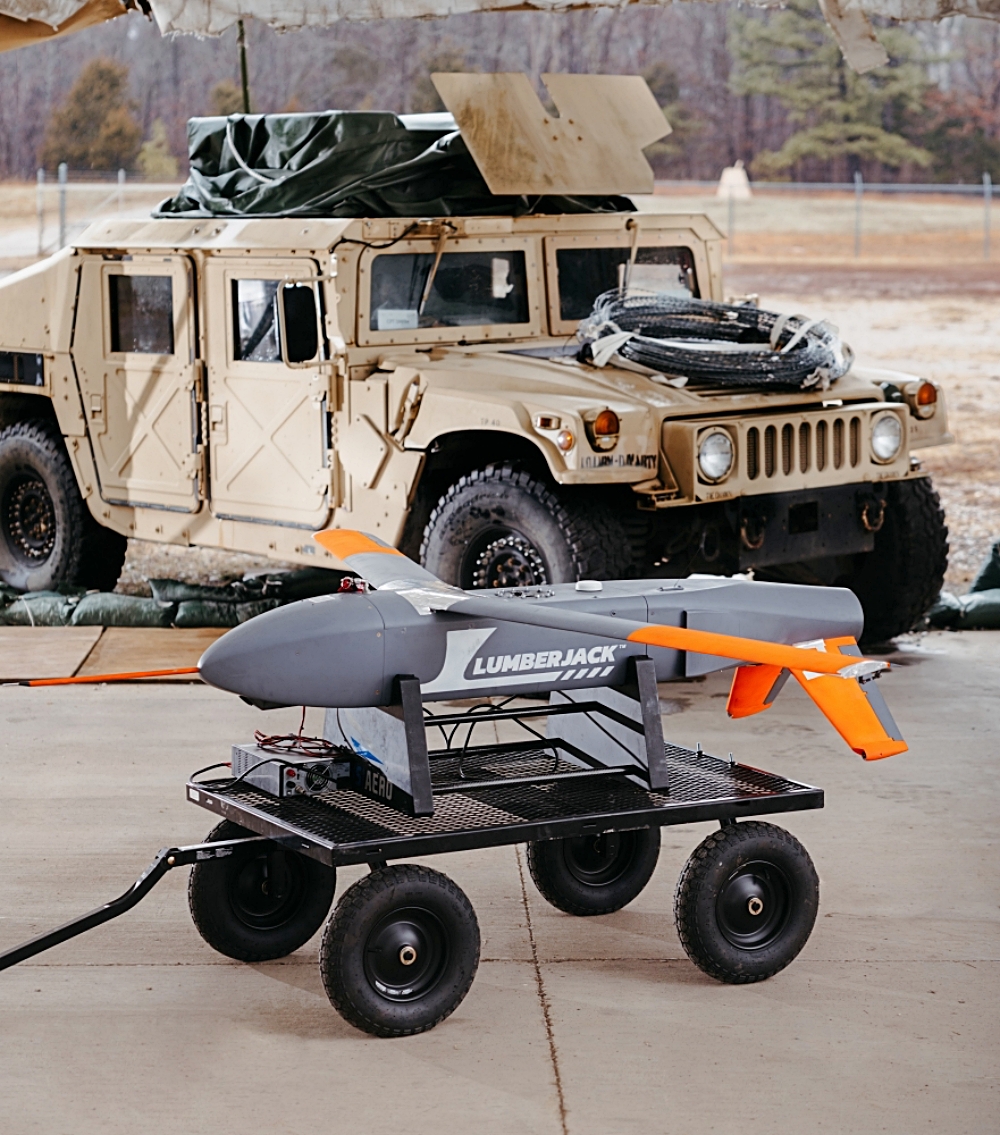
Lumberjack dominates the battlefield—seamlessly executing a fully autonomous mission at the high-stakes Operational Lethal Eagle exercise. (Photo – Northrop Grumman)
Lumberjack is a low-cost, one-way attack UAS with a modular design that supports interchangeable payloads, enabling both kinetic and non-kinetic missions. Built to be expendable, it reduces cost per effect while maintaining operational impact.
Developed with Empirical Systems Aerospace and Palantir, the system can launch from air or ground platforms, offering flexibility, long-range reach and rapid deployment in contested environments.
Source: Northrop Grumman