
Autonomy options for the Marines have taken a major step forward, as officials at the Office of Naval Research (ONR) announced today two successful helicopter flight demonstrations with unmanned flight capability at Marine Corps Base Quantico, Va., part of the Autonomous Aerial Cargo/Utility System (AACUS) programme. Continue reading
Dubai Customs Uses UAS for Vessel Surveillance in Dubai Creek
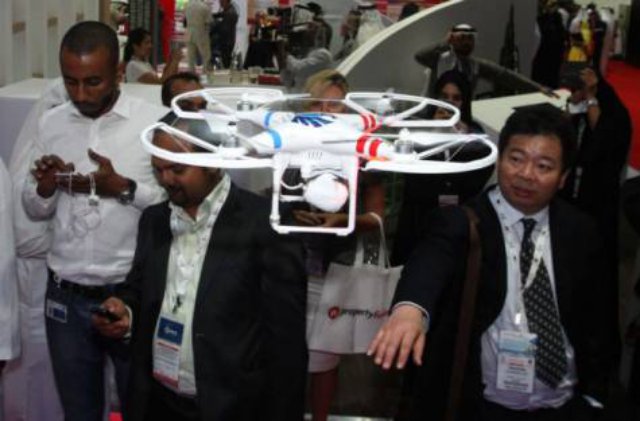 Dubai Customs is using UAS for surveillance of suspicious activity and to support inspection of trade vessels in Dubai Creek. A senior official told Gulf News the unmanned quad-copters were launched last month and may be deployed in similar operations in Dubai’s Jebel Ali port, the world’s biggest manmade harbour. Continue reading
UAS Thermal Images Reveal Buried Ancient Village in New Mexico
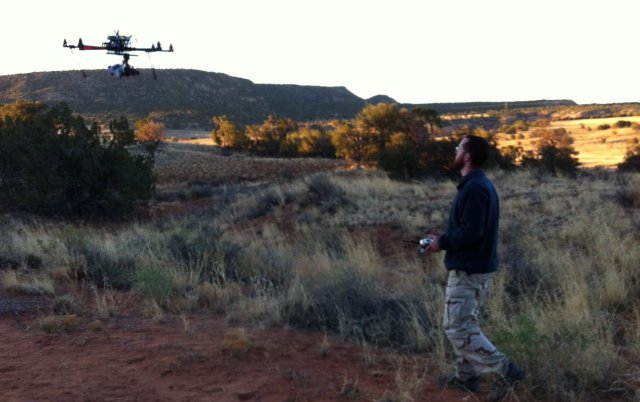 Thermal images captured by a small UAS allowed archaeologists to peer under the surface of the New Mexican desert floor, revealing never-before-seen structures in an ancient Native American settlement. Called Blue J, this 1,000-year-old village was first identified by archaeologists in the 1970s. Continue reading
European Commission Issues Call for Tough Standards to Regulate Civil UAS

The European Commission has yesterday proposed to set tough new standards to regulate the operations of civil UAS (or”remotely piloted aircraft systems” – RPAS). The new standards will cover safety, security, privacy, data protection, insurance and liability. The aim is to allow European industry to become a global leader in the market for this emerging technology, while at the same time ensuring that all the necessary safeguards are in place. Continue reading
US Air Force Report Details Future UAS Plans
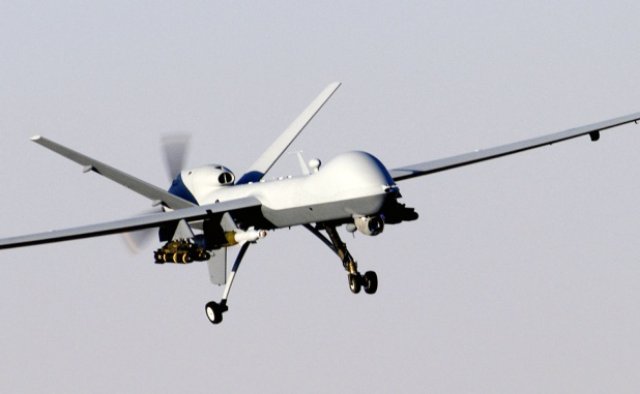
The US Air Force next month will finally reach the target number of 65 combat air patrols for its Predator and Reaper fleet, while the administration seeks to cut back on its drone operations in theatre. The Air Force’s long-term outlook for its remotely piloted aircraft fleet was released last Friday, and includes insights into how future generations of unmanned systems will take on some missions exclusively flown by manned aircraft today, along with the current state of drone operations. Continue reading
RQ-4 Global Hawk Expands Satellite Communications Capability
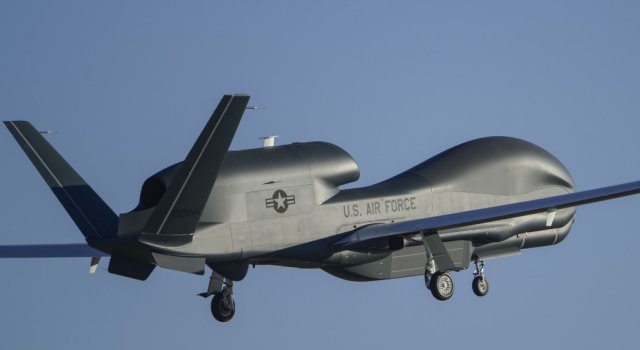 The U.S. Air Force RQ-4 Global Hawk unmanned aircraft system (UAS) has completed a series of ground and air demonstrations at Beale Air Force Base, Calif., expanding the adaptability of the Global Hawk system to use an additional Satellite Communications (SATCOM) link to improve the transfer of mission data. Continue reading
Melbourne University UAS Detects Wind Patterns in Real Time
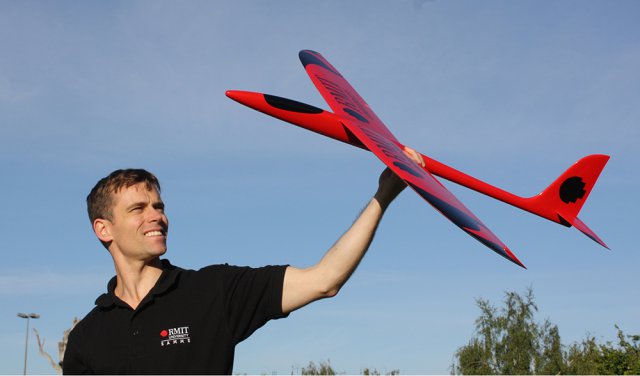 Melbourne researchers are developing UAS that will detect and glide on natural air currents to conserve energy – something birds have been doing for millennia. In the right conditions, the aircraft could glide between buildings and skyscrapers for hours on end, barely expending any battery power, project leader Dr Reece Clothier of RMIT University says. Continue reading
South Korea Invests $250M in Domestic UAS
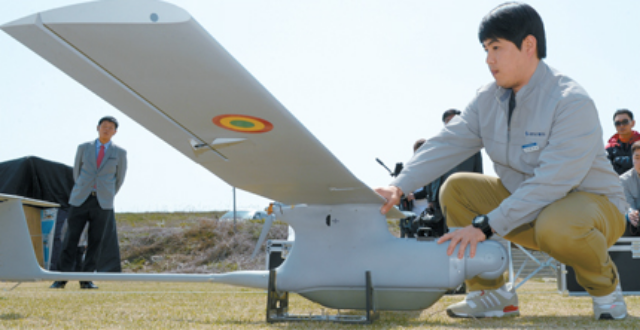 The South Korean government has announced its plan to spend 260 billion won ($247.1 million) over the next eight years to commercialize two advanced models of Korean-made tilt-rotor UAS, high-speed unmanned aerial vehicles that the government is looking to export. Continue reading