
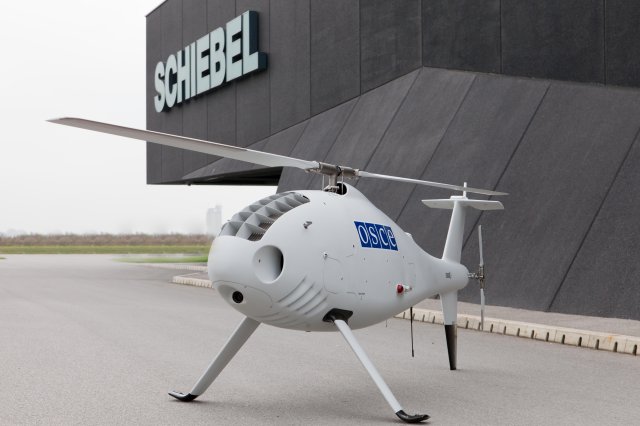
 The OSCE Special Monitoring Mission to Ukraine (SMM) today successfully completed the maiden flight of its unarmed/unmanned aerial vehicles (UAVs) before members of the media near Mariupol in eastern Ukraine. The roll-out of the UAV operations in eastern Ukraine will continue Friday with, weather permitting, routine operational flights.
MQ-8C Fire Scout Prepares for Shipboard Testing
Northrop Grumman Corporation successfully completed precision sloped landing tests Aug. 27 with the MQ-8C Fire Scout at Naval Base Ventura County, Point Mugu, in preparation for at-sea testing.
China Will Be UAV Market Leader in 10 years
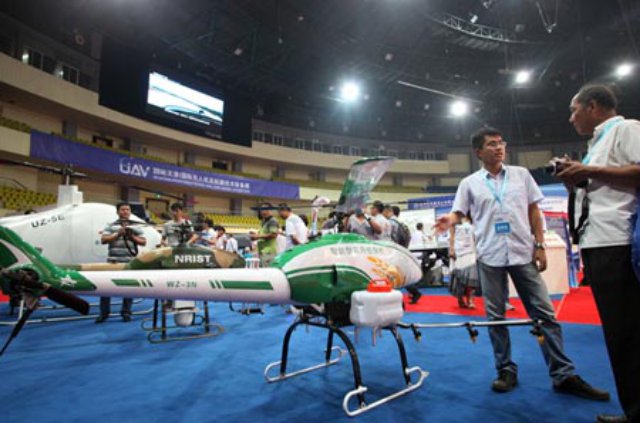 China will become the world’s largest manufacturer of unmanned aerial vehicles within the next decade, according to a report from Russia’s Military-Industrial Courier.
UK Information Commissioner Warns Broadcasters About Filming by UAS
UK broadcasters have been warned that their use of unmanned aircraft for filming purposes must adhere to data protection laws. The Information Commissioner’s Office (ICO) said that UAS “can be highly privacy intrusive” because they can capture images of individuals “unnecessarily”. Continue reading
Hawker Hunter Flying Display
A Hawker Hunter T.7 jet (WV372) performs a tight, low speed display at the Shuttleworth Air Pageant airshow in 2014. Continue reading
JARUS Makes RPAS C2 Link RCP Document Available
The 1st edition of JARUS-RPAS C2 Link RCP concept (Ed 1.0) is now available on the JARUS website. It can be found under the tab “Draft Deliverables”. Continue reading
Russia Offers UAS to Patrol Ukraine Border

During last week’s ASEM summit in Milan, Russia made it clear that it was ready to provide drones for security monitoring in eastern Ukraine, Russian Foreign Minister Sergei Lavrov said Monday. Continue reading
Man Arrested for UAS Flight at Manchester City Stadium
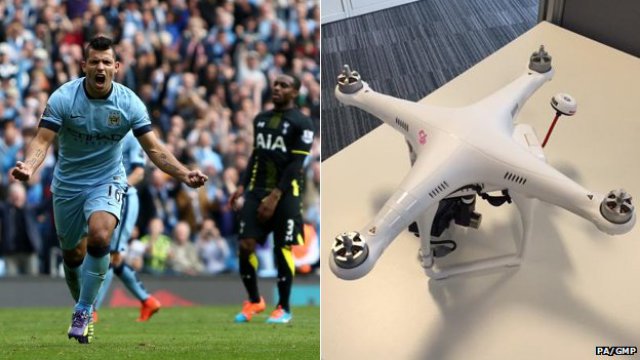 A man has been arrested after a quadcopter was flown over Manchester City’s home game with Tottenham Hotspur. Greater Manchester Police said the 41-year-old man, from Nottingham, was arrested in the nearby Asda car park.