
 CyPhy Works announced that it has received an order for its Persistent Aerial Reconnaissance and Communications (PARC) System, from the U.S. Army’s Rapid Equipping Force (REF). PARC, a tethered drone, addresses the need for a persistent eye-in-the-sky by flying for days at a time.
ONR Plans Unmanned Vehicle Swarm Demonstrations
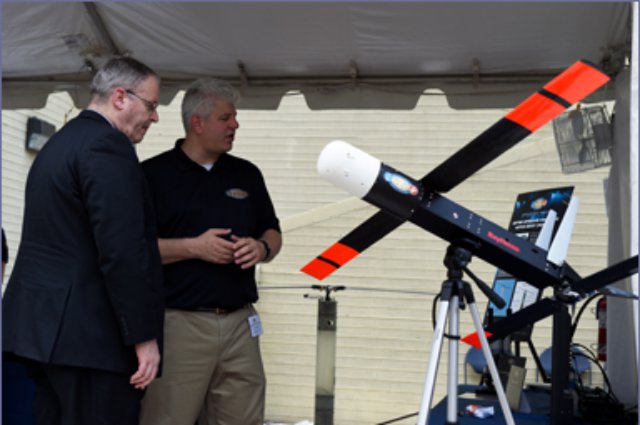 The U.S. Navy will conduct two technology demonstrations of swarming unmanned vehicles over the next nine weeks, the chief of naval research said. The demonstrations in July and September will feature unmanned aerial vehicles (UAVs) and unmanned surface vehicles (USVs), respectively.
UK Navy Receives COTS mini UAS for Evaluation
The UK Royal Navy’s (RN’s) unmanned aviation trials and development unit, 700X Naval Air Squadron (NAS), has started to take delivery of a series of sub-20 kg commercial-off-the-shelf (COTS) mini unmanned aircraft systems (UASs) to evaluate their performance and inform possible future acquisitions. Continue reading
Drone World Expo – Exclusive Interviews – Michael Chambliss
 We wanted to find out more about the team behind Drone World Expo – what makes them tick, what motivates them and what are the secrets behind the success of the event. We interviewed Advisory Board member Michael Chambliss. Michael is a technologist and business representative for the for the International Cinematographers Guild (ICG), IATSE Local 600, focused on new production technologies impacting directors of photography and their camera crews. He has been working closely with FAA-exempt UAS motion picture and television aerial operators, regulatory agencies, insurers, the motion picture and television Industry Wide Safety Committee, industry guilds, and community based UAS groups to implement this technology as new visual storytelling technique. Continue reading
Facebook’s Solar-Powered Aquila Completes First Flight
Connectivity Lab announced the first full-scale test flight of Aquila, facebook’s high-altitude unmanned aircraft. Aquila is a solar-powered airplane that can be used to bring affordable internet to hundreds of millions of people in the hardest-to-reach places. Continue reading
UK Royal Navy Plans to Drop ScanEagle Next Year
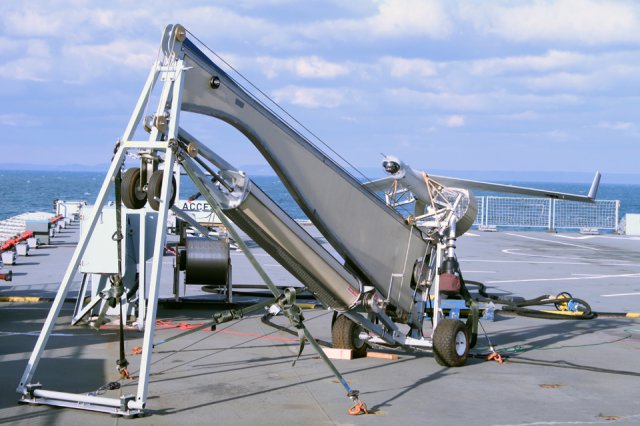 Britain’s Royal Navy is to lose its only remotely piloted air systems capability when the current arrangement with Boeing to operate the ScanEagle platform expires next year.
Russian UAV Over Israel ?
 On June 16, the Israeli Defence Force announced the start of a three-day military exercise the following day. As it began after 17:00pm on June 17, an unidentified UAV (Unmanned Aerial Vehicle) crossed in from Syria and flew over the Israeli Golan and Upper Galilee for nearly an hour.
Teal Quad Can Travel up to 40 mph in Windy Conditions
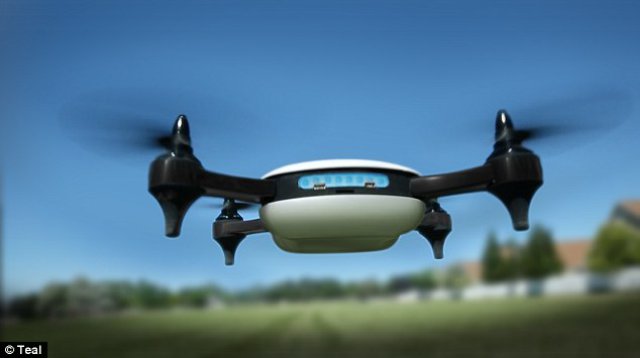 The Teal quad contains a supercomputer which allows it to fly autonomously as well as recognise images. It is the brainchild of founder George Matus, who at only 18 years old, wanted to create a device that was ‘fast, versatile, smart and break the limits of what drones could do.