
Sidecar specialist Ural has just motored into the world of aerial photography with a somewhat quirky addition to its range of bike attachments Continue reading →
Hybrid VTOL Fixed Wing Aircraft for Shipboard Operations
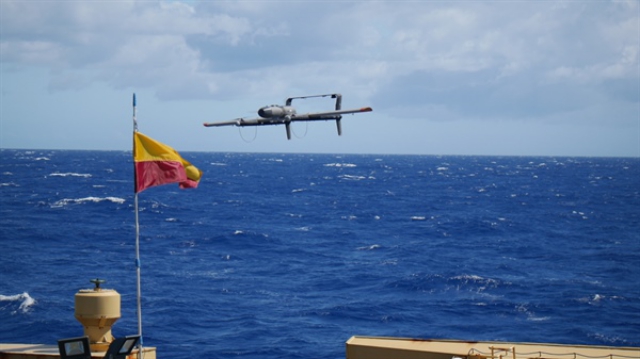
A hybrid quadrotor (HQ) UAS platform with the ability of vertical take-off and landing (VTOL) and conversion to fixed wing (FW) flight allows for operations from ships, where launch and recover space is constrained while maintaining the range and endurance of a FW aircraft. Continue reading
German Triton Programme Renamed Pegasus
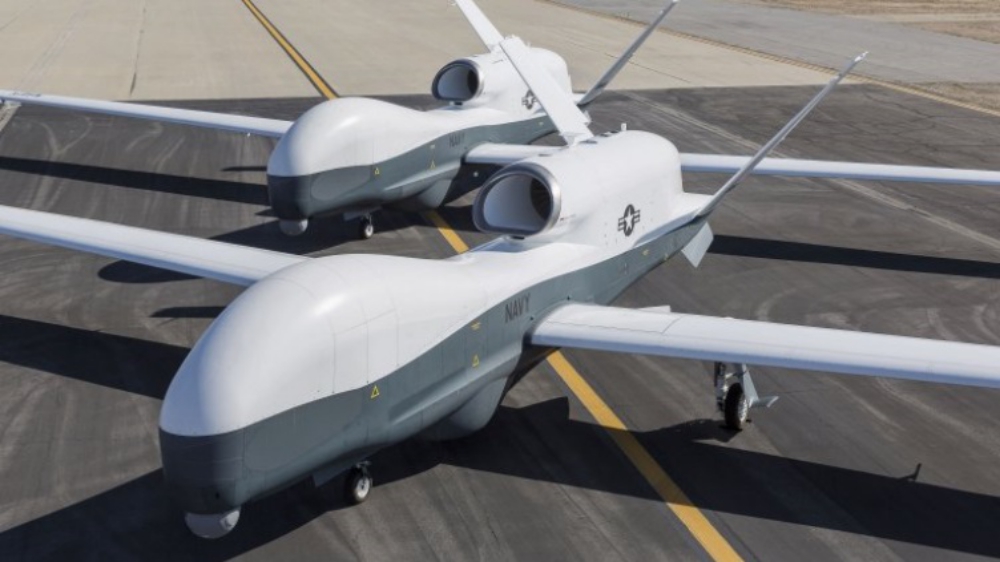
The German Air Force’s plans to field the Northrop Grumman RQ-4C Triton high-altitude long-endurance (HALE) unmanned aerial vehicle is proceeding to plan with a procurement contract expected to be signed late next year, a senior service official said on 24 October. Continue reading
Wing Installation Phase on Turkish Unmanned Fighter
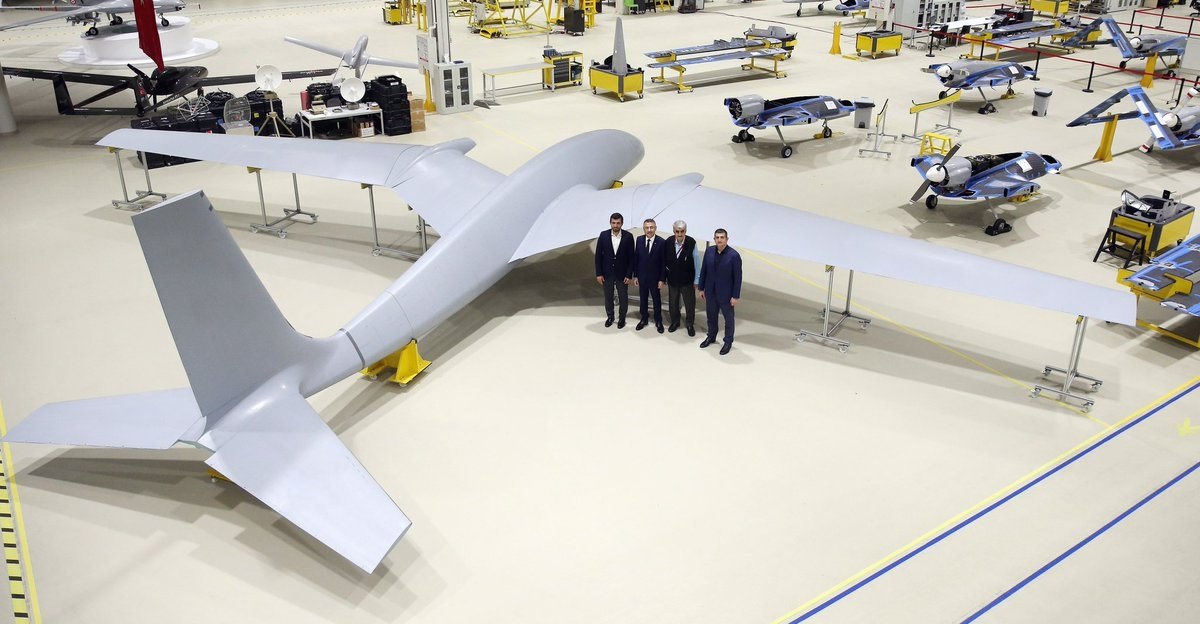
A privately owned Turkish drone specialist has installed the wings on its unmanned fighter jet currently in development.
The Forgotten Convair B-58 Hustler
The Convair B-58 Hustler was the first operational jet bomber capable of Mach 2 flight. The aircraft was designed by Convair and developed for the United States Air Force (USAF) for service in the Strategic Air Command (SAC) during the 1960s. Continue reading
OSCE Special Monitoring Mission Drone Downed in Ukraine
October, while flying over an area near Kalynove (non-government-controlled, 72km east of Donetsk), an SMM long-range unmanned aerial vehicle (UAV) spotted a surface-to-air missile system (9K33 Osa) and a fuel truck east of Nyzhnokrynske (non-government-controlled, 66km east of Donetsk). Continue reading
Small Flying Robots Lift Objects up to 40 X Weight
Researchers from EPFL and Stanford have developed small drones that can land and then move objects that are 40 times their weight, with the help of powerful winches, gecko adhesives and microspines. Continue reading
Korea Aerospace Industries Develops VTOL UAV
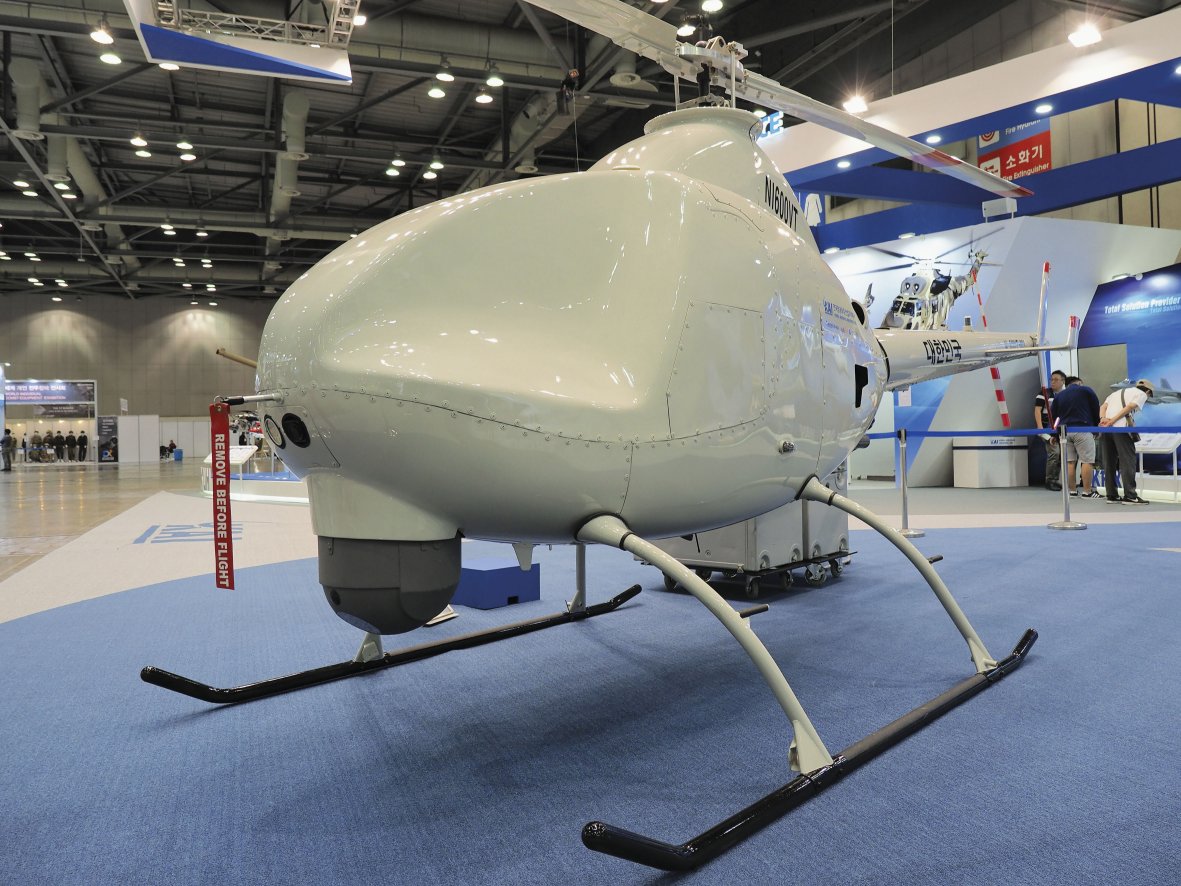
Korea Aerospace Industries (KAI) has launched an internally funded programme to develop an indigenous multirole vertical take-off and landing (VTOL) unmanned aerial vehicle (UAV) to meet a future Republic of Korea Army (RoKA) requirement, with flight trials expected to commence in 2019.
KAI officials told Jane’s that the Night Intruder 600 VT is the company’s first attempt at developing a VTOL UAV. The prototype air vehicle has an overall length of 9 m, width of 2 m, height of 2.5 m, and a planned maximum take-off weight (MTOW) of 600 kg. However, its MTOW could be extended to more than 750 kg when the programme matures.
“Development of the Night Intruder 600 VT commenced in 2017 and we have based it on a commercially available two-seat helicopter for logistical and maintenance efficiencies,” said Kwak Kyoung Ryoung, deputy senior manager at KAI’s UAV Business and Program Management Team.
“Using the latest lightweight helicopter platforms eliminates concern about parts obsolescence or discontinuity, and is much more cost effective than developing a bespoke airframe,” Kwak added.
He declined to disclose details of the air vehicle’s propulsion system, although he noted that engineers are aiming for a 6-hour endurance with a full-mission loadout.
The air vehicle is typically equipped with a chin-mounted stabilised electro-optical infrared (EO/IR) turret with high-definition daylight and thermal cameras, although a laser rangefinder or designator can be incorporated to provide targeting support to forward deployed RoKA ground elements. Other mission payloads being planned include a synthetic aperture radar (SAR) system.
As the Night Intruder 600 VT is expected to operate in a contested environment, KAI has incorporated patented GPS anti-jamming capabilities to reduce its susceptibility against interference and intentional jamming. It will also be equipped with a redundant flight control and communications system, with the initial approach employing combined C-band satellite communications (satcom) – which operates at lower frequencies and therefore offers improved performance under adverse weather conditions than the Ku-band or Ka-band frequencies – and ultra-high frequency radio for assured control.
Photo: Night Intruder 600VT prototype seen with it electro-optical payload – IHS Markit/Kelvin Wong
Source: Jane’s 360
[themoneytizer id=”15547-28″]