Category Archives: Non-Military & Commercial UAS

Global UAV Tech to Purchase NOVAerial Robotics

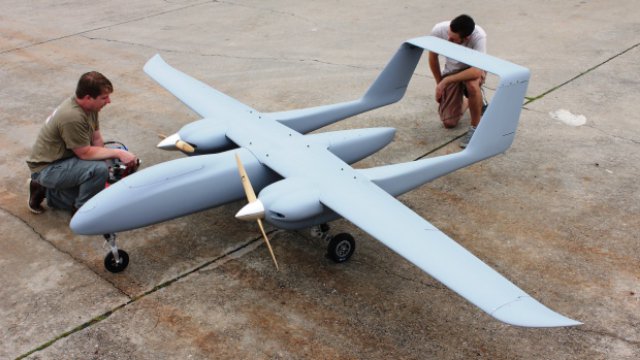
Procyon 800E

Global UAV Technologies Ltd. (formerly Alta Vista Ventures Ltd.) has announced that on May 24th, it signed a Letter of Intent (LOI) to purchase a 100% interest in the Canadian-based company, NOVAerial Robotics Inc. (“NOVAerial”) for a total consideration of CAD $700,000 – payable as $300,000 in cash and $400,000 in shares of Global UAV Technologies. $10,000 of the funds is payable as a refundable deposit. Continue reading

Textron Systems Supports Tornado Damage Assessment

Textron Systems Unmanned Systems, has announced that its Civil & Commercial team provided its personnel and operations in support of disaster response efforts for the Oklahoma Department of Emergency Management. The Civil & Commercial team provided full-motion video in real-time to the Emergency Operations Center in Oklahoma City and the National Weather Service in Norman, Oklahoma. Continue reading

Texas A&M Drone Program Partners with NASA

An AR200 by Air Robot, a virtually silent unmanned aerial system, was on display in the Lone Star UAS Center of Excellence and Innovation booth at the AUVSI XPONENTIAL in Dallas in May. It can hover and star with ‘steady eye on target’ with hands-off functionality

Corpus Christi engineers are now working with NASA to develop software to keep drones from colliding with other aircraft, help with emergency landings and sense weather and “no fly” zones, all without the aid of a pilot. The work is part of a new Space Act Agreement signed recently by representatives from NASA Armstrong Flight Research Center, Lone Star UAS Center of Excellence and Innovation (LSUASC) at Texas A&M University-Corpus Christi, and Texas A&M University System. Continue reading

Aeroscout’s Long Flight Endurance Scout B-330

Aeroscout, a long term partner of performance leading LiDAR manufacturer RIEGL, has launched the Scout B-330 UAV helicopter, which is built with a high payload capacity of up to 50 kg (110 lbs), a very long flight endurance (at least three hours) and the capability of flying at very high altitudes (up to 3,000m above sea level) in a typical mission scenario. This includes a full autonomous take-off sequence, a mission flight at variable speed, and a landing sequence.

Continue reading