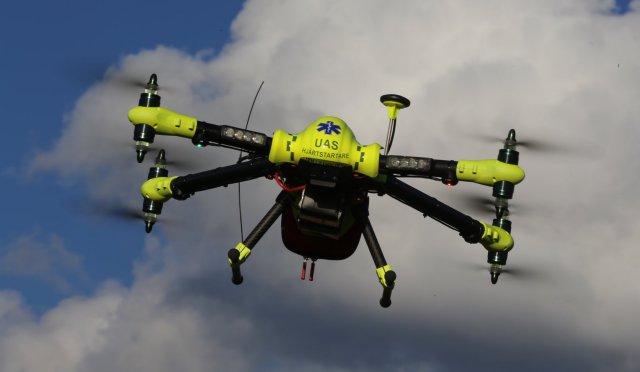
A simulated study found that drones carrying a defibrillator, which could be used by a member of the public, arrived 16 minutes quicker than the emergency services on average, saving precious time. Continue reading

UAS VISION
an independent online news service for the Unmanned Aircraft Systems world
A simulated study found that drones carrying a defibrillator, which could be used by a member of the public, arrived 16 minutes quicker than the emergency services on average, saving precious time. Continue reading
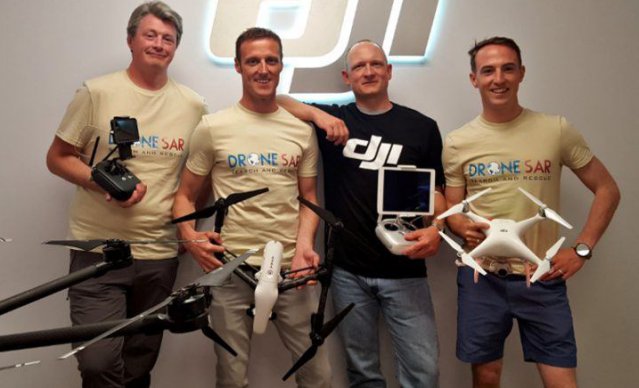
Matthew Kelly and Oisin McGrath from DroneSAR, DJI’s director of Education Romeo Durscher and DroneSAR’s Gearoid O Briain
Ireland’s Donegal-based DroneSAR, has developed unique software that it claims will revolutionise the worldwide search and rescue industry. Continue reading

U.S. Geological Survey scientists and partners are taking technology to the next level, using unmanned aircraft systems (UAS), commonly called drones, to acquire both fire intensity and emissions data during prescribed burns.
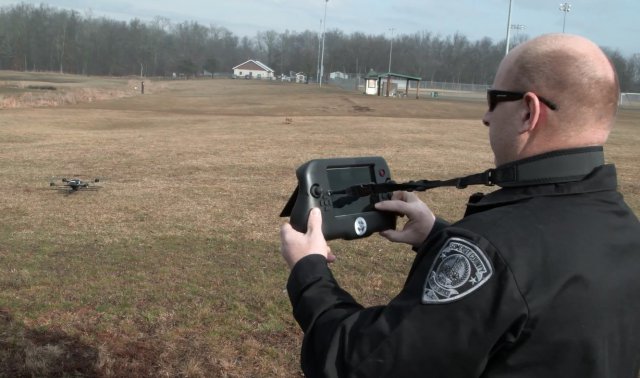
Sheriff’s agencies are poised to use the Lockheed Martin Indago quadrotor small unmanned aerial system (UAS) to perform search and rescue operations as part of the Project Lifesaver International (PLI) program that supports clients with autism, Down syndrome and dementia. Continue reading
SimActive Inc. has announced that Trumbull Unmanned is using Correlator3D as part of their emergency response services. This includes rapid mapping of oil spills and pipeline inspections for large surveys. Continue reading
On Saturday, officials from Shinjuku Ward, Tokyo, and drone experts flew a drone in a high-rise district west of JR Shinjuku Station after establishing an exclusive radio communications network between Shinjuku Central Park, a designated evacuation site for the area, and Kogakuin University, which would become a disaster response headquarters. Continue reading
Boeing is planning to make fighting forest fires a lot safer for firefighters by using the latest technologies. Developed by their Insitu division, their system use large UAVs controlled via their INEXA Control system aided by Microsoft’s HoloLens. Continue reading
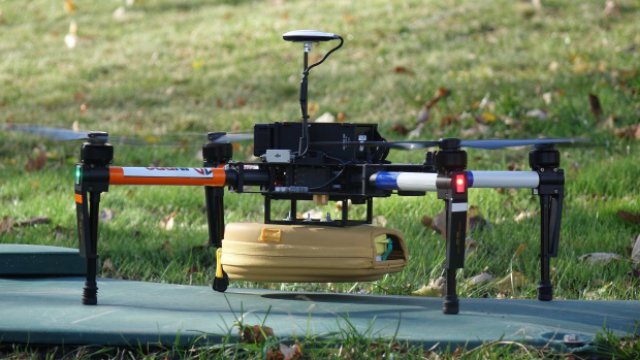 The Heart and Stroke Foundation of Canada estimates that about 40,000 Canadians suffer cardiac arrest each year. University of Toronto computer science engineer Timothy Chan thinks that drone technology might help a greater proportion of them survive. Continue reading