
The U.S. Air Force’s new Collaborative Combat Aircraft will take part in their first large-force engagement exercise in December, the head of the drones’ Experimental Operations Unit.
The Emerald Flag exercise, which will take place at Eglin Air Force Base in Florida, will be CCAs’ “first dip of the toe in an actual force integration,” Lt. Col. Lyndon Bartlett, commander of the unit, said in a panel at AFA’s Air, Space & Cyber conference.
Flying CCAs alongside manned fighters will help build the foundations necessary to one day use them in real-world operations, Bartlett said.
“That will, in [my] mind, be the first time that we will ever do some CCA end-to-end kill chain live,” Bartlett said. “That’s the first time we’ll ever be integrated in a fourth- and fifth-gen combined [offensive counter-air] push. It’ll be small, but those type of building blocks are where, I think, you get the intangibles like trust in the CCA.”
CCAs are semi-autonomous fighter drones that will, in some cases, fly alongside manned fighters such as the F-35 or the upcoming F-47, and be directed by those fighters’ pilots using a tablet interface. The Air Force wants to have at least 500 CCAs by 2032, and plans a total fleet of 1,000 or more. So far, the service has committed to buying two CCAs—General Atomics’ FQ-42A Vengeance and Anduril Industries’ FQ-44A Fury—but more are planned.
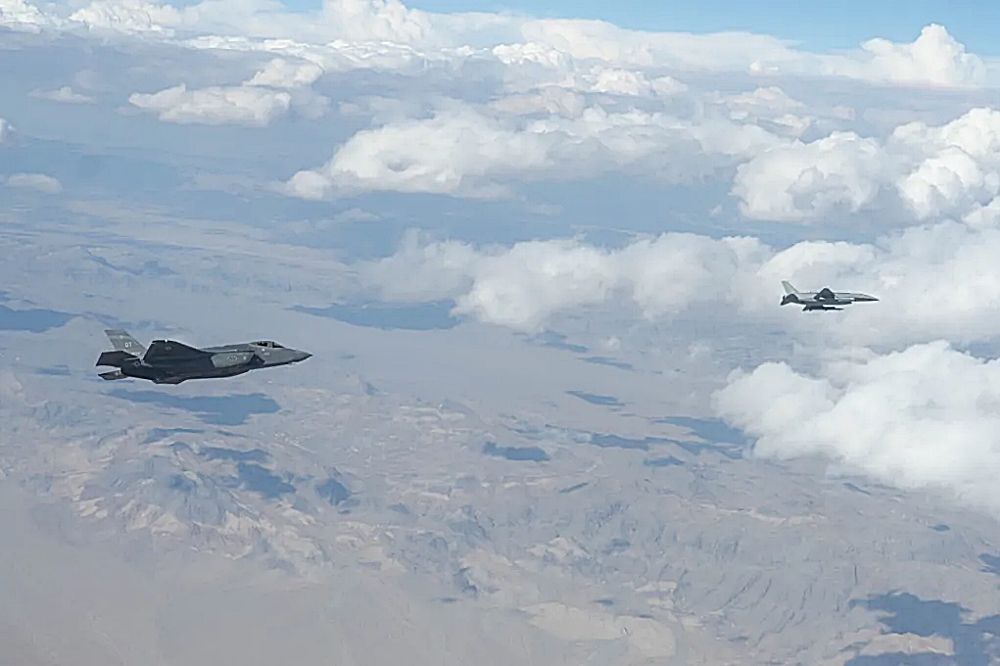
An Air Force YFQ-44A Fury CCA drones flies together with an F-35 Joint Strike Fighter. Anduril
Jason Levin, Anduril’s senior vice president of engineering, said the company delivered its FQ-44 Fury drone to the EOU in August. And in recent months, the process for operating Fury has been streamlined to the point where “it’s down to a single operator flying a Fury from a laptop,” Levin said.
“They were doing disaggregated operations, flying from multiple locations,” Levin said. “They were doing hot reloads on Fury, so getting it down from hours down to single-digit minutes to turn the jet. They’re really pushing the envelope, flying with mission autonomy. It was the first time Air Force operators were flying with mission autonomy on Fury multiple times a day, in the airspace with manned fifth-gen fighters, other CCAs, starting to build that trust.”
David Alexander, president of General Atomics Aeronautical Systems, said that once a foundation has been built for Airmen to autonomously use CCAs and they are comfortable, the program can focus more on Agile Combat Employment operations, where aircraft are flown from smaller, potentially austere and isolated bases, without the same level of support a larger base might have.
At that point, Alexander said, “it’s not an experiment anymore, it’s an everyday event.”
Levin said those ACE exercises are vital, because that’s where operators find the shortcomings of CCA’s software. And if those problems aren’t rapidly fixed, he said, Airmen in the field won’t become comfortable using CCAs.
“When we go out to those ACE exercises and they don’t like something, if we don’t fix it by the next ACE, they’re not going to trust the system,” Levin said. “They’re not going to trust that it does what it needs to do.”
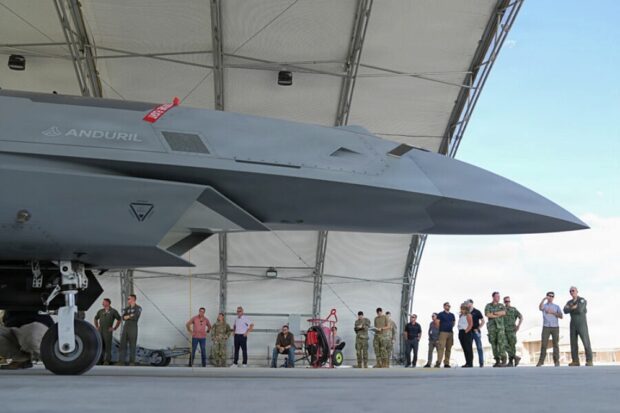
Top Photo: Personnel with the U.S. Air Force and Royal Netherlands Air and Space Force observe a YFQ-44A Fury aircraft assigned to the Collaborative Combat Aircraft Experimental Operations Unit during an Agile Combat Employment exercise at Creech Air Force Base, Nevada, July 20, 2026. (U.S. Air Force photo by Senior Airman Renee Blundon)
Source: Air & Space Forces Magazine