
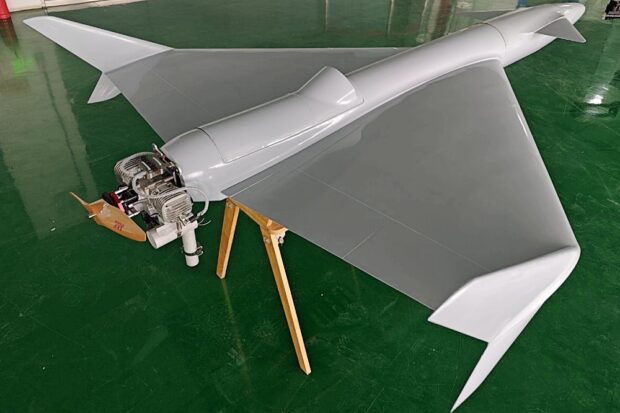
This turned up unannounced in our mailbox over the weekend – an offer from a Shenzen-based online retailer, XingkaiUAV. They claim to provide turn-key drone solutions and one-stop services for UAV platforms.
XK-F50 Supplier Target Drones
It is a tactical drone equipped with mobile vehicle-borne or ship-borne solid rocket boosted launch, capable of launching multiple aircraft simultaneously.
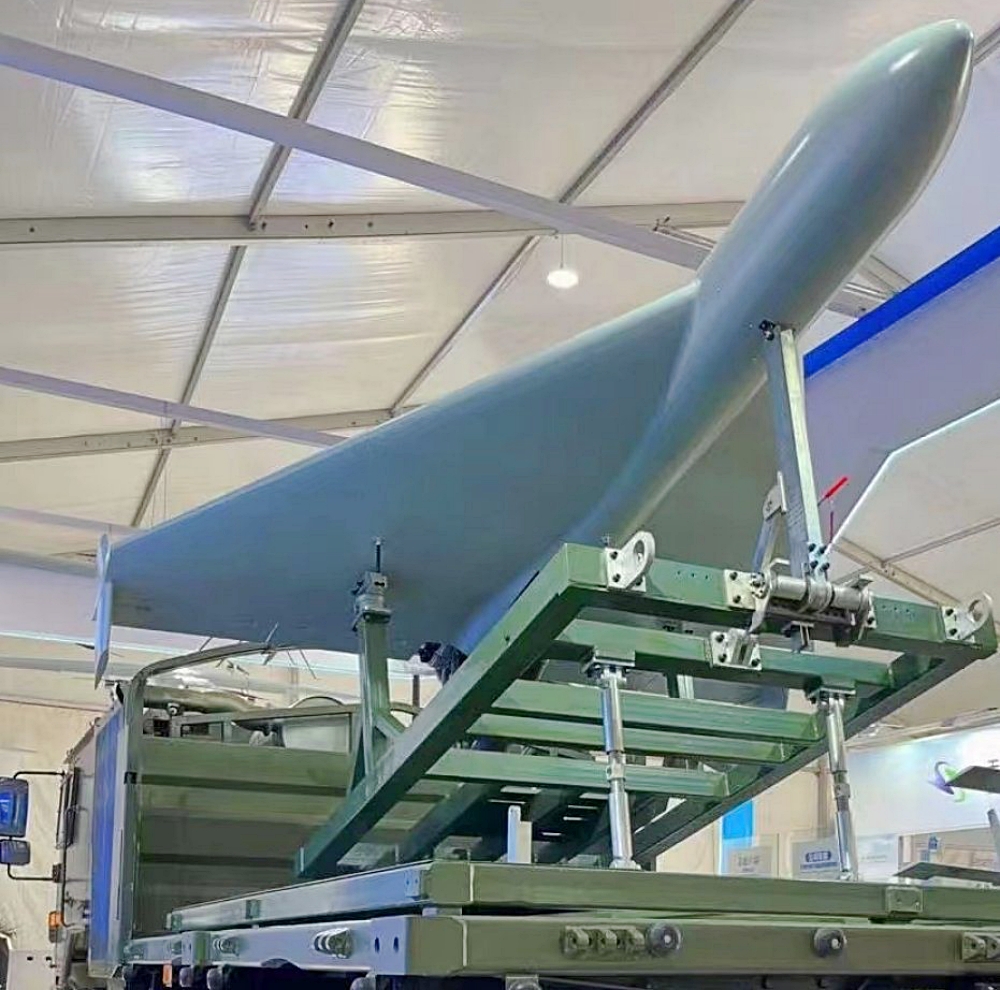
It is a long-range suicide drone used on the battlefield to strike fixed targets. The aircraft has a low altitude and high speed capability of penetration. It flies very low and dives down to 100 meters before hitting the target for high-speed ground penetration.
This drone also has strong mobility and reliability, and can be quickly deployed to the battlefield in a short period of time to improve operational efficiency and strike accuracy.
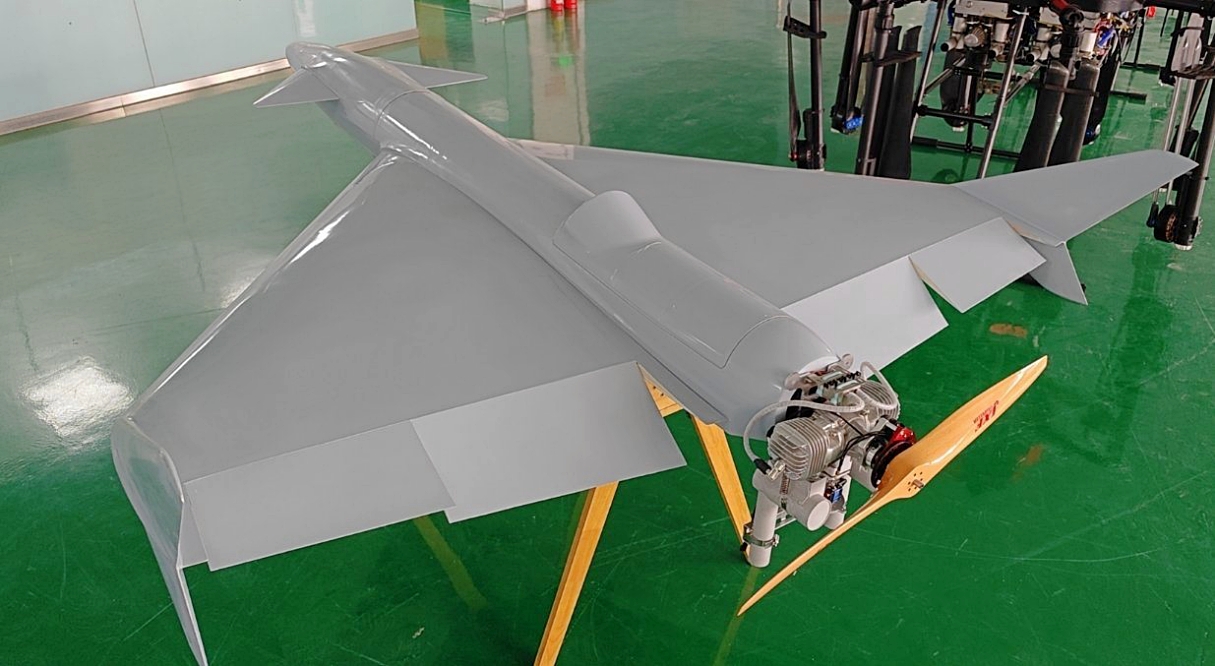
Flight Parameters
| Model No. | XK-F50 |
| Length | 2.8m |
| Wingspan | 1.8m |
| Aircraft shell | carbon fiber material |
| Tactical payload | 20 kilograms |
| Own weight of aircraft | 30 kilograms |
| Power system | 130CC dual cylinder piston electronic injection gasoline engine |
| Navigation system | Beidou or GPS, etc |
| Longest range | 540 kilometers |
| Flight altitude | 4300 meters |
| Flight weight | 50 kilograms |
XingkaiUAV says:
Our drone platforms are highly versatile and widely used in various industries and commercial applications, such as surveillance, firefighting, search and rescue, patrolling, inspection, delivery, mapping, and surveying. They are expertly crafted from lightweight and rigid carbon fiber, which significantly enhances productivity while reducing costs and ensuring optimal safety measures.

Shenzhen Xingkai Technology Co., Ltd. is a Global leading high-tech enterprise engaged in R&D development and production of RF wireless communication systems for the broadcast, public surveillance, and defense industries.

Our R&D team has over 20 years of professional technical experience in design, develop, build, support and delivery end-to-end communications & advanced networkings.
Our company attaches great importance to the construction of the R&D team, who with extensive industry experience and accumulation in the fields of RF communication, Baseband unit, and images processing.
Our products range includes mimo mesh network, tactical radio, software detined radio, tactical data link, ip encoder, there has also been continued demand in the areas of C2/C3/C4ISR/C5ISR mission systems, border and perimeter security systems, unmanned aircraft systems, unmanned surtace vessels, remote controlled systems, and homeland security solutions, law enforcement and also covering film, broadcast and live stream activities that who can’t risk communication failure.
Normally small quantity orders will be dispatched within 2-5 working days after receiving payment. For bulk order, we will ship out within 10-15 days…
Source: Xinghai Tech
Why This Matters
This offer is striking not just for what it describes, but for how casually it presents it. An unsolicited marketing leaflet advertising a “long-range suicide drone” appearing in a civilian mailbox highlights how accessible advanced military-adjacent technology has become. The normalization of such language—“strike accuracy,” “battlefield deployment,” “penetration capability”—in what is essentially a commercial brochure signals a shift: tools once tightly controlled by governments are increasingly framed as products in a global marketplace.
The technical details reinforce this concern. The drone’s specifications—540 km range, 20 kg payload, high-speed low-altitude flight—place it well beyond hobbyist or benign commercial use. While the company attempts to balance this by listing civilian applications like firefighting or surveying, the explicit inclusion of offensive combat use undermines that positioning. This dual-use ambiguity is a core issue in modern defense technology: the same platform can serve both humanitarian and destructive purposes, depending on the operator.
Equally important is the geopolitical dimension. A Shenzhen-based firm marketing directly to unknown recipients abroad suggests a diffusion of defense capabilities that may bypass traditional export controls or oversight mechanisms. Whether or not this specific offer is legitimate, it reflects a broader ecosystem where private companies operate in gray zones between commercial innovation and military application.
There is also an information security angle. Receiving such material unsolicited raises questions about targeting—why this recipient, and how was their information obtained? It hints at the possibility of indiscriminate or automated outreach strategies, which could include actors with varying levels of legitimacy.
Ultimately, this matters because it illustrates a world where advanced weapon-like systems are increasingly commodified, globally marketed, and ambiguously regulated—challenging existing norms around security, accountability, and technological control.