

The U.S. Marine Corps awarded a $9.5 million contract to a British defence company to procure compact radio frequency jammers capable of neutralizing small drones — and the urgency language attached to the award signals that this is not routine procurement.
Marine Corps System Command in Quantico, Virginia, awarded the $9,515,508 firm-fixed-price and cost reimbursement contract on Friday to SteelRock Technologies Ltd. of London, United Kingdom. The contract covers the procurement of NightFighter Mini Systems and associated spares in support of Program Manager Ground Based Air Defense’s Organic-Counter small Unmanned Aerial Systems program, known as O-CsUAS. Delivery of all supplies is required on or before August 25, 2026. The entire $9,515,508 was obligated at award using fiscal year 2024 Marine Corps procurement funds. All work will be performed in London.
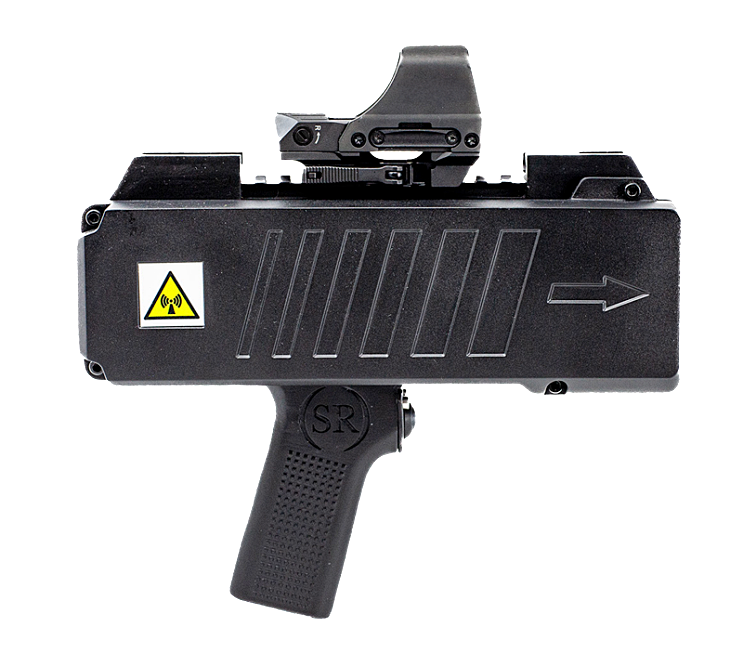
The NightFighter Mini is the most compact system in SteelRock’s NightFighter product family, which also includes the larger NightFighter S and NightFighter X. All three employ the same directed radio frequency mitigation technology — the Mini packages that capability into a single-piece form factor weighing 2 kilograms with battery installed and measuring 25 centimeters long, 15 centimeters wide, and 19 centimeters tall with its sight fitted. A single operator runs the system. It covers four preset radio frequency bands, including Wi-Fi and military spectrum bands, and its effective range is defined as Visual Line of Sight — meaning the operator can engage any drone they can see.
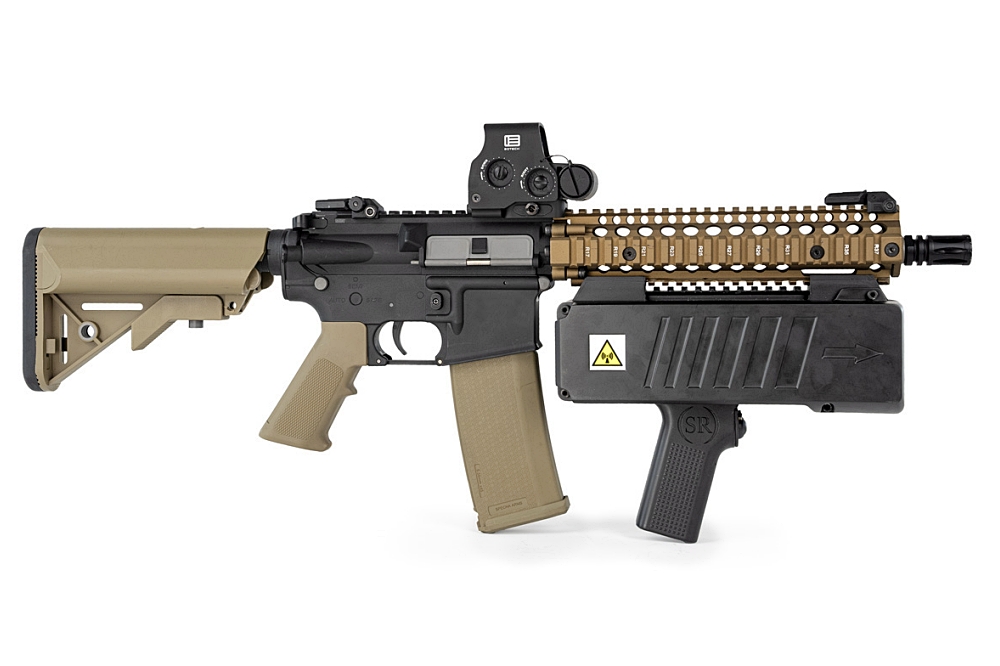
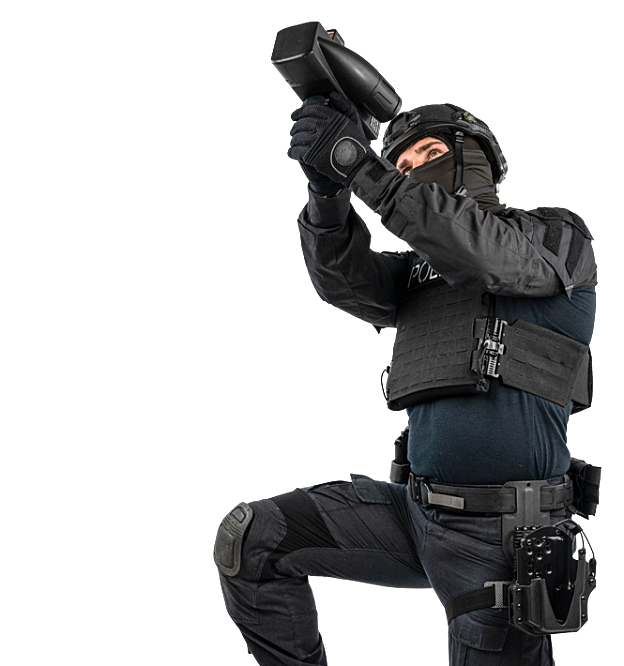
The system supports two mission types. The first is sidearm or weapon-mounted UAV mitigation — the NightFighter Mini can be attached to a rifle or carried as a sidearm, allowing an individual Marine to engage drone threats without dedicated counter-UAS equipment or a separate operator. The second is Tactical Electronic Interdiction, or TEI, which refers to the broader electronic disruption of adversary unmanned systems in a tactical area. The combination of those two mission profiles in a 2-kilogram package represents a significant compression of what has historically required heavier, more expensive, and less mobile equipment.
Radio frequency jamming works by overwhelming the control and navigation signals that keep a drone connected to its operator and oriented in space. Commercial drones rely on radio links — typically operating in Wi-Fi frequencies or dedicated control bands — to receive commands from their operators and, in many cases, to maintain GPS navigation. A jammer that floods those frequencies with interference severs that connection. Depending on how the drone is programmed, losing its control link causes it to hover in place, return to its launch point, or descend — none of which are useful outcomes for an adversary trying to conduct reconnaissance or deliver a payload.
The NightFighter Mini’s four preset bands cover the primary frequencies used by commercial off-the-shelf drones, wireless cameras, routers, and other Internet of Things devices that have been weaponized or repurposed for military surveillance in recent conflicts.
The O-CsUAS program exists because the small drone threat has outpaced the Marine Corps’ organic ability to counter it. Small commercial and modified drones — quadcopters, fixed-wing platforms, first-person-view attack drones — have become ubiquitous on modern battlefields, used for reconnaissance, target designation, electronic intelligence, and direct attack.
Ukraine has demonstrated at scale what happens when infantry formations lack effective close-range counter-drone capability: persistent surveillance degrades operational security, and weaponized drones inflict casualties that larger air defence systems are not designed or positioned to prevent. The Marine Corps’ Urgent Statement of Need reflects a determination to give individual Marines and small units a portable, immediately deployable tool to address that threat at the individual and squad level.
SteelRock Technologies is a London-based company specializing in radio frequency counter-drone systems. Its NightFighter product family positions the company in a market segment — lightweight, individual-carried counter-UAS — that has expanded rapidly as militaries worldwide scramble to address the small drone threat. The U.S. contract marks a significant validation of SteelRock’s technology by one of the world’s most demanding military customers.
The Marine Corps’ willingness to source this capability from a British startup, under urgency authority, rather than waiting for a domestic solution to mature, reflects how acute the operational need has become.
Source: Defence Blog