

What began as a bold concept is now steadily advancing toward operational reality. The Defense Advanced Research Projects Agency (DARPA), working with General Atomics Aeronautical Systems, Inc. (GA-ASI), has achieved key technical milestones on its LongShot program.
The air-launched uninhabited vehicle—recently designated the X-68A—has successfully completed full-scale wind tunnel evaluations along with parachute recovery and weapons-release testing, clearing major hurdles ahead of flight trials.
LongShot aims to transform air combat operations. The concept centers on an uninhabited aircraft launched from a larger host platform that flies ahead of manned assets and engages enemy targets using its own air-to-air missiles. By pushing offensive capability forward, LongShot allows traditional fighters to operate farther from contested airspace, improving pilot survivability while extending mission reach and overall force effectiveness.
The system is designed to be platform-agnostic. An operational variant could integrate with fighters or bombers, or potentially be deployed as a palletized munition from mobility aircraft. This flexibility supports joint-force adaptability across multiple mission sets.

According to program manager Col. John Casey, LongShot reduces significant technical risk and offers a viable pathway to expanding combat reach through uninhabited, air-launched systems. Completion of critical integration milestones has paved the way for an upcoming flight test campaign intended to validate vehicle performance and inform follow-on development.
The program draws on expertise from multiple U.S. defence and research organizations, including Air Force, Navy, Army, and NASA partners. GA-ASI serves as the industry lead responsible for designing, building, and demonstrating the LongShot concept.
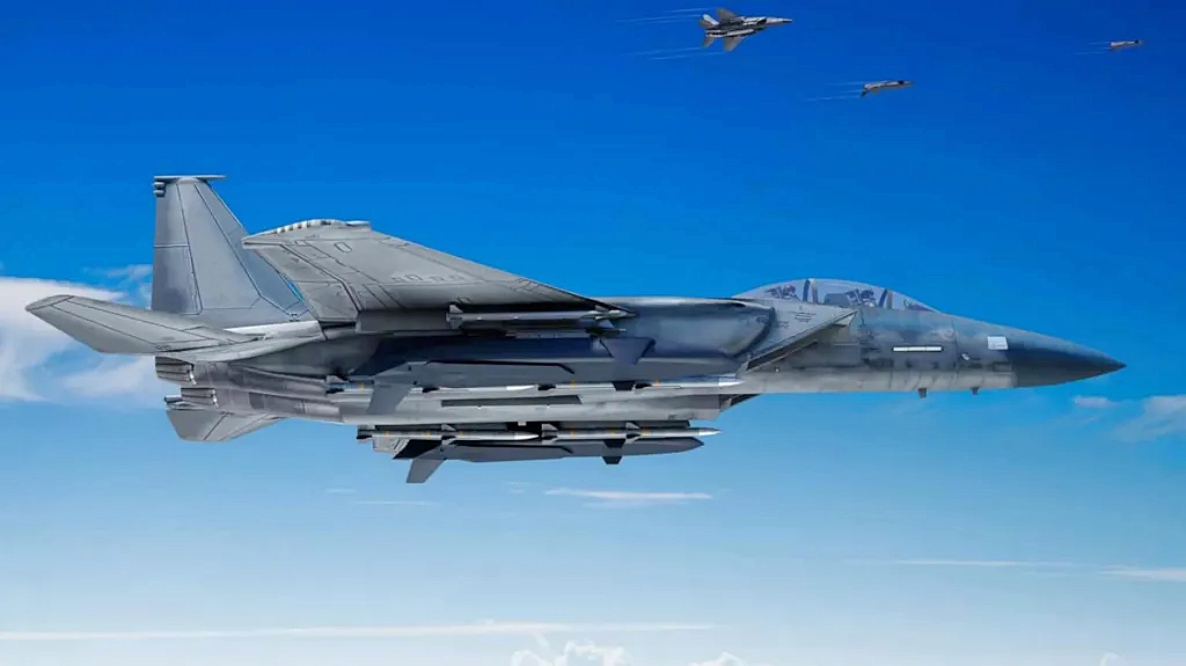
A rendering of an F-15 carrying LongShot drones, as well as other stores. Note the main wings and canards in their stowed positions. General Atomics
With ground and integration testing underway, DARPA is targeting initial flight tests as early as late 2026. These trials will demonstrate safe launch from an F-15, verify airworthiness, and confirm the vehicle’s ability to deploy a captive submunition.
Top Photo: Artist’s concept: Notional scenario of LongShot aircraft releasing air-to-air missiles. DARPA | Colie Wertz
Source: DARPA