
MIT Lincoln Laboratory’s Airborne Sense and Avoid (ABSAA) Radar Panel is a stepped-notch antenna array that marks a substantial advance in the fabrication of wide-bandwidth radar systems for use aboard unmanned aerial systems (UAS). Continue reading

an independent online news service for the Unmanned Aircraft Systems world
MIT Lincoln Laboratory’s Airborne Sense and Avoid (ABSAA) Radar Panel is a stepped-notch antenna array that marks a substantial advance in the fabrication of wide-bandwidth radar systems for use aboard unmanned aerial systems (UAS). Continue reading
Iran’s Revolutionary Guard is claiming it shot down an Israeli Hermes UAS, near the Natanz nuclear facility, earlier today. The Iranian military force has not offered any further details. Neither has Israeli commented on the claim.
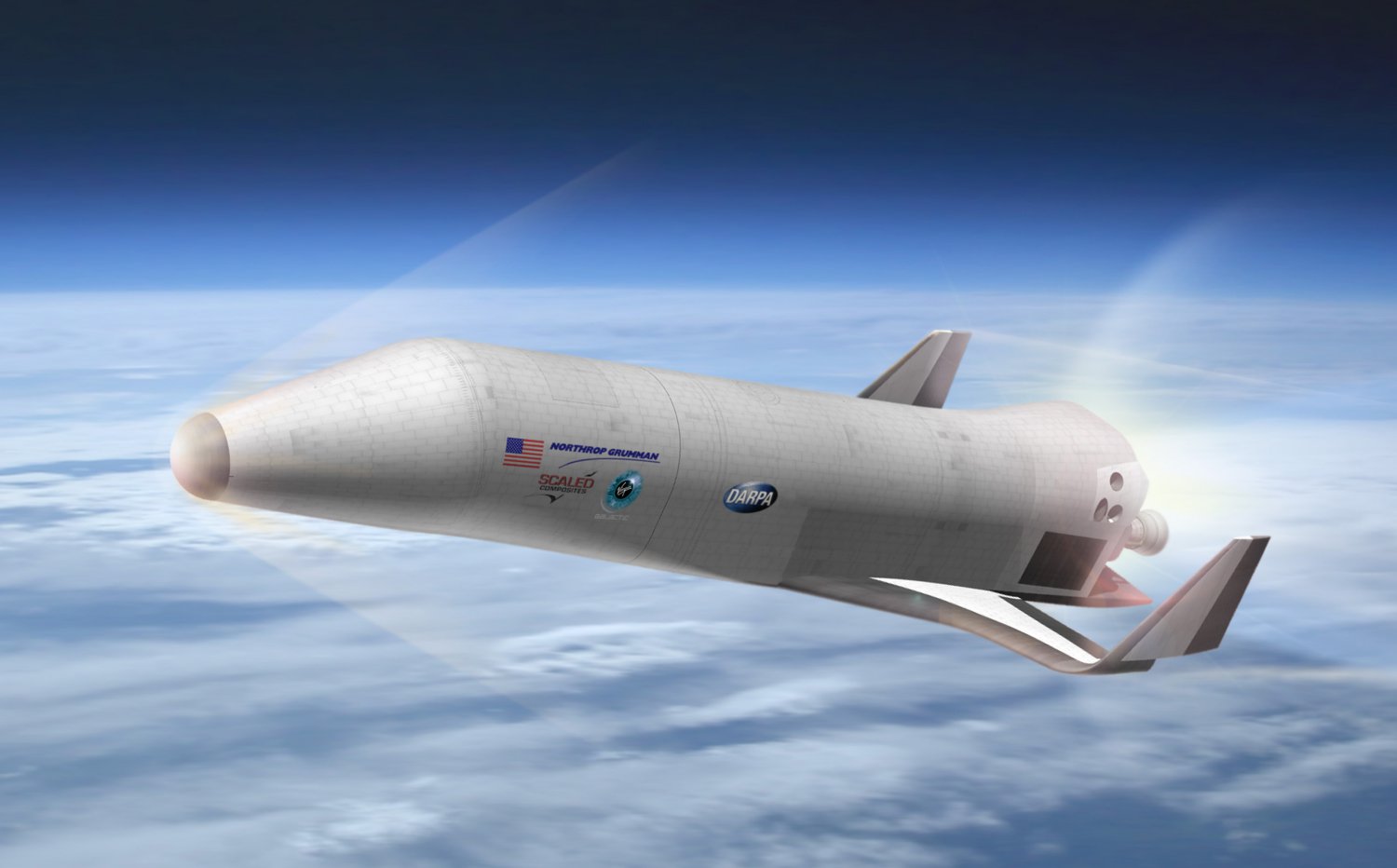 Northrop Grumman Corporation with Scaled Composites and Virgin Galactic is developing a preliminary design and flight demonstration plan for the Defense Advanced Research Projects Agency’s (DARPA) Experimental Spaceplane XS-1 programme.
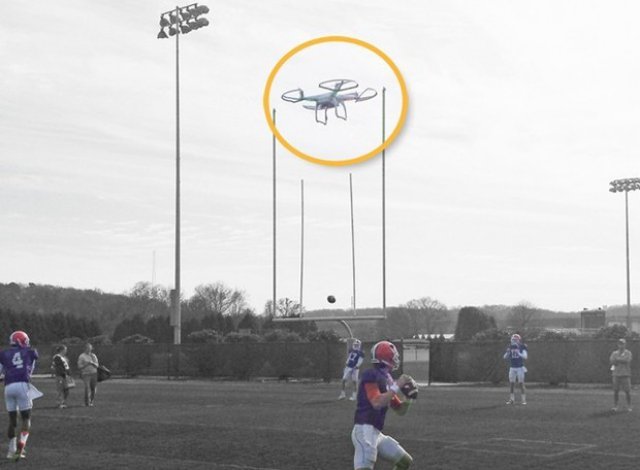 Grady Jarrett, Clemson’s built-like-a-boulder nose tackle, thought he was hearing a swarm of bees last spring when he discovered the camera-equipped UAS hovering above the practice field. With the coaches’ children always buzzing around a Clemson practice, defensive end Vic Beasley said he first thought it was somebody’s toy. Instead, Clemson had joined the growing number of college football programs using UAS to record practices, and the results were met with wide acclaim.
Starring former 007 Pierce Brosnan, The November Man has modern hovering drones woven into the story. As the deadly ex-CIA agent stalks his mark, a drone is stalking him, allowing his team of handlers to coordinate his every move. Continue reading
The professor heading up the project, Inna Sharf, is a mechanical engineer at McGill University’s Aerospace Mechatronics Laboratory. Sharf’s team has been tasked with a new project to create autonomous landing UAS software. Continue reading
Iran has unveiled indigenous cruise missiles and unmanned aerial vehicles as the country continues to break new ground in its defence industry. Continue reading
 Work is underway at BAE Systems to give aircraft human-like ‘skin’, enabling the detection of injury or damage and the ability to ‘feel’ the world around them. Engineers at BAE’s Advanced Technology Centre are investigating a ‘smart skin’ concept which could be embedded with tens of thousands of micro-sensors. When applied to an aircraft, this will enable it to sense wind speed, temperature, physical strain and movement, far more accurately than current sensor technology allows.