
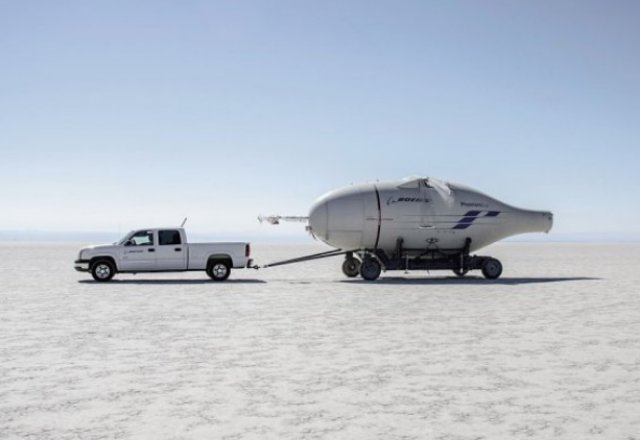
 Boeing’s hope that the Phantom Eye high-altitude long-endurance unmanned aerial vehicle (UAV) might be returned to the skies has been ended with the disclosure by the US Air Force (USAF) that the sole prototype is to be sent to a museum instead.
Intel Gets FAA Night Flight Waiver
 Intel received from the Federal Aviation Administration (FAPP) the Part 107 Certificate of Waiver, which posted today on the FAA’s website. The waiver is from regulations regarding daylight operation and the operation of multiple small unmanned aircraft. Intel is authorized to operate multiple small unmanned aircraft systems at night within Special Security Notice Flight Restriction Areas in the United States.
US Missile Defense Agency Solicits Industry for Low Power Laser Demonstration
 The US Missile Defense Agency moved one step closer to their laser-equipped unmanned air vehicle with a plan to compete a low power laser demonstrator for missile defense.
DJI’s Forthcoming ‘Mavic’ Folding Drone
 DJI’s Adam Najberg recently told Engadget that if the average consumer is going to buy a drone, “size is going to be an issue. Also ease of use.” Judging by a recent leak, the company may not be just musing about such a product. Drone site Heliguy leaked an image of a small camera drone that collapses down for easy transport. If accurate, it could be called the “Mavic,” a name DJI recently trademarked.
AT&T’s Ambitious Drone Strategy

When you think of the up-and-coming players in the commercial drone market, you might think of Amazon, or Google … but how about AT&T? “AT&T is going to be one of the biggest users of drones in the United States,” Art Pregler, who heads AT&T’s drone program and serves as director of national mobility systems, told GeekWire in an interview. Continue reading
Paris Drone Fest on Champs-Elysees
The Champs-Elysees was the setting of a mini-air show as amateur drone enthusiasts flew their high-tech toys over the famed Paris avenue in the city’s first festival celebrating the gadgets. Continue reading
NASA Chooses Helicopter for Mars Drone
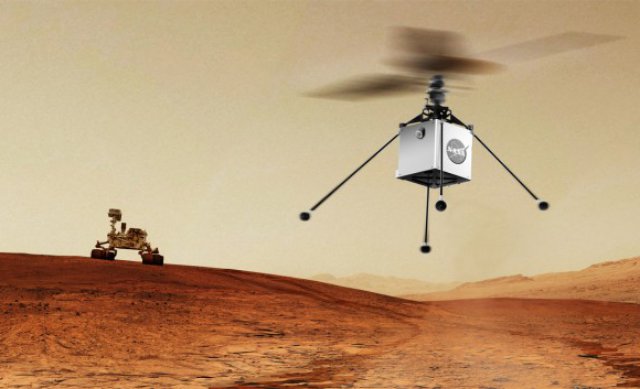 NASA is now planning on using a UAV in addition to the Rover in order to explore Mars. The reasons are very simple, and parallel the desire to use UAV’s on earth. Having a camera in the air, instead of being stuck on the ground, allows for better perspective to see details of the terrain. And also, avoids the problem that rovers have with negotiating difficult terrain.
Russia Uses GSM Networks to Track Drones
 Russia’s newest Rubezh airspace control system is capable of identifying and tracking unmanned aerial vehicles, cruise missiles and low-flying aircraft by using GSM networks, Izvestiya reported, adding that the innovative solution could also be employed to assist with rescue operations and to improve fire safety. Continue reading