The South African Civil Aviation Authority (SACAA) says over the last year, the number of registered remotely-piloted aircraft systems (RPAS), commonly known as drones, has more than doubled. Continue reading
UAS VISION
an independent online news service for the Unmanned Aircraft Systems world

The South African Civil Aviation Authority (SACAA) says over the last year, the number of registered remotely-piloted aircraft systems (RPAS), commonly known as drones, has more than doubled. Continue reading

On January 31, 2017, the Drone Advisory Committee (DAC) – a multi-stakeholder advisory group to the Federal Aviation Administration (FAA) – met in Reno, Nevada to discuss the critical issues affecting the integration unmanned aircraft systems (UAS) into the national airspace. Continue reading
The Federal Aviation Administration’s (FAA) latest public service announcement is a reminder that the airspace around NRG Stadium in Houston is a No Drone Zone for the Super Bowl. Continue reading

Commercial operators of drones in the UAE have to shell out a fee of $13,624 (AED50,000) per year, according to the General Civil Aviation Authority (GCAA). Unmanned aerial systems (UAS) operators using drone for non-commercial purpose are charged $1,107 (AED4,063) a year though the operator has to pay $273 (AED1,000) every 90 days. The fee for UAS training entities has also been set at $13,624 (AED50,000), but for five years. Continue reading
The law on the operation of drones in Greece was published in the Government Gazzette last week, applying to the use of drones when they fly more than 50 meters away from the controller. Continue reading

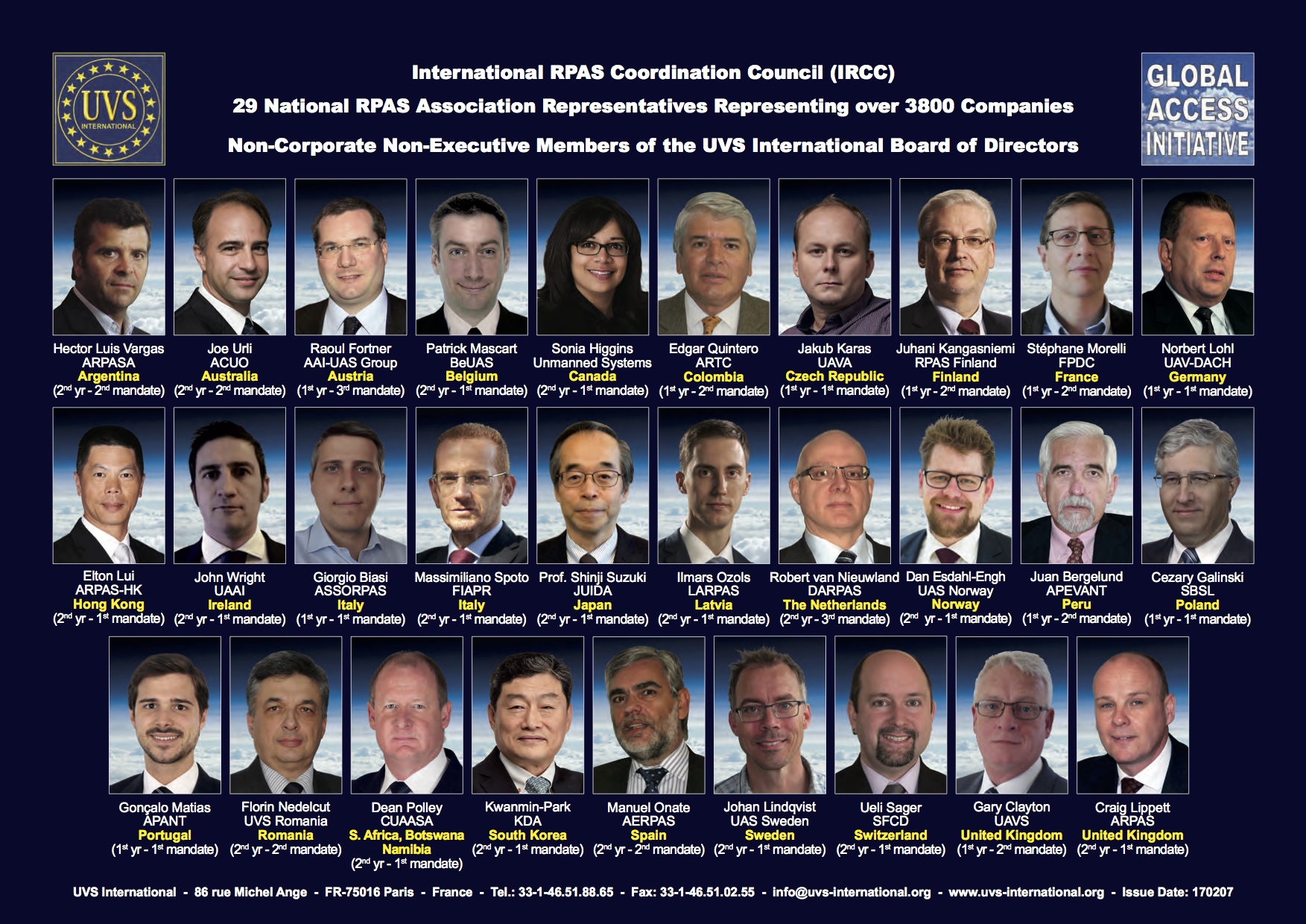
The Australian Association of Certified UAV Operators (ACUO) is calling for the Federal Government to launch a program to design, develop and implement a continent-wide unmanned traffic management (UTM) system as the only viable means of achieving the safe integration of remotely piloted aircraft systems (RPAS) – called drones by the general public – into national airspace. Continue reading

Due to the potential operational, environmental and safety hazards posed to Antarctic activities by the operation of Unmanned Aerial Vehicles (UAVs), the use of any UAV, drone, or remotely piloted aircraft in Antarctica by U.S. Antarctic Program (USAP) personnel is prohibited without specific authorization from the National Science Foundation (NSF) . Continue reading
By Joshua S. Turner, partner and co-chair of the UAS Practice, and John T. Lin, associate in the Telecom, Media & Technology Practice, at Wiley Rein LLP in Washington, DC
No one disputes that the federal government has exclusive jurisdiction over “navigable air space,” which has historically begun “above the minimum safe altitudes of flight,” including the airspace needed to ensure safety in the takeoff and landing of aircraft. The FAA generally sets the minimum safe altitude as “500 feet above the surface [of non-congested areas], except over open water or sparsely populated areas.” Continue reading