
Aerosense, Sony Corp.’s joint-venture drone company, has unveiled a prototype of the flying machines it will use to serve business customers. Continue reading
Category Archives: Non-Military & Commercial UAS
EHANG Raises $42M in Series B Financing
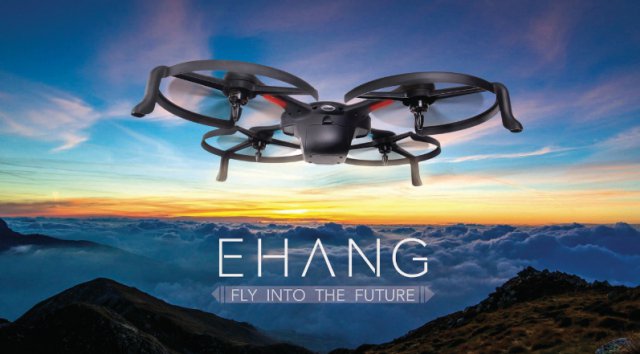 EHANG announced that it has raised $42 million in series B financing. Led by GP Capital, and with participation from GGV Capital, ZhenFund, Lebox Capital, OFC and PreAngel, the move drives the valuation of the Chinese drone startup 100 times higher than 16 months ago when it was established.
Skycatch Lands $22M New Funding

Drone developer Skycatch Inc. has landed $22 million in new funding. The company is still raising its funding, and it has a target of $25 million, according to a regulatory filing. Continue reading
Trimble Launches ZX5 Multi-Rotor
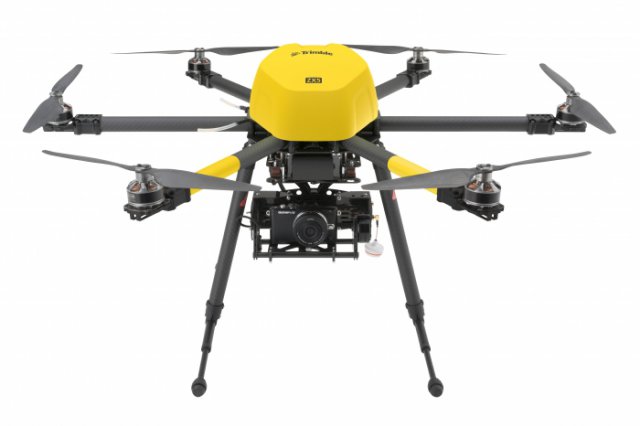
Trimble has announced the ZX5 Multirotor Unmanned Aircraft System (UAS), a new aerial imaging and workflow solution that captures and processes geo-referenced photo and video data for mapping, agriculture and inspection applications. Continue reading
Drones Over Machu Pichu
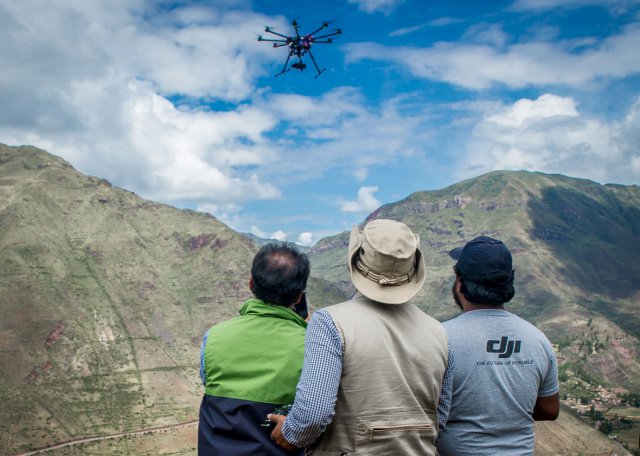
Members of Peru’s Ministry of Culture drone team watch a DJI S1000 octocopter in flight at the ruins of Pisaq in the Sacred Valley in April 2015.
Founded in 2013 by Luis Jaime Castillo Butters, the former deputy minister of cultural heritage and cultural industries, Peru’s drone archaeology team has quickly become one of the most active in the world, working to accurately survey and preserve the South American nation’s thousands of valuable archaeological sites. Continue reading
LED License Plates for Drones
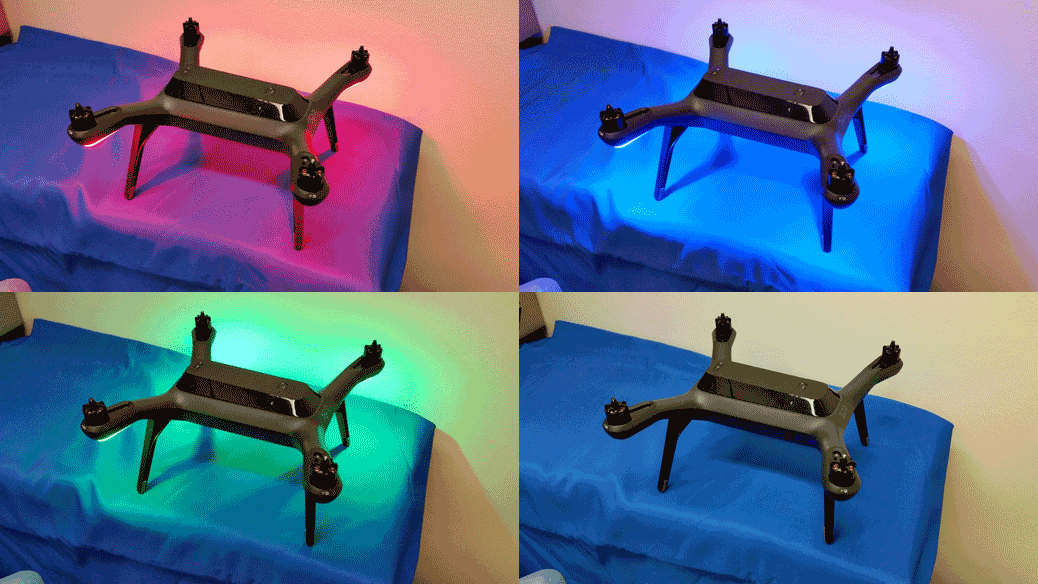 Researchers at the University of California, Berkeley, are now testing a kind of license plate for drones they think could help make drone operators more accountable. The project, called Lightcense, involves a rectangular array of bright, multicolored LEDs attached to the underside of a craft. The LEDs blink a unique pattern that could be looked up in a database by law enforcement to identify a drone’s owner.
Yamaha RMAX Gets CAA Part 102 Authorisation in New Zealand
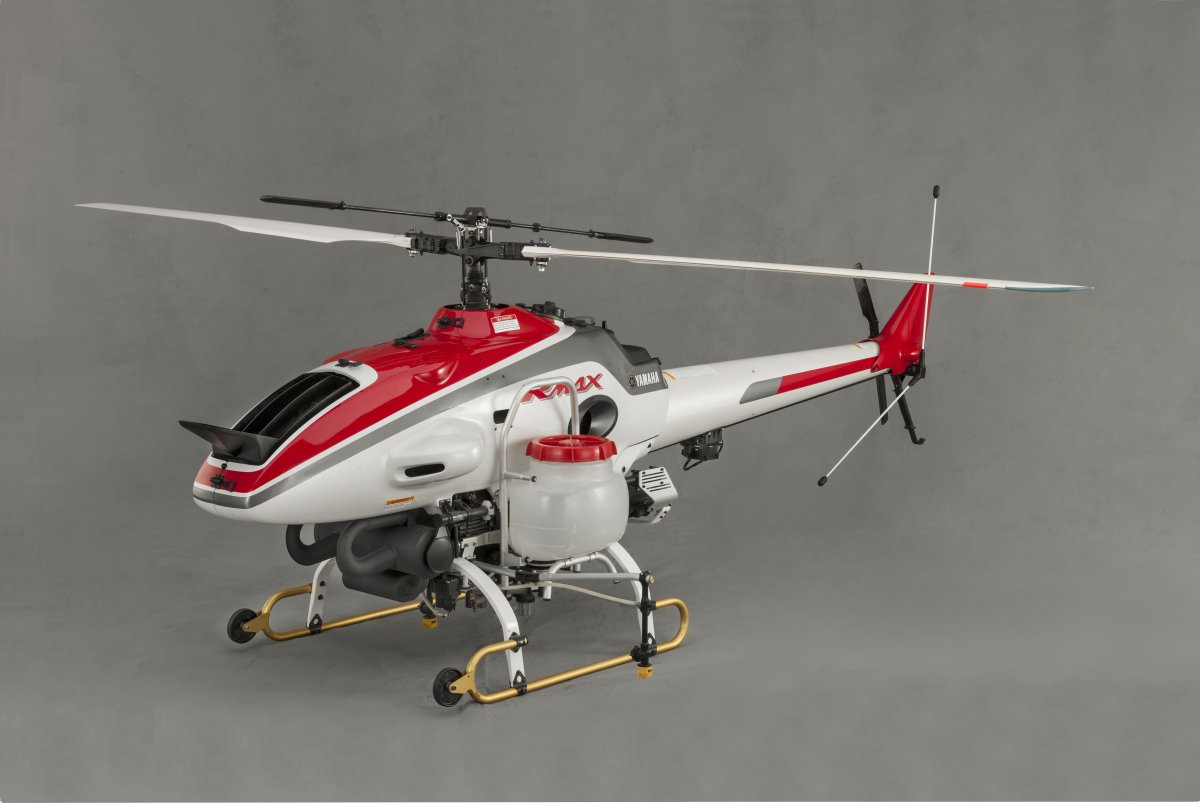 The Yamaha RMAX unmanned helicopter has become the first drone to be certified for flight in New Zealand under Part 102 of the Civil Aviation Rules.
Helicopter Operators Consider RPAS
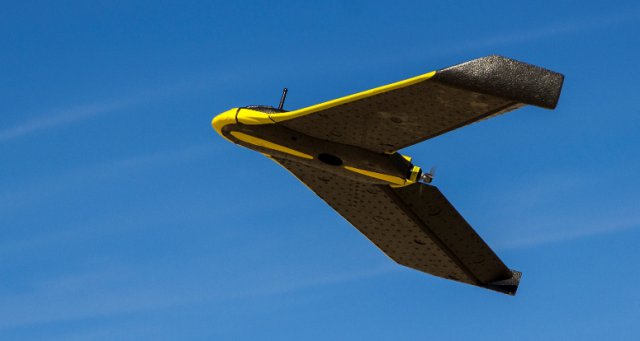 Remotely piloted aircraft systems (RPAS) present new opportunities for helicopter operators and some industry representatives in Europe suggest operators supplement their fleets with these aircraft, which can fill roles that rotorcraft cannot.