
Lennox Head on the state’s Far North Coast made history last Thursday when it became the scene of a dramatic rescue involving the deployment of the Westpac Little Ripper UAV and Rescue Pod. Continue reading
Category Archives: First Responders
Ontario Paramedics Now Fly BVLOS
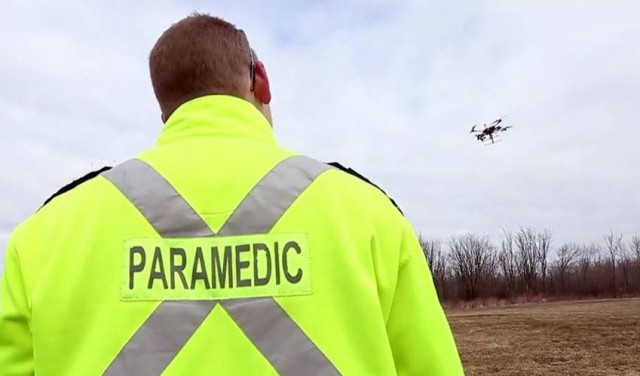
When a driver was fatally ejected one night late last year from a vehicle that rolled off a road in Eastern Ontario’s Renfrew County, emergency responders were unsure whether there were other victims. The terrain around the crash site was difficult to access, forested and rocky with steep and unexpected drops. Instead of relying solely on emergency staff to determine the number of dead or injured, the county’s paramedic service turned to a technology it has pioneered among its peers in Canada: an unmanned aerial vehicle (UAV) or, more colloquially, a drone. Continue reading
Thrush Aircraft and Drone America to Develop Autonomous Fire Fighting Aircraft
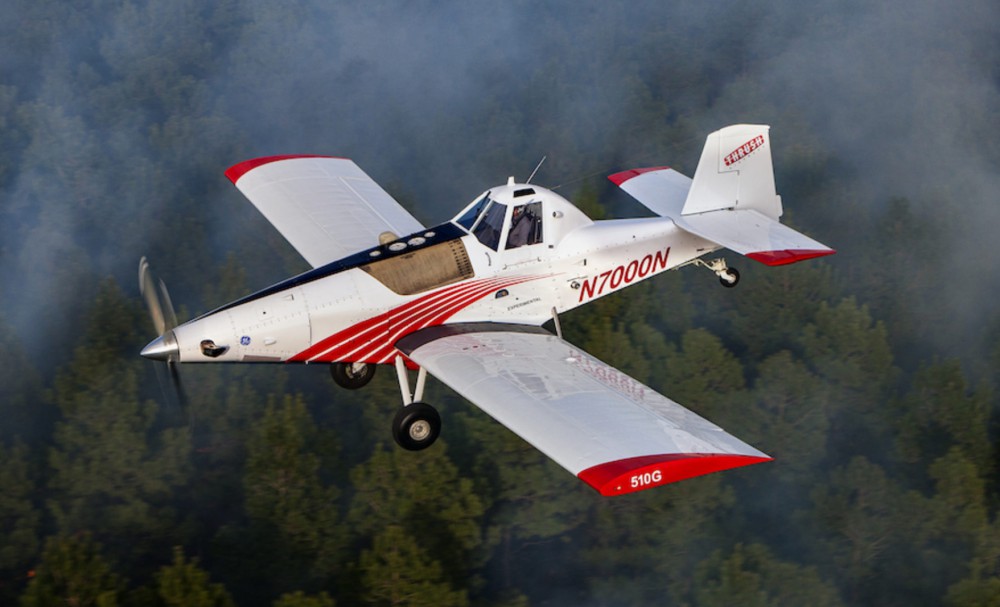
The arsenal of airborne tactics available to firefighters and first responders may soon grow significantly as Thrush Aircraft has formed a strategic alliance with highly-regarded unmanned aerial vehicle and systems manufacturer Drone America to begin development of the world’s first autonomous air tanker. Continue reading
NY Guardsmen on Firewatch In California Skies
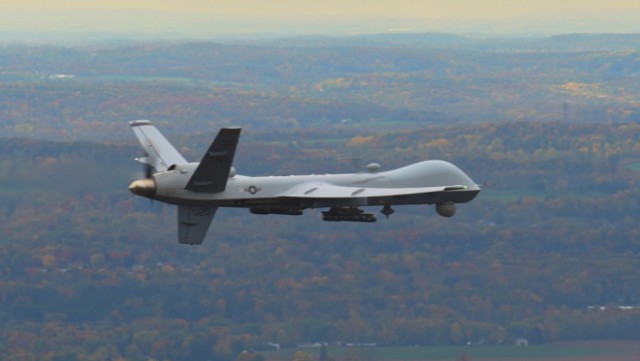
Nine members of the New York Air National Guard’s 174th Attack Wing have deployed to assist the California Air National Guard’s 163rd Attack Wing in flying the MQ-9 Reaper remotely piloted aircraft that have been helping local authorities fight the massive Thomas Fire in Southern California. Continue reading
China’s CH-4 to be Deployed for Firefighting
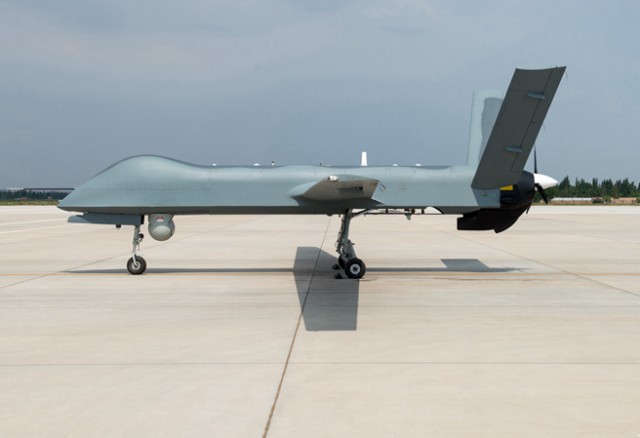 A CH-4 unmanned aerial vehicle (UAV), also known as a “rainbow drone,” will officially enter service to monitor forest fires in northeast China, following a deal inked between the regional forestry authority and the drone’s manufacturer in Beijing on Nov. 19, 2017. Continue reading
Insitu Flies ScanEagle for Disaster Relief and Fire Suppression Missions

Insitu Inc., a wholly-owned subsidiary of The Boeing Company, used its ScanEagle unmanned aerial system (UAS) in assisting with several recent disaster recovery operations in Texas, and fire suppression operations in Oregon and California. Continue reading
Police Scotland Drones to Support Helicopter Unit
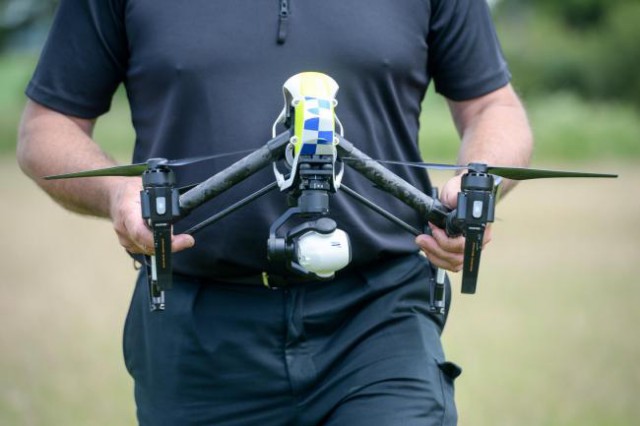
Police Scotland is planning to buy two drones equipped with high-resolution cameras in what would be a first for the force north of the border. Tender documents reveal plans to spend around £125,000 on two “unmanned aerial vehicles” for the force’s Air Support Unit, which currently consists of one helicopter. Continue reading
Centralized Drone Management for First Responders
SPH Engineering has launched its UgCS centralized drone management solution for Police, Search and Rescue, Firefighter and Security Service Command centers for efficient drone implementation in first response and surveillance operations. Continue reading