Industry leaders gathered at the Global Urban & Advanced Air Summit (GUAAS) to discuss the latest innovation of advanced air mobility and pioneer future strategies face-to-face. Continue reading


UAS VISION
an independent online news service for the Unmanned Aircraft Systems world
Industry leaders gathered at the Global Urban & Advanced Air Summit (GUAAS) to discuss the latest innovation of advanced air mobility and pioneer future strategies face-to-face. Continue reading
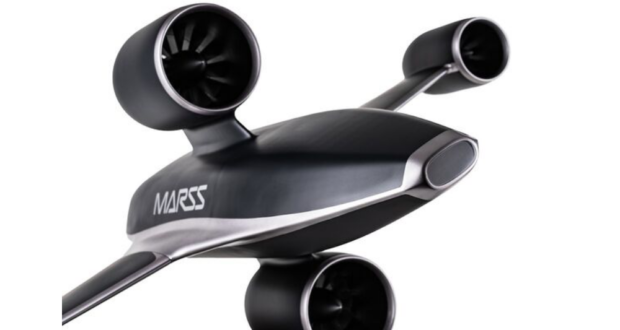
UK technology firm MARSS launched a new counter unmanned aerial vehicle (C-UAV) technology at the World Defense Show in Riyadh on 6 March, featuring a reusable, electrically powered interceptor. Continue reading
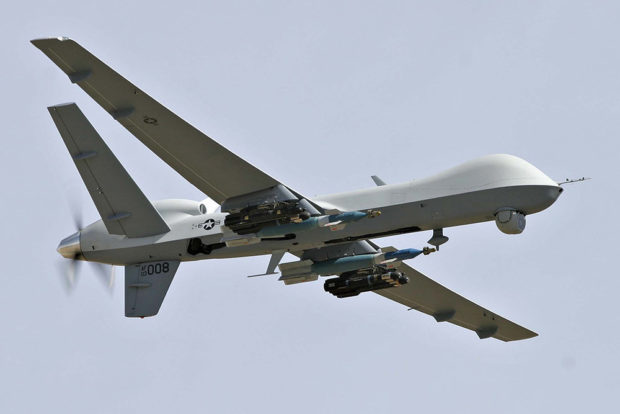
Poland is to procure MALE MQ-9 Reaper drones, we have found out. The procurement is to be finalized as an urgent operational requirement, concerning the situation beyond Poland’s eastern border.

The latest story of homespun Ukrainian heroism circulating on Twitter suggests that a woman downed a Russian drone by throwing a jar of pickled gherkins from her balcony at the device. Continue reading

Pratt & Whitney has been selected by the U.S. Department of Energy (DoE) to develop novel, high-efficiency hydrogen-fueled propulsion technology for commercial aviation, as part of DoE’s Advanced Research Projects Agency-Energy (ARPA-E). Continue reading

The Federal Aviation Administration (FAA) and the United Kingdom Civil Aviation Authority recognize the potential of electric vertical take-off and landing (eVTOL) and other Advanced Air Mobility (AAM) aircraft to significantly benefit the public. Continue reading
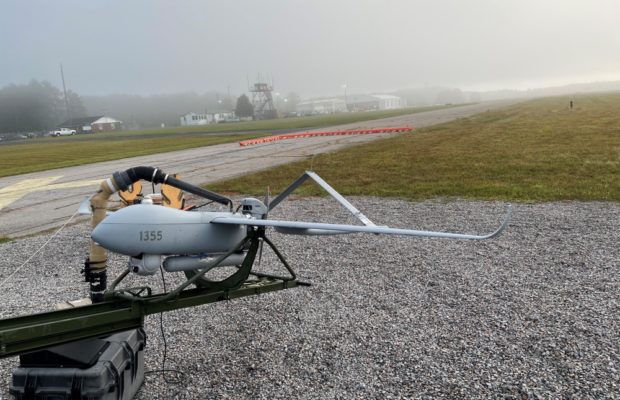
Norwegian Nordic Unmanned has checked into the UAS Denmark Test Center for drones at Hans Christian Andersen Airport, where the listed drone manufacturer will now have a permanent address via a Danish subsidiary. According to Nordic Ummanned, the Funen Airport offers some completely unique facilities. Continue reading
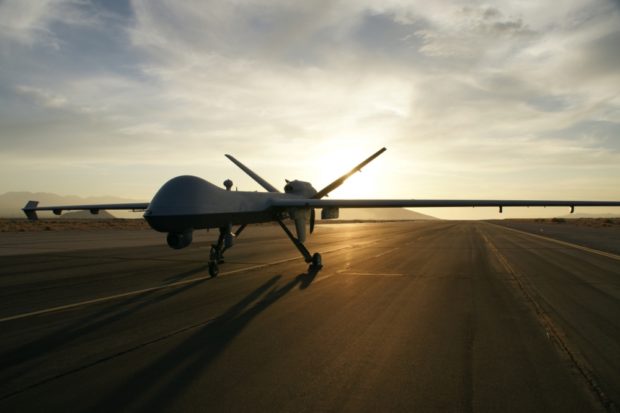
The MQ-9A Remotely Piloted Aircraft has surpassed 2 million flight hours in support of global customers. The workhorse unmanned aircraft from General Atomics Aeronautical Systems, Inc. combines unmatched persistence and mission flexibility with a >90% Mission Capable Rate, which puts the MQ-9A in a class by itself. Continue reading