
A team, led by Andy Keane and Jim Scanlan of the University of Southampton, believes that 3D printing will soon allow unmanned aircraft to go from the drawing board to flight in a matter of days.
Category Archives: Applications & Testing & Experience
Spanish Unmanned Aircraft Monitors Spanish Coastline
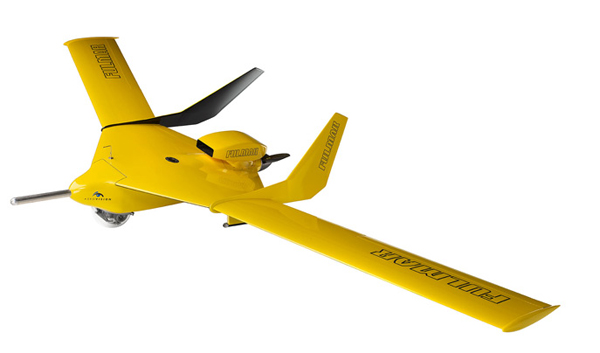
Aerovisión Spain has supplied an unmanned aircraft used in trials of monitoring the Spanish coast, within the remit of the WIMAAS (Wide Maritime Area Surveillance) project, financed by the European Union.
Unmanned Aircraft in Oil-Spill Response in Alaska
The University of Alaska Fairbanks Geophysical Institute and BP Exploration Alaska demonstrated the use of a three-pound unmanned aircraft, the Aeryon Scout, as a way of gathering 3-D aerial data to aid in oil spill clean up efforts.
Raytheon’s JLENS Aerostat Successfully Completes Endurance Test

Raytheon Company‘s aerostat system – Joint Land Attack Cruise Missile Defense Elevated Netted Sensors (JLENS) – recently completed a successful endurance test.
Global Hawk Completes First Full System Flight with MP-RTIP Sensor

Northrop Grumman Corporation’s RQ-4B Block 40 Global Hawk completed its first full system flight with the high performance AN/ZPY-2, also referred to as the Multi-Platform Radar Technology Insertion Program (MP-RTIP) sensor. The flight took place at Edwards Air Force Base, Calif., on July 21.
American Dynamics Flight Systems AD 150 Wind Tunnel Test
CNN sent reporter Brian Todd to the Glenn L. Martin Wind Tunnel at the University of Maryland to witness wind tunnel tests of the AD-150 aircraft, being developed by American Dynamics Flight Systems, an unmanned aircraft that can take off vertically and fly horizontally.
Euro Hawk Lands in Europe
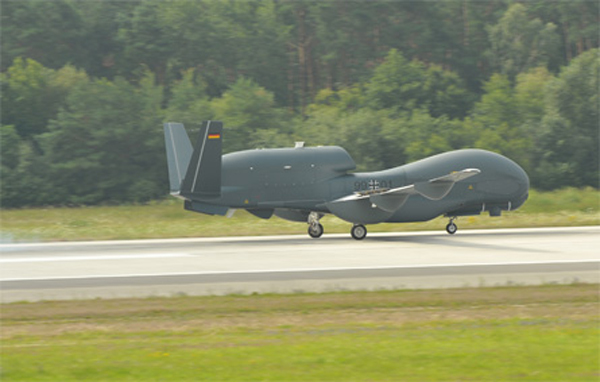
Those who have been following the saga will all be relieved to know that the Northrop Grumman-Cassidian Euro Hawk finally landed in Germany on 21 July.
Fire Scout Performs Well After 1,000 Flight Hours – U.S. Navy
More than a thousand hours of flight time carried out this year by deployed Fire Scout unmanned helicopters is evidence that the system is working through its developmental problems and showing itself able to deliver a reliable reconnaissance and surveillance capability, the programme’s U.S. Navy managers said.