
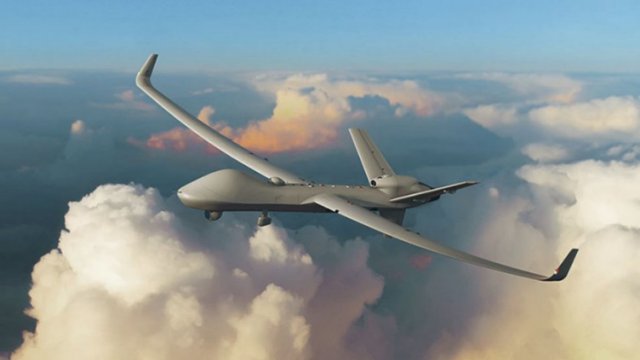
 General Atomics Aeronautical Systems, Inc. has announced that it has successfully completed fuselage structural integrity testing of its Certifiable Predator B (CPB) RPA.
Category Archives: Applications & Testing & Experience
NASA, AeroVironment and SmartC2 Team for BVLOS UAS Traffic Management Flight Demonstration
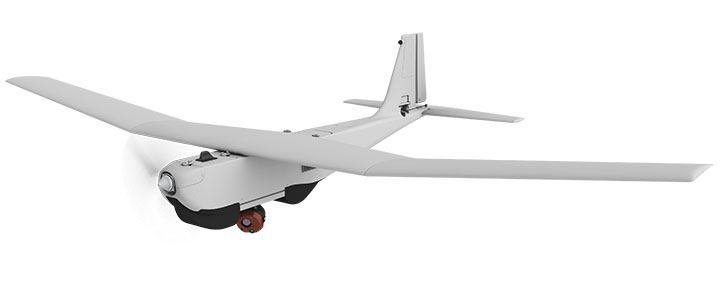
AeroVironment, Inc. has announced that the company – in partnership with SmartC2, a provider of flight business management systems – will team with NASA on its Unmanned Traffic Management (UTM) Technology Capability Levels (TCL) 2 flight demonstration slated for October 2016. Continue reading
Textron Completes Hybrid Quadrotor Integration on Aerosonde
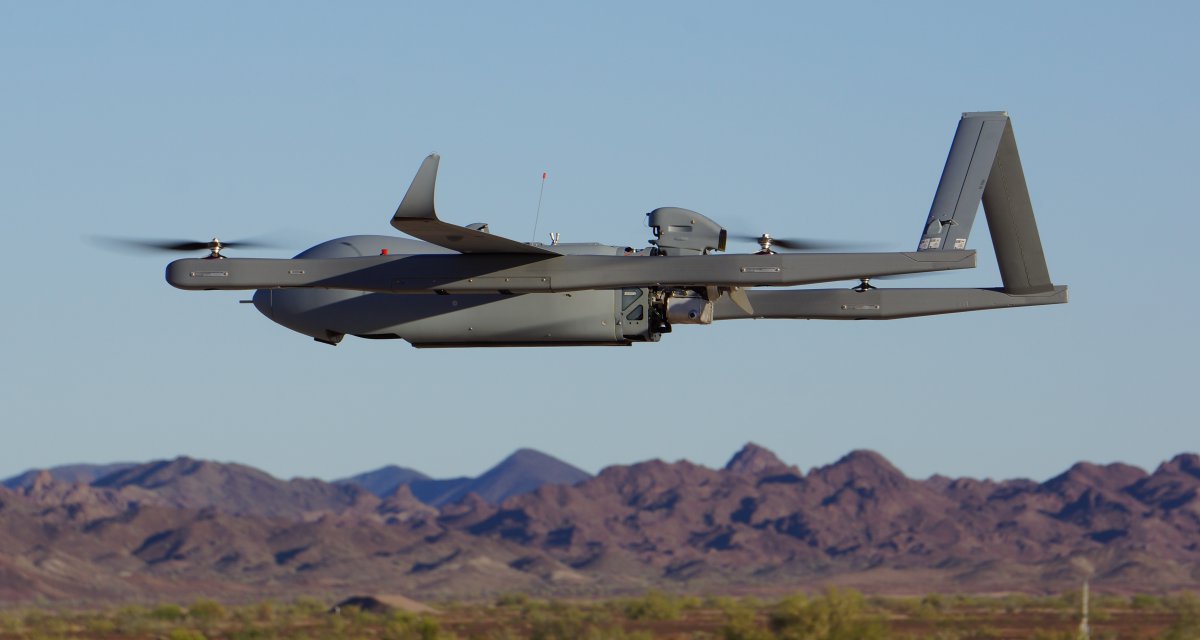 Textron Systems Unmanned Systems has announced the successful demonstration of the Aerosonde Small Unmanned Aircraft System (SUAS) enabled with Hybrid Quadrotor technology – allowing the system to take-off and land vertically to significantly increase mission flexibility.
General Atomics ‘Avenger’ Trials UTAS MS-177 Sensor
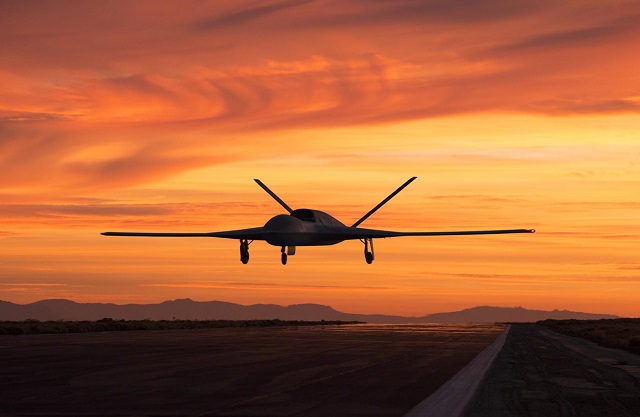 The US Air Force’s next-generation multispectral camera, the UTC Aerospace Systems (UTAS) MS-177, has been successfully flown on the General Atomics Aeronautical Systems “Predator C” Avenger aircraft.
Aurora Successfully Flies Subscale X-Plane Aircraft
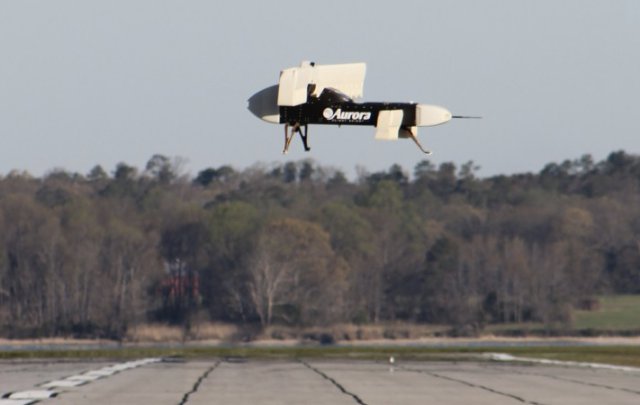 Aurora Flight Sciences announced that a subscale vehicle demonstrator (SVD) of its LightningStrike, Vertical Take-off and Landing Experimental Plane (VTOL x-plane) for the Defense Advanced Research Projects Agency (DARPA) was successfully flown at a U.S. military facility.
NASA Preparing for Fourth Series of Flight Tests
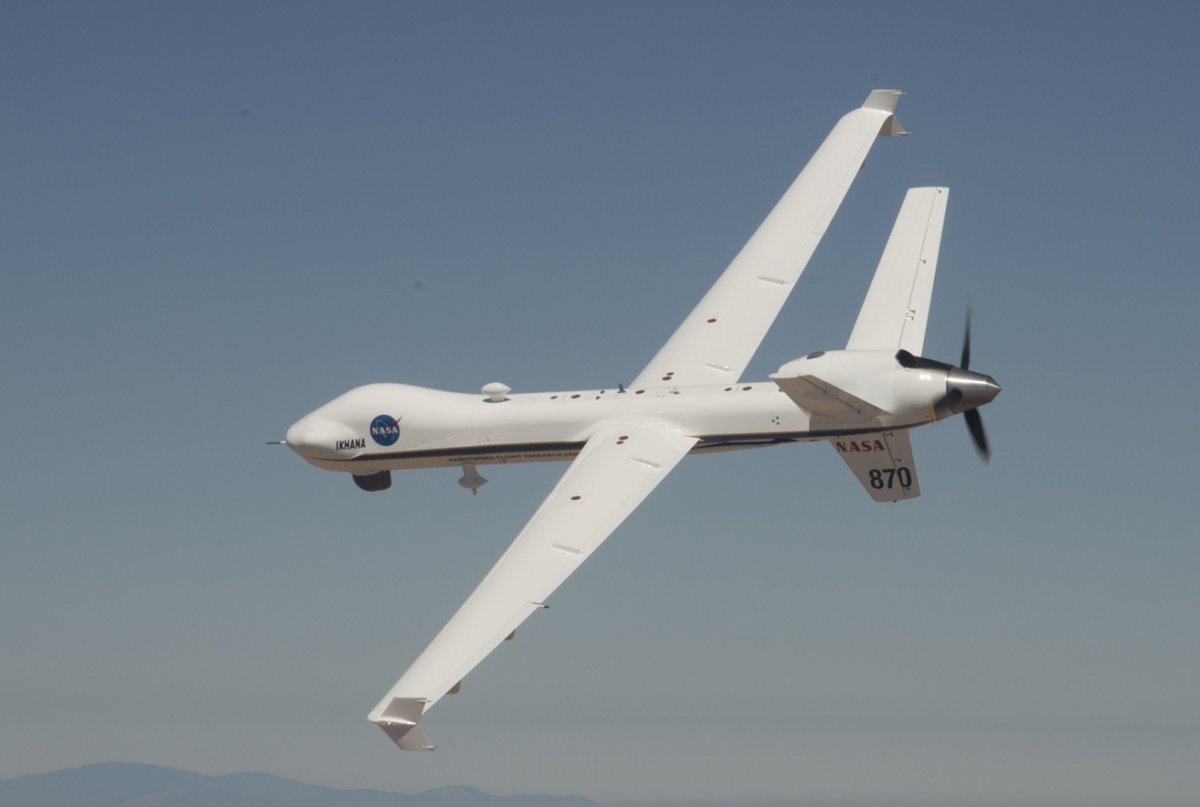 NASA and its partners, General Atomics Aeronautical Systems, Inc., Honeywell International and the RTCA Special Committee (SC)-228, are validating and advancing technologies that will assist the Federal Aviation Administration as they develop the regulations to allow integration of Unmanned Aircraft Systems (UAS) into the National Airspace System (NAS).
US Navy’s Solar Drone Lands on Water
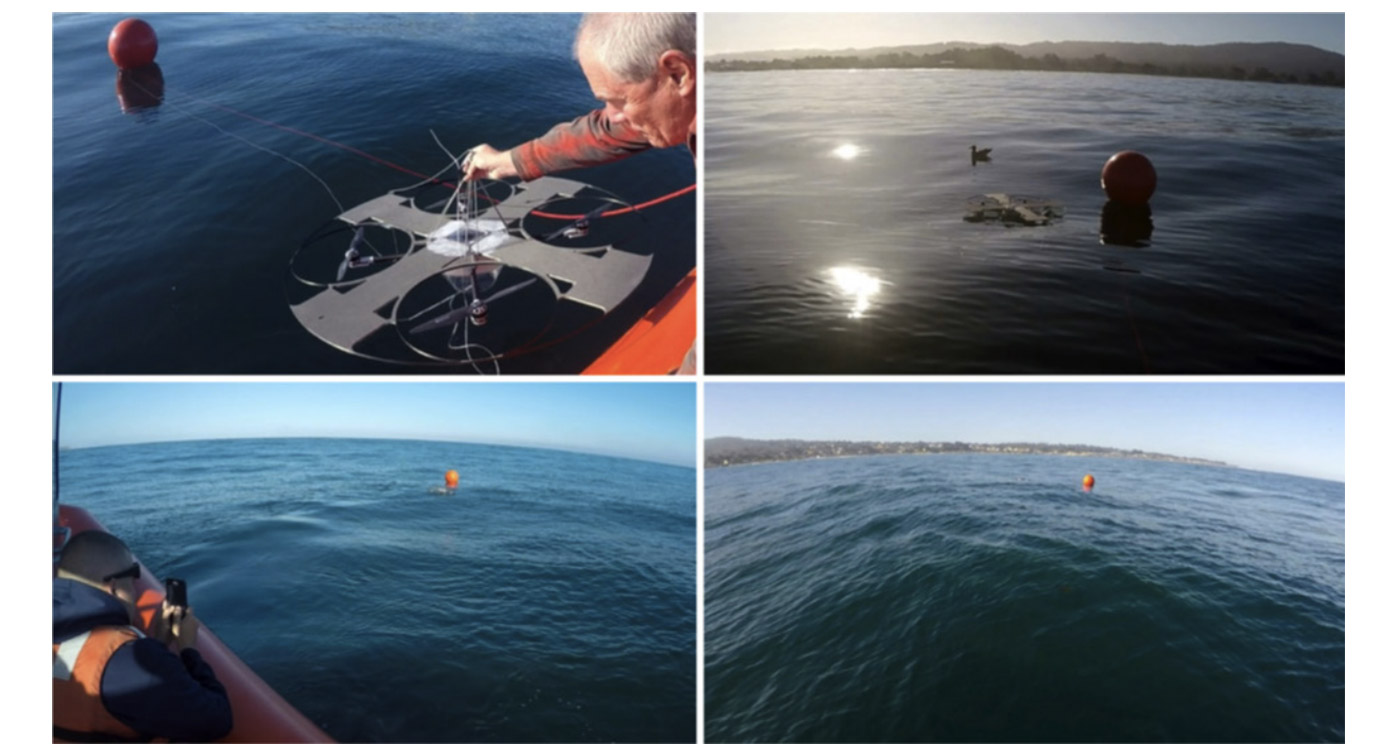 Unlike most quadcopters, the Aqua-Quad doesn’t take off from solid ground. Dr. Kevin Jones and his team from the Naval Postgraduate School developed it to fly straight up from the ocean or any body of water. And it can land back on water after it has fulfilled its mission, staying on or under the surface until it’s deployed again. Continue reading
BlueBird’s ThunderB Performs 25.5h Test Flight
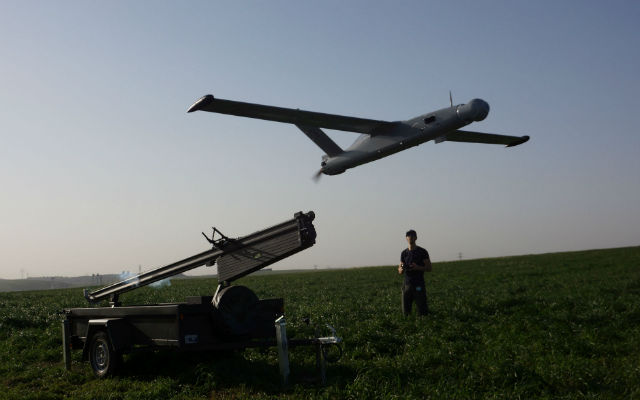 BlueBird’s ThunderB tactical unmanned air vehicle performed a record 25.5h flight on 17 March, as part of a demonstration for an undisclosed customer.