

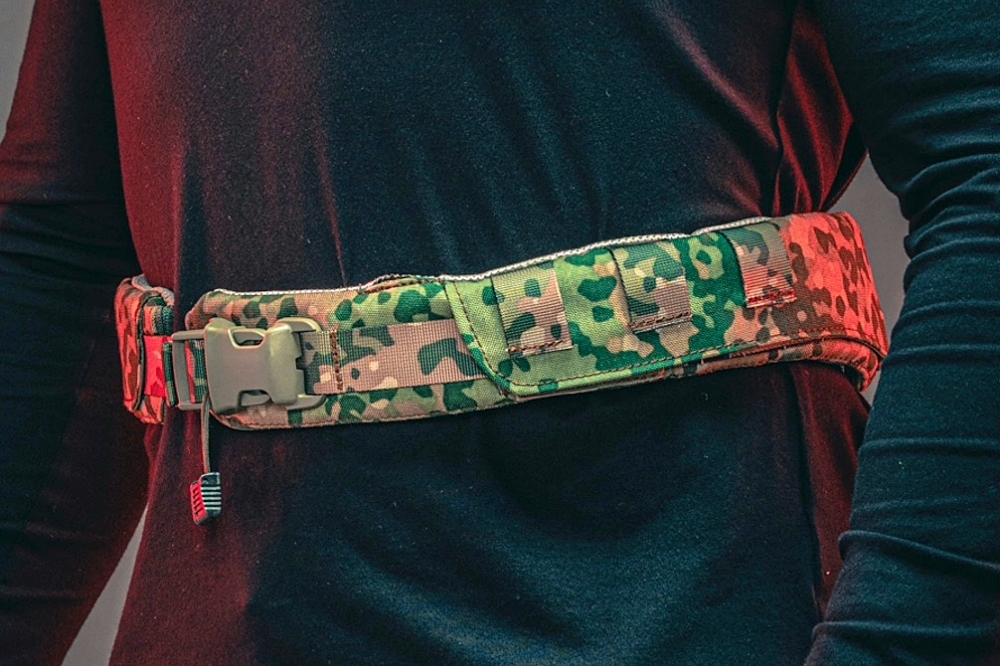
The Haptic Drone Detection System is a soldier-worn early warning system that detects approaching drones and lets dismounted soldiers feel where the drone threat is coming from. Helmet-mounted acoustic sensors pick up the sound of a drone, and a haptic belt translates the direction and distance of the drone into intuitive vibrations around the waist. No screen to check, no audio alarm to listen for.
Drones have changed the battlefield. In the war in Ukraine, drones are now estimated to cause around 70% of all casualties, and small FPV drones and multicopters are hard to see or hear in time. Our drone warning gives soldiers the critical seconds they need to take cover, conceal or take counter-measures, while their hands, eyes and ears stay free for the mission.
Elitac Wearables develops the system together with acoustic sensing specialist Microflown AVISA, in close collaboration with the Dutch Ministry of Defence.
How the Drone Detection System Works
The Haptic Drone Detection System combines passive acoustic UAS threat detection with haptic feedback technology. Acoustic vector sensors on the helmet listen for the unique sound signature of drone propellers and motors. A compact processing unit determines the direction of the drone, and the Mission Navigation Belt translates this into a vibration on the side of the body that faces the threat.
When the soldier turns or the drone moves, the haptic signal updates automatically, so the indicated drone location is always correct. This allows the soldier to take swift appropriate action, take cover or decide on counter drone activity.

From Single Soldier to Networked Team
Stand-Alone: Individual Drone Warning
When the helmet sensors of a soldier detect a drone, the soldier immediately feels a haptic drone warning in the direction of the threat. At set intervals, the belt gives an updated cue of the direction of the drone, so the soldier always knows where the threat is, even while moving.
Networked: Shared Drone Location for the Whole Team
When several soldiers are equipped, the system works as a distributed sensor network. Detections from multiple sensors are combined on a TAK server to determine the location of the drone. That location is shared through ATAK, and every soldier feels a personal haptic signal that indicates the direction and distance of the drone relative to their own position and orientation. Even a soldier whose own sensor did not hear the drone receives the correct warning.
Because detection is passive, the system does not emit any radio or radar signal. This keeps the user hard to detect and also works against autonomous and fibre-optic controlled drones that RF detection cannot pick up.
Source: elitac wearables