
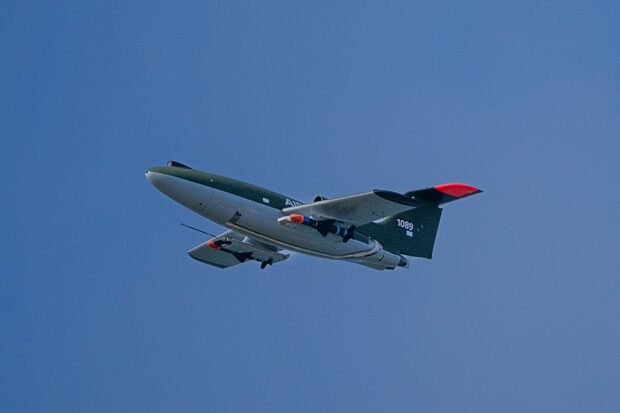
Airbus’ ‘Bird of Prey’ interceptor drone has completed its first demonstration flight at a military training area in northern Germany. In a realistic mission scenario, the drone autonomously searched for, detected, and classified a medium-sized one-way attack (kamikaze) drone.
After confirming the target, it successfully engaged it using a Mark I air-to-air missile developed with defence start-up Frankenburg Technologies.
Airbus Defence and Space CEO Mike Schoellhorn said countering kamikaze drones is now a pressing tactical priority. He highlighted that the Bird of Prey, combined with Frankenburg’s low-cost Mark I missiles, offers armed forces an effective and affordable interception capability, addressing a key gap in modern asymmetric warfare. He also noted that integrating the system into Airbus’ Integrated Battle Management System (IBMS) enhances overall air defence effectiveness.
Frankenburg Technologies CEO Kusti Salm described the development as a major step in modern air defence. He emphasised that combining low-cost, mass-producible interceptor missiles with a drone platform creates a new cost model, enabling defence against large-scale aerial threats more efficiently.
The demonstration occurred just nine months after the project began. The prototype, based on a modified Airbus Do-DT25 drone, has a 2.5-metre wingspan, a length of 3.1 metres, and a maximum take-off weight of 160 kg.
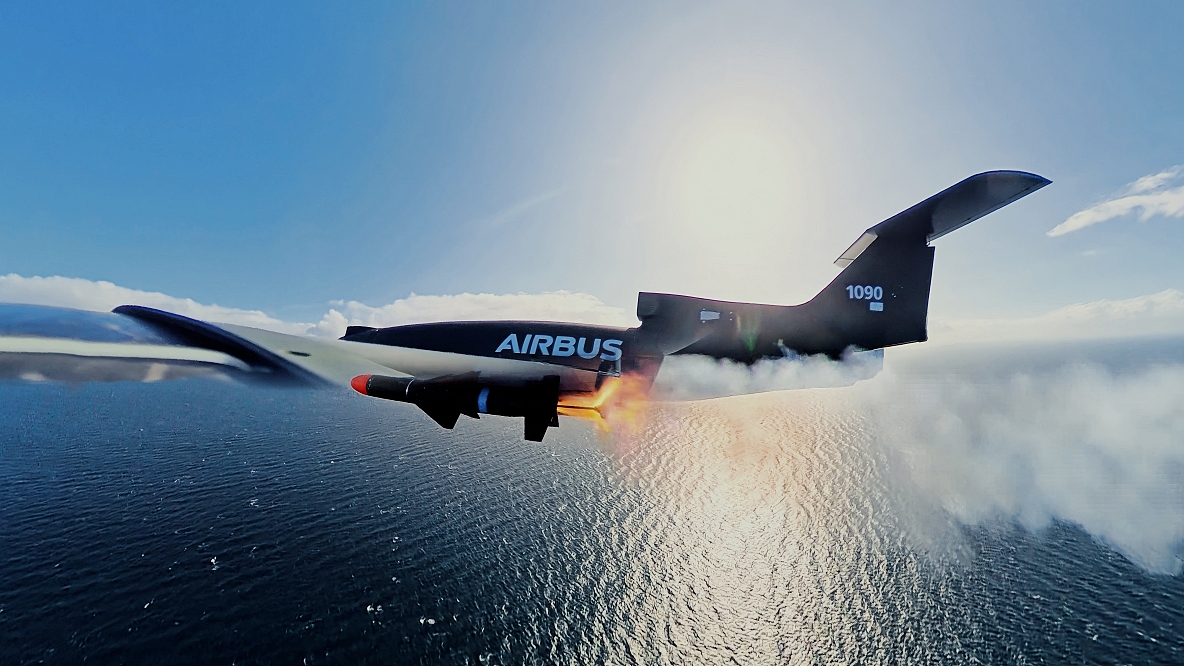
While the prototype carried four missiles, the operational version will carry up to eight. The high-subsonic Mark I missiles have a range of up to 1.5 kilometres, are 65 centimetres long, and weigh under 2 kg, making them among the lightest guided interceptors available. Equipped with fragmentation warheads, they are designed to neutralise targets at close range, allowing the reusable drone to engage multiple threats per mission at low cost.
Designed to integrate into NATO air defence systems via IBMS, Bird of Prey is intended as a flexible, mobile component of layered defence. Further live-warhead tests are planned through 2026.
Source: Airbus