
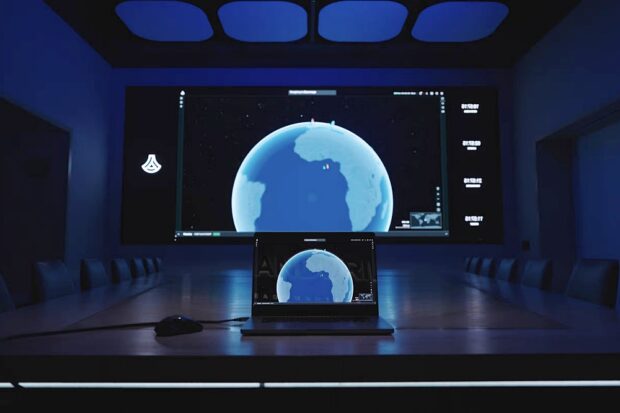
Anduril Industries Inc., based in Costa Mesa, California, has been awarded a firm-fixed-price contract with a cumulative ceiling of $20 billion to consolidate current and future commercial capabilities into a unified, mission-ready system.
This includes the company’s proprietary, open-architecture, AI-enabled Lattice platform, along with integrated hardware, data infrastructure, computing resources, and technical support services to meet the Army’s evolving operational and business requirements.
The rapid global proliferation of unmanned aerial systems (UAS), or drones, has expanded the threat landscape beyond traditional battlefields to the U.S. homeland. Department of War installations, federal sites, and critical infrastructure are increasingly vulnerable. Existing fragmented systems, operating independently, are insufficient to counter this dynamic and growing risk.
To address this challenge, a unified command-and-control approach is required. A common platform that integrates diverse systems can enable forces to detect, track, identify, and respond to threats quickly and effectively across the joint force.
The Joint Interagency Task Force 401 (JIATF-401), responsible for coordinating counter-UAS efforts across federal agencies, has selected Anduril’s Lattice software as its tactical command-and-control solution. This $87 million award represents the first task order under the Army’s Enterprise Agreement with Anduril. It establishes both a standardized software platform and a scalable acquisition pathway for deploying advanced counter-drone capabilities across government organizations.
Lattice integrates a wide range of sensors and effectors—from legacy systems to emerging technologies—enabling rapid detection, classification, and engagement of threats. Built using commercial software best practices, the platform is continuously updated based on operational insights from deployments worldwide.
This agreement builds on years of successful air defence deployments and recent selection of Lattice as the Army’s next-generation fire control capability for counter-UAS missions. As threats continue to evolve, a unified command-and-control backbone will be essential for integrating new technologies and strengthening coordinated defence efforts.