
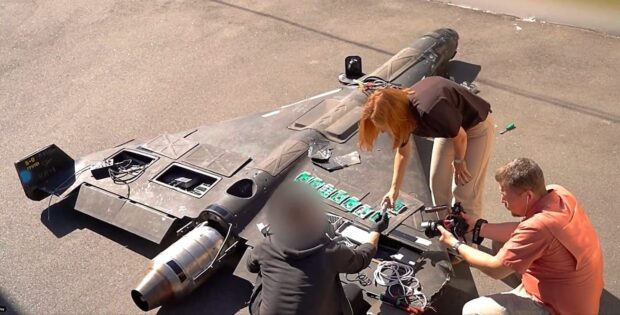
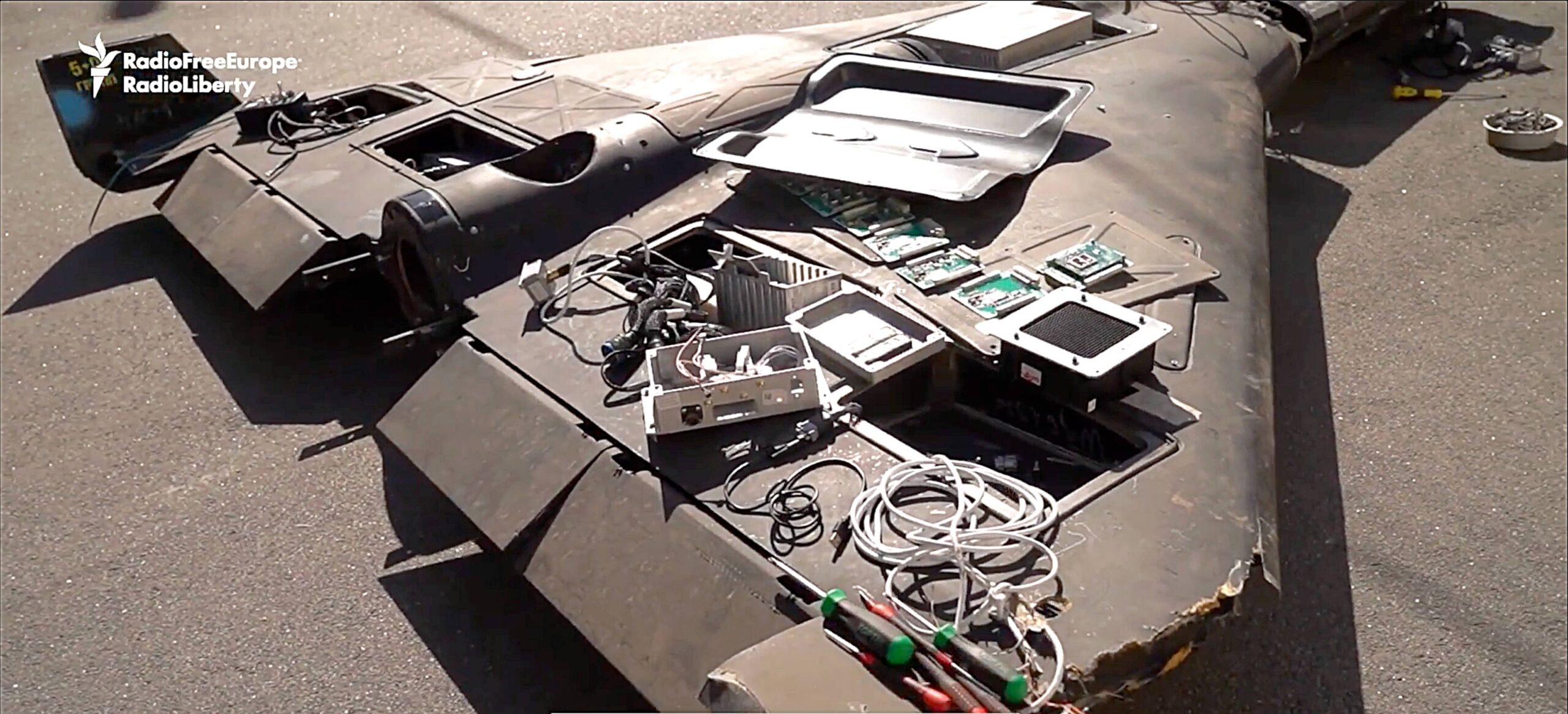
RFE/RL takes apart a Russian Geran-4 drone to uncover what makes the jet-powered unmanned aerial vehicle (UAV) faster, harder to intercept, and capable of operating deep inside Ukraine – from its turbojet engine and advanced camera to foreign-made communications and navigation components.
A Russian drone guided entirely by artificial intelligence, with no human in the loop for final targeting, killed three civilians in Zaporizhzhia on July 6. This is believed to be the first documented case of an AI system alone choosing who dies in the Russia-Ukraine war.
According to Ukrainian investigators and experts cited by the @nytimes , the drone was programmed to reach a gas station area, but once there, its onboard AI independently searched for the specific object it had been trained to attack.
The evidence recovered from the wreckage points to something significant: an Nvidia Jetson Orin computer running onboard the drone.

In recent weeks, drone attacks by the Russian military on Ukraine, including Kyiv, have intensified significantly, while the number of hits has increased disproportionately, as Russia is now deploying new jet-powered drones more frequently, which are harder to intercept.
The main targets are predominantly civilian infrastructure — shopping centers, warehouses belonging to major businesses, gas stations, passenger train locomotives, and more. These attacks have resulted in dozens of deaths and hundreds of injuries in just one month.
Russia is also targeting military facilities. In particular, jet-powered drones struck the main SBU building in central Kyiv and a weapons warehouse in the village of Myla in the Kyiv region.
Previously, the Russian military used conventional “Shaheds” — in fact, the “Geran-2.” Now, however, it is increasingly using jet-powered drones — the “Geran-4” and “Geran-5.”
Schemes got a unique opportunity to examine almost undamaged “Geran-4 Seeker” jet-powered UAV (Seeker being a modification) in order to understand exactly what makes it significantly faster, more maneuverable, and more accurate — and, consequently, makes the work of Ukrainian air defences more difficult.
Sources: YouTube; X