
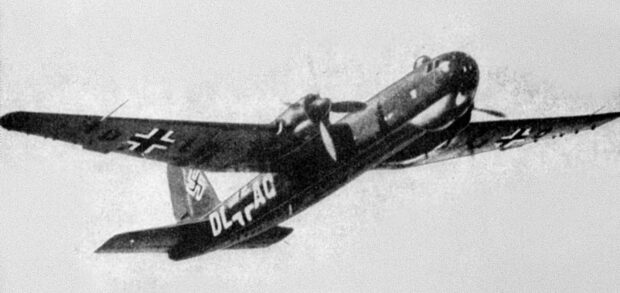
Pilots called it the Luftwaffenfeuerzeug: the Luftwaffe’s Lighter. The Heinkel He-177 Griffin, a massive four-engine heavy bomber, had a fatal flaw: its engines were crammed together in pairs, generating heat no cooling system could handle. Aircraft exploded on runways before ever reaching combat.
Germany desperately needed aircraft to strike deep into Britain and hunt Allied convoys across the Atlantic. Then Heinkel’s engineers finally cracked the code. Test pilots reported smooth flight and cool engines.
On the night of January 21, 1944, a dozen Griffins lifted off from bases across France, their bomb bays loaded for London. Hitler wanted the capital to burn in retaliation for Allied raids on German cities. He was out for revenge, and he would have it even if every Griffin had to fly over Britain in flames.
The Heinkel He 177 Greif (Griffin) was a long-range heavy bomber flown by the Luftwaffe during World War II. The introduction of the He 177 to combat operations was significantly delayed by problems both with the development of its engines and frequent changes to its intended role.
Nevertheless, it was the only long-range, heavy bomber to become operational with the Luftwaffe during the conflict. The He 177 had a payload/range capability similar to that of four-engined heavy bombers used by the Allies in the European theatre.
Work on the design began in response to a 1936 requirement known as Bomber A, issued by the Reichsluftfahrtministerium (RLM) for a purely strategic bomber. Thus, the He 177 was intended originally to be capable of a sustained bombing campaign against Soviet manufacturing capacity, deep inside Russia.
In contrast to its heavy payload and very wide, 30 metres (98 ft) planform, the specifications called for the design to have only two very powerful engines. To deliver the power required, the He 177 needed engines of at least 2,000 horsepower (1,500 kW). Engines of this type were new and unproven at the time.
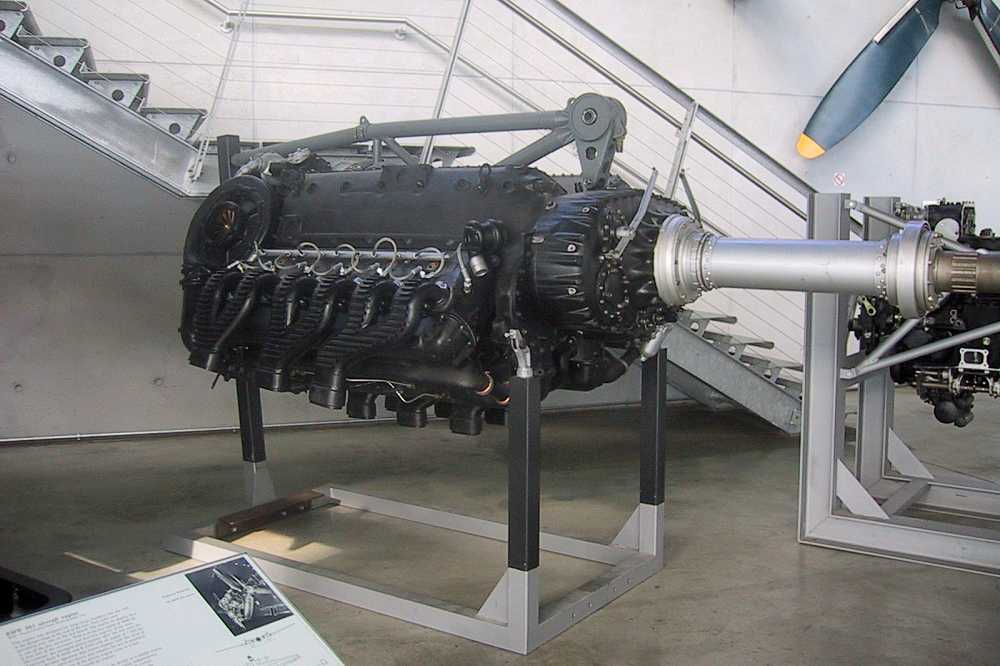
A later DB 610 “power system” which equipped the He 177A-5. The DB 606A/B powerplants were similar in configuration, with outermost “pair” of engine mount forgings not shown
The Daimler-Benz DB 606 power system that was selected, in conjunction with its relatively cramped nacelles, caused cooling and maintenance problems, such that the powerplants became infamous for catching fire in flight, and contributing to the He 177 gaining nicknames from Luftwaffe aircrew such as Reichsfeuerzeug (“Reich’s lighter”) or Luftwaffenfeuerzeug (“Air Force lighter”).
The type matured into a usable design too late in the war to play an important role. It was built and used in some numbers, especially on the Eastern Front, where its range was particularly useful. The He 177 is notable for its use in mass raids on Velikiye Luki in 1944, one of the late-war heavy bombing efforts by the Luftwaffe.
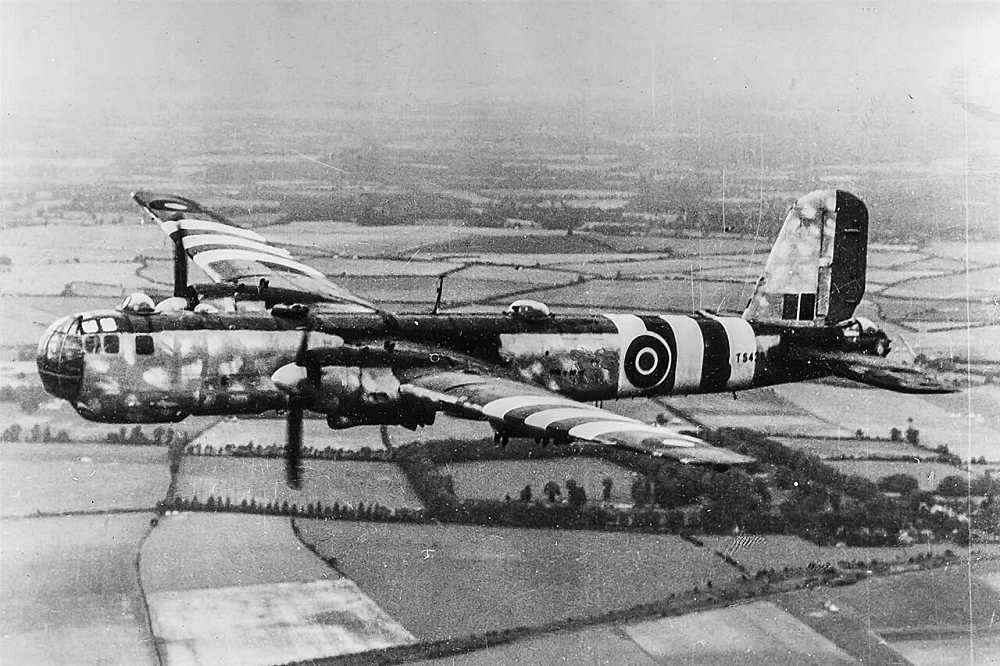
A German Heinkel He 177A-5 (s/n 550062, RAF serial TS439) being tested by the Royal Air Force in September 1944 (flown by Eric Brown). The He 177 (coded F8+AP) was captured by the French Resistance at the end of August 1944 at the maintenance factories of Toulouse-Blagnac. It was in flight condition. French national markingss were then applied to it, but it was to be delivered to the Allies, in this case to the RAE (Royal Aircraft Establishment) of Farnborough. In anticipation of this flight and to avoid any unfortunate and fatal confusion, reconnaissance bands inspired by the invasion bands of D-Day were painted on the plane and it was flown from Toulouse to Farnborough in a flight lasting 2 h 45 min on 10 September 1944.
It saw considerably less use on the Western Front, although the type played a role during Operation Steinbock (the “Baby Blitz”) against the British mainland in 1944.
Top Photo: The second German pre-production Heinkel He 177A-02 Greif (DL+AQ) in flight.