
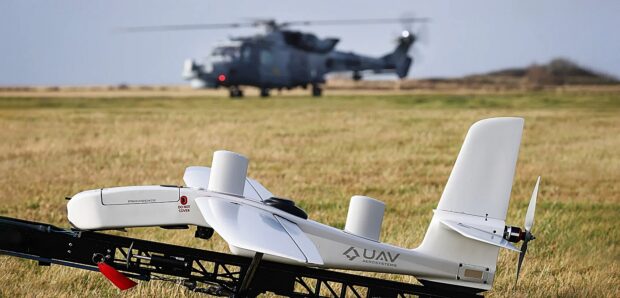
The crew of a Wildcat from 815 Naval Air Squadron received information almost instantaneously from two small surveillance drones (a Puma and a Providence), and data from other ground-based sensors to target a moving vehicle via a multi-node mesh network, at times over the horizon and beyond line of sight.
The trials, conducted out of Predannack airfield on Cornwall’s Lizard Peninsula, pave the way for far more complex operations involving crewed and crewless systems working together – a ‘hybrid air wing’ – not just involving Royal Navy assets, but also drones operated by the rest of the UK Armed Forces and our NATO allies.
It’s this aspect of the trials – dubbed Eagles Eye and involving experts from the Royal Navy’s specialist drone squadron, 700X, Wildcat personnel from 847 Naval Air Squadron and industry experts from MarWorks, TeleplanForsberg, General Dynamics, C3IA, UAV Aerosystems and Collins Aerospace – which has the team behind them truly excited, harnessing technology combat-proven in Ukraine.
It unlocks the potential for helicopters and aircraft to act as airborne command centres for flotillas of drones, connecting to any sensor across the communications network via a series of nodes.
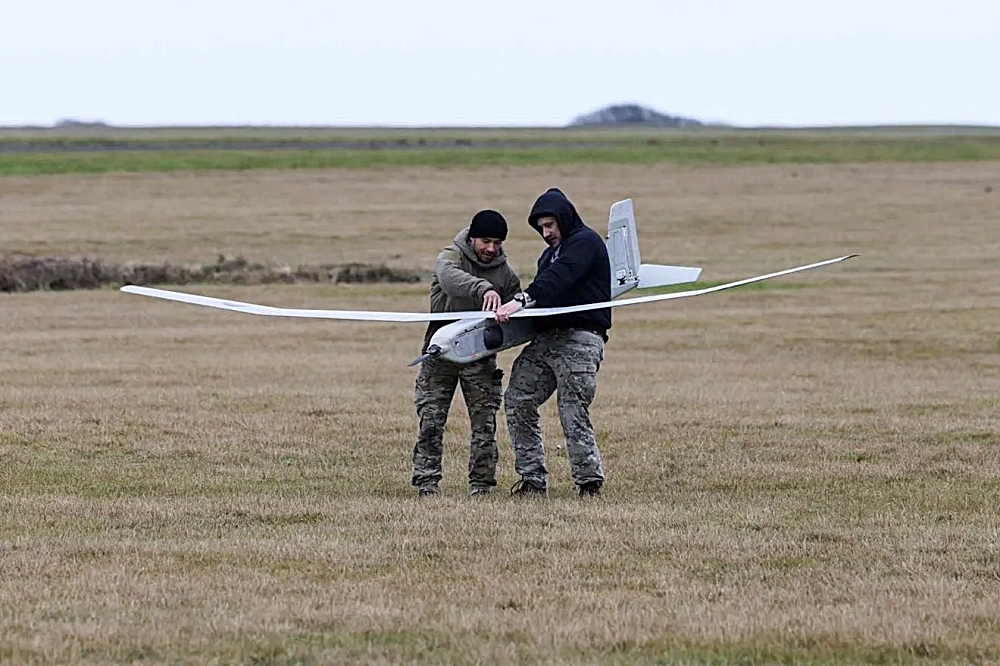
The MESH network used during the trials is decentralised and designed to be resilient, with the ability to reroute data automatically if individual nodes are lost or disrupted. This ‘self-healing’ characteristic has proven critical in Ukraine, where similar networking concepts have allowed forces to continue operating under intense electronic attack.
Sources: UK Royal Navy ; Navy Lookout