
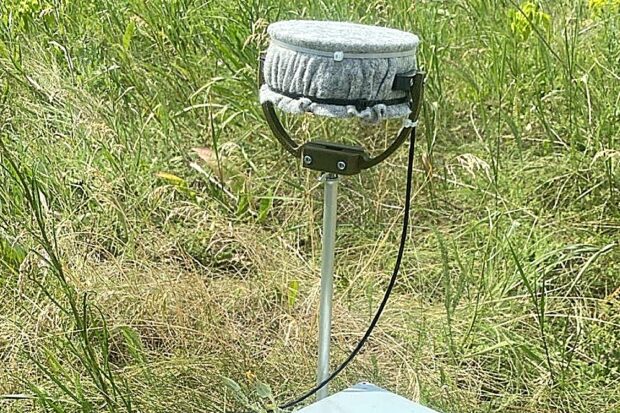
Ukrainian company ZVOOK announced on its Facebook page that it has developed the ZVOOK NW0, a “tactical acoustic sensor” designed to detect enemy FPV drones by analyzing the sound of their flight.
The system is specifically intended to identify FPV drones using fiber-optic control, which cannot be detected by traditional electronic reconnaissance (RER) systems.
According to the developer, the ZVOOK NW0 operates using artificial intelligence that continuously analyzes the surrounding acoustic environment. The declared detection range is 150 to 450 meters, with 360-degree coverage. When a drone is detected, the sensor can activate an audible alarm (optional) and transmit target data to the ZVOOK UI, an interactive real-time map interface.
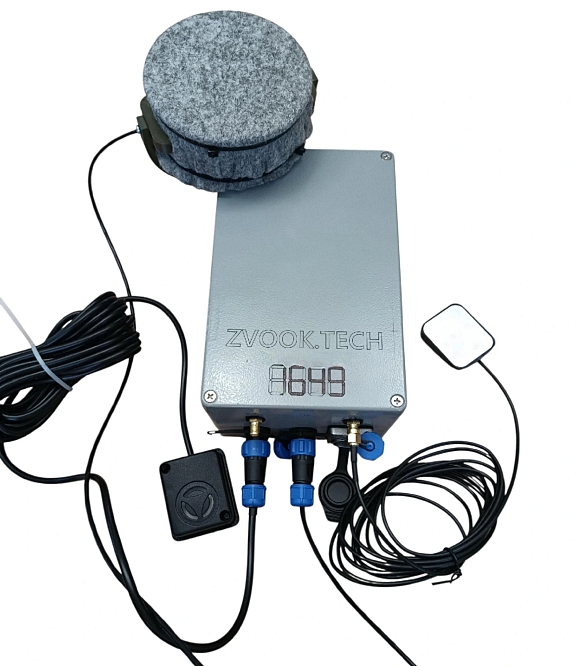
The sensor is rated IP67, providing a high level of protection against dust, water, and mechanical impact, allowing it to function reliably in harsh combat and weather conditions. The system also supports remote firmware updates. For operation, the device must be connected to a power source and a data transmission network, which may use fiber-optic cables, twisted pair, LTE, or LoRa radio channels depending on the configuration. Power consumption ranges from 15 to 20 watts.
ZVOOK notes that acoustic sensors make it technically feasible to deploy large-scale detection networks for protecting frontline positions, cities near the line of contact, and logistics routes. To ensure reliable coverage, the company recommends placing sensors at intervals of 400–600 meters.
ZVOOK is best known for developing acoustic detection systems for cruise missiles, helicopters, drones, and low- to medium-altitude aircraft. Its broader acoustic monitoring network consists of distributed microphones across Ukraine that capture ambient sounds, which are processed by specialized software to isolate characteristic acoustic signatures.
To enhance sensitivity, the system uses curved acoustic mirrors approximately half a meter in diameter. Individual stations reportedly cost about $500, allowing for dense deployment. These stations are powered by rechargeable batteries and solar panels, making them both cost-effective and difficult for the enemy to detect.
Source: MILITARNYI