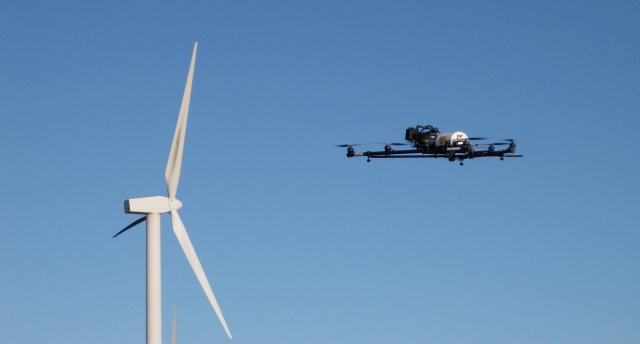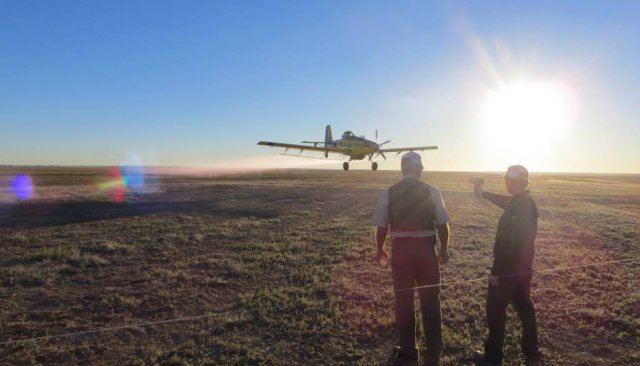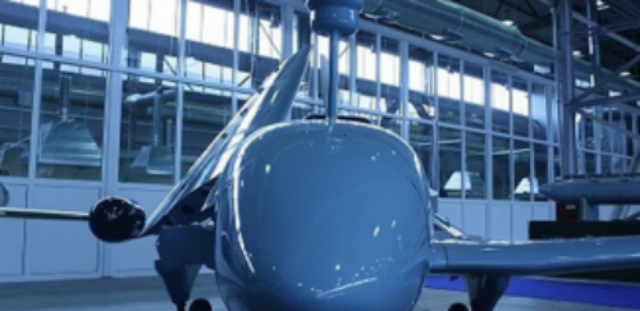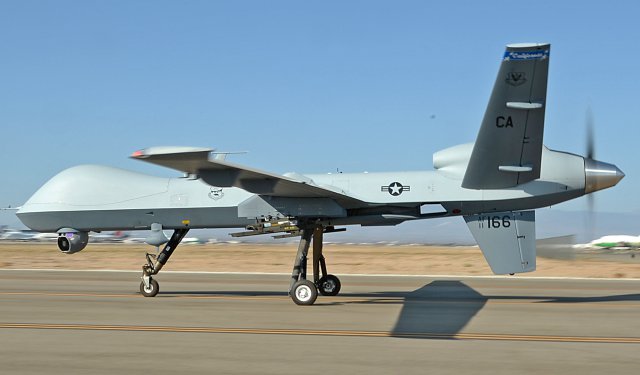
Facebook’s aerospace team in the UK has completed construction of its first full-scale aircraft, called the Aquila, as part of its Internet.org effort. Aquila is a solar-powered unmanned plane designed to beam down Internet connectivity from the sky
ASA ANPA 2015-10 – Introduction of a Regulatory Framework for the Operation of Drones
The drone industry is diverse, innovative and international. It has an enormous potential for growth with the associated possibility to create jobs. To ensure a safe, secure and environmentally friendly development, and to respect the citizens’ legitimate concerns for privacy and data protection, EASA has been tasked by the European Commission — following the Riga Conference1 and its associated Declaration — to develop a regulatory framework for drone operations, as well as concrete proposals for the regulation of low-risk drone operations. Continue reading
Russian Microwave Radiation Gun to Take Down Drones
Blood Samples Successfully Transported by UAV
Laboratory tests performed on blood samples flown for up to 40 minutes on hobby-sized drones yielded results comparable to those performed on samples that never left the ground, according to a proof-of-concept study conducted by researchers at Johns Hopkins University. Continue reading
Northrop Grumman Looks to UAS to Grow Revenues
Northrop Grumman Chief Executive Officer Wesley Bush sees opportunity on the horizon in the military Unmanned Aircraft Systems (UAS) market. The company announced its second quarter 2015 earnings earlier today, predicting likely budget constraints in the coming year created by the Budget Control Act and possible further sequestration in 2016. Continue reading
US Homeland Security Issues Warning About Drones
The US Department of Homeland Security has sent an intelligence assessment to police agencies across the country about drones being used as weapons in an attack. Continue reading
MQ-9 Reaper Accident Report Released
Solar-Powered UAV’s Record-Breaking 81-Hour Flight
Solar-powered drone Atlantik Solar has broken the world endurance record for unmanned aerial vehicles under 50kg — by flying continuously for 81 hours. It is also the second longest UAV flight ever, behind Airbus Space’s 53kg Zephyr 7. “We had to be extremely energy efficient, as we wanted to fly though the night, so we developed large and efficient batteries that supply that energy while flying in the darkness,” says Philipp Oettershagen, 28, one of the engineers behind AtlantikSolar. Continue reading