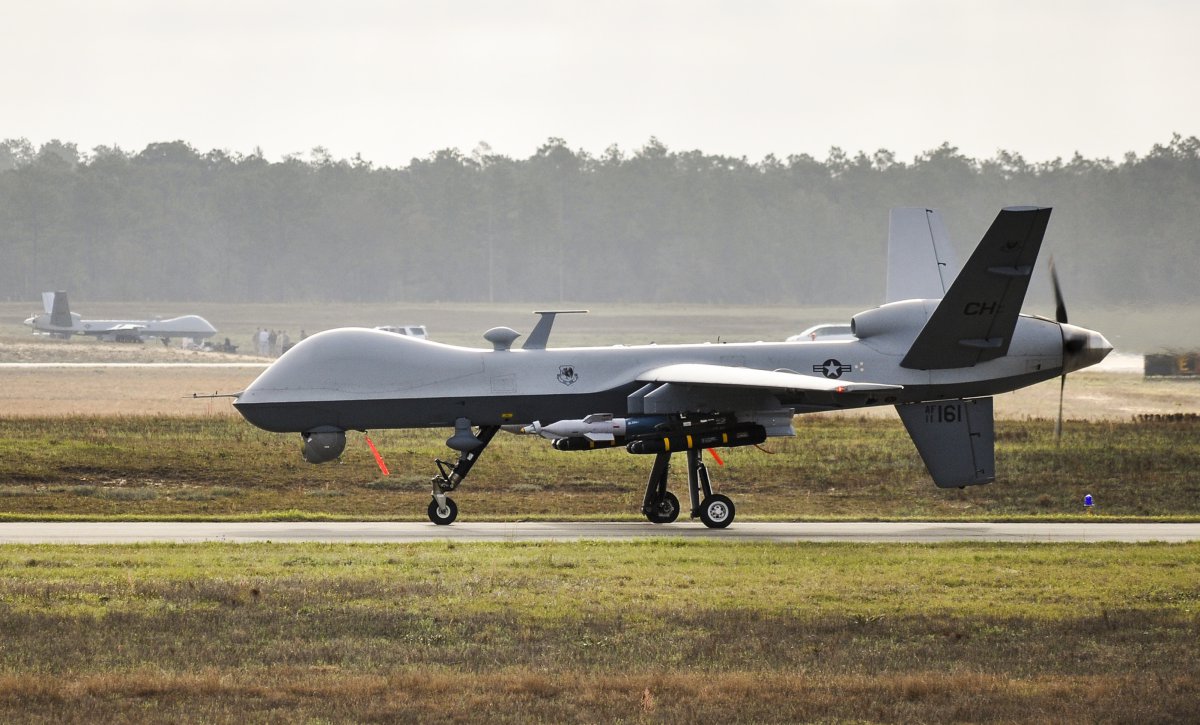
Turkey’s domestically produced UAV, the Bayraktar TB2, has been armed, making Turkey the fifth country to arm a UAV. With the anti-tank missile installed, which was developed by Roketsan (a major Turkish weapons manufacturer and defence contractor based in the central Anatolian province of Ankara), Bayraktar successfully completed the test shots on Thursday. Continue reading
Maiden Flight for NATO AGS Global Hawk
The first RQ-4 Global Hawk developed for the NATO Allied Ground Surveillance (AGS) programme made its maiden flight out of Northrop Grumman’s Palmdale facility in California on 19 December. Continue reading
Drones for Solar PV Operations and Maintenance
PrecisionHawk Partners with Indiana State University
PrecisionHawk and Indiana State University have signed a research and development partnership that aims to advance the unmanned aerial systems industry from multidisciplinary perspectives. The university-business collaboration will focus on safety, education, training and algorithm development for PrecisionHawk’s DataMapper aerial data software. Continue reading
FAA Issues Fact Sheet on State and Local UAS Laws
The Federal Aviation Administration’s (FAA) new fact sheet on state and local regulation of unmanned aircraft systems (UAS) provides information for states and municipalities considering laws or regulations addressing UAS use. The document outlines FAA’s safety reasons for federal oversight of aviation and airspace, and explains federal responsibility in this area. Continue reading
Iraqi Strike Could Boost China’s UAV Sales
Intelligent Energy Hydrogen Fuel Cells for UAS
Intelligent Energy, the energy technology company, announced that it has developed a prototype of a hydrogen fuel cell powered range extender for drones. The range extender offers longer flight time and fast re-fuel capabilities, addressing two of the biggest challenges for manufacturers of battery-powered drones.
Three Miles High: Drones Study High-Altitude Glaciers
About 5,000 meters high in the Peruvian Andes, scientists are mapping glaciers and wetlands in the Cordillera Blanca mountain range with 10-centimeter precision to gauge how climate change will affect the half-million local residents who rely in part on those glaciers for their water supply. Continue reading