Xwing, a defense and aviation autonomy technology startup, has announced that it was advanced as one of the winners of a Phase I SBIR from the Army xTech SBIR Autonomy program. Continue reading
UAS VISION
an independent online news service for the Unmanned Aircraft Systems world
Xwing, a defense and aviation autonomy technology startup, has announced that it was advanced as one of the winners of a Phase I SBIR from the Army xTech SBIR Autonomy program. Continue reading
Farming drone company Hylio has received Federal Aviation Administration approval to deploy up to three drones weighing more than 55 pounds simultaneously with a single pilot and without visual observers, which also allows for nighttime operations. Continue reading
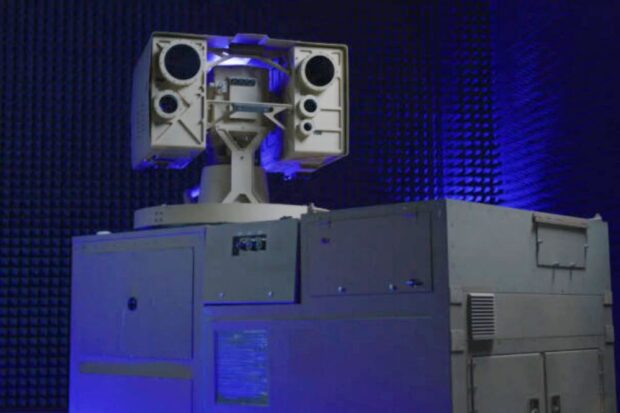
Taiwan is building a new weapon system comprised of a laser mounted on an armoured vehicle to counter the threat of Chinese drones. Continue reading
The announcement was made on March 7th by Defence Secretary Grant Shapps as he met President Zelenskyy in Kyiv. Britain steps up support to Ukraine with a complete package of £325 million for cutting-edge drones to help fight Putin’s illegal invasion. Continue reading
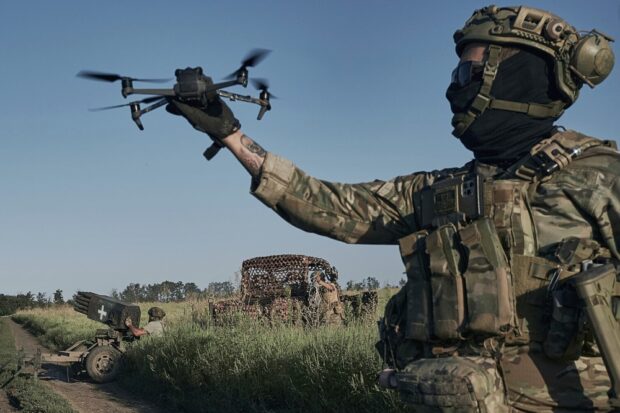
The invasion forces of Russia have started using FPV drones controlled via fiber optic wires. This way of signal exchange makes the UAVs completely invulnerable to any electronic warfare systems as they operate without reliance on radio communication. Continue reading
Incorporating high-quality imagery and four-axis stabilisation in less than 6.6kg, the CM234 from AVT Australia delivers the highest performance of imaging capabilities for the lowest SWaP in its class. Continue reading
San Francisco voters awarded local police more power and less oversight. A ballot measure that will ostensibly help San Francisco police catch suspects in criminal cases by easing restrictions on vehicle pursuits, allowing for the use of more surveillance technology and reducing oversight from the Police Commission was on its way to passing, according to vote tallies on Wednesday last week. Continue reading
The British Army began World War I with only two machine guns per infantry battalion. One gun was a spare, meaning the effective ratio was one per 1,000 soldiers. Historian John Ellis summarized, “For the British commanders, on the eve of the First World War, the machine gun simply did not exist.” Continue reading