
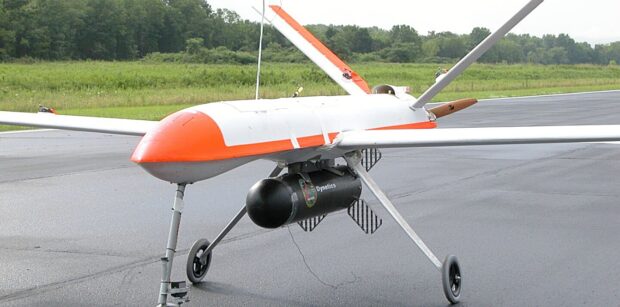
The Islamic Revolution Guards Corps announced on Monday night that its forces have brought down two American MQM-170 reconnaissance drones by electronic warfare south of Qeshm Island, while its air defence systems intercepted and destroyed a US MQ-9 drone over the eastern part of the Strait of Hormuz.
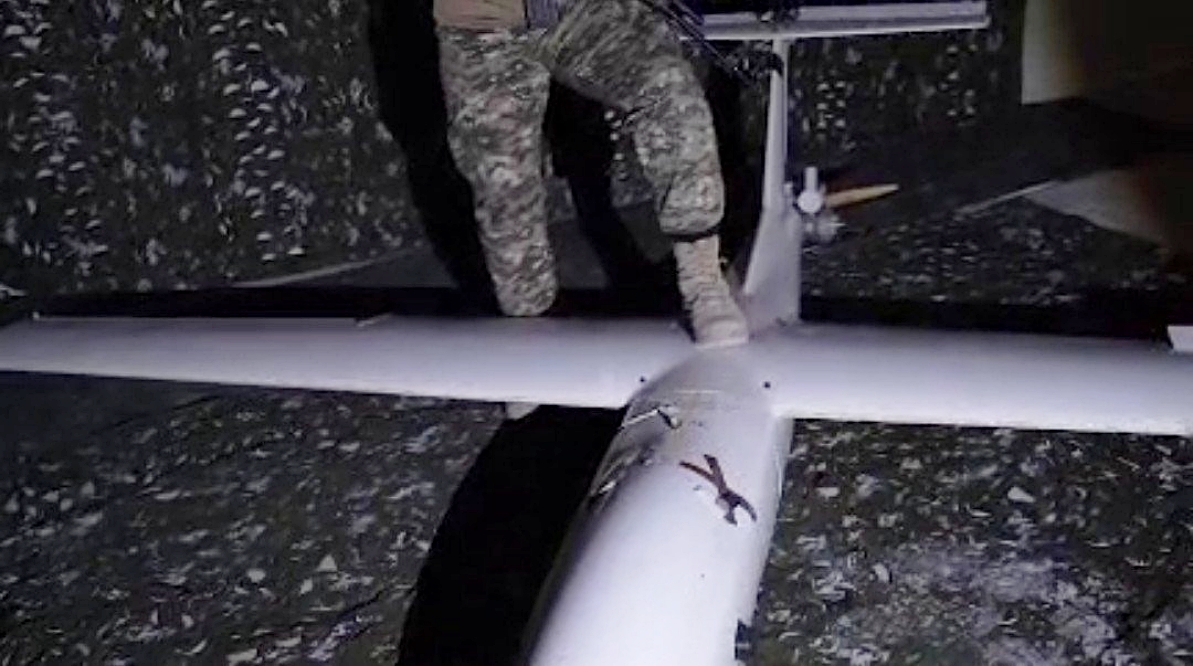
Captured MQM-170 Drone
In a statement released on Monday night, the IRGC Public Relations Department said the two MQM-170 drones were grounded through the use of advanced electronic warfare systems operated by the IRGC Aerospace Force.
The statement noted that, with the latest incident, the number of American drones of this type captured by elite IRGC officers has reached four.
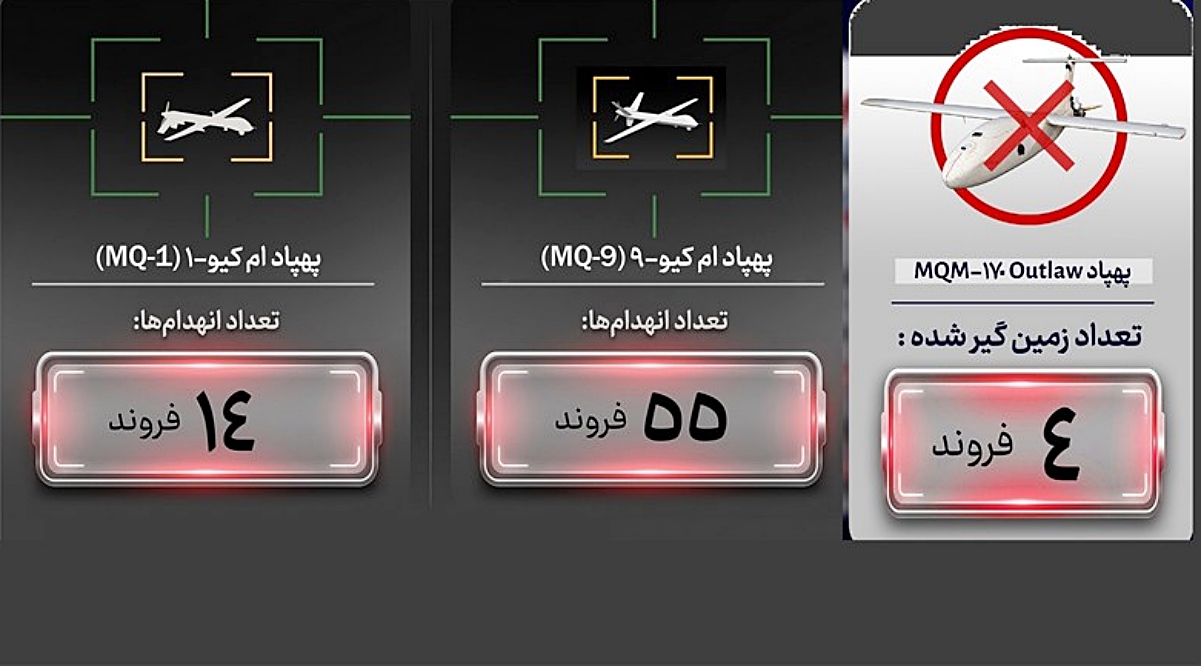
In a separate statement, the IRGC announced that its advanced air defence system has intercepted and destroyed the 55th American MQ-9 drone.
According to the statement, the drone was targeted and brought down over the eastern Strait of Hormuz by a new IRGC Aerospace Force air defence system operating under the control of Iran’s integrated air defence network.
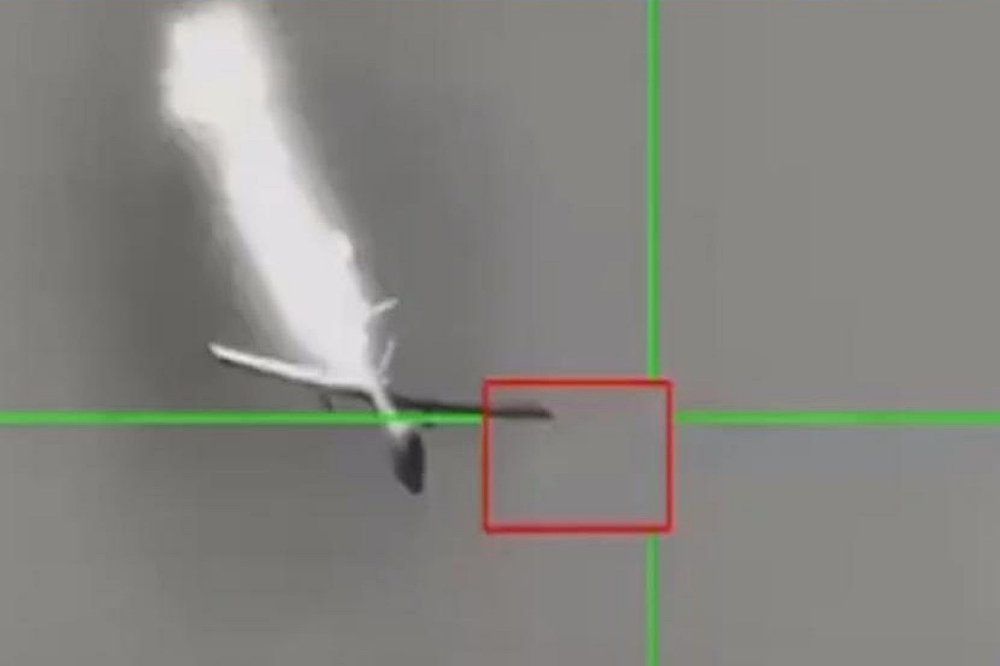
Moments of Iranian Air Defences Shootdown of U.S. Air Force MQ-9 Reaper Drone
The MQM-170 Outlaw is an American unmanned aircraft developed by Griffon Aerospace. The family has primarily been associated with aerial target and decoy missions, allowing military forces to simulate hostile aircraft and test air defence systems under realistic conditions. The aircraft can also contribute to intelligence gathering if equipped with suitable sensors. Iranian officials have claimed that the aircraft were being used to gather intelligence on Iranian air defence deployments along the Persian Gulf coast and around the Strait of Hormuz.
Such missions could help an opposing force identify radar locations, assess the reactions of air defence units and collect information on the operation of surveillance and interception systems. Reliance on the MQM-170 for such operations could reflect a response to the rapid losses taken by the MQ-9 Reaper fleet during operations against Iran, which are much higher value aircraft that cannot be easily replaced.
The IRGC is estimated to have brought down a total of 55 hostile drones over the Strait of Hormuz since the United States launched an assault on Iran in February, with dozens more shot down in other parts of Iran. While electronic warfare systems can interfere with communications links, navigation signals or other electronic functions on which an unmanned aircraft are reliant, the effectiveness of such an approach depends on the drone’s architecture, its degree of autonomy, the resilience of its navigation and control systems, and the electronic protection measures employed.
Access to the aircraft’s onboard equipment could provide Iranian specialists with an opportunity to examine their construction, navigation systems, communications hardware and mission payloads, revealing technical characteristics that would otherwise be difficult to establish from radar tracking or wreckage.
Top Photo: MQM-170 Outlaw
Sources: Tasnim News Agency; Military Watch Magazine